
Hacker Community
Flipper Zero Transmits APRS With No Extra Parts – Hackaday (Hackaday)
Summary: A developer has enabled the Flipper Zero multi-tool to transmit APRS (Automatic Packet Reporting System) packets using only its internal 435 MHz radio, bypassing the typical requirement for an external transmitter. The hack exploits the similarity between the device’s native FSK modulation and APRS’s FM standard, though the resulting signal may not be universally decodable. This represents a software-driven expansion of the tool’s RF capabilities within the amateur radio spectrum.
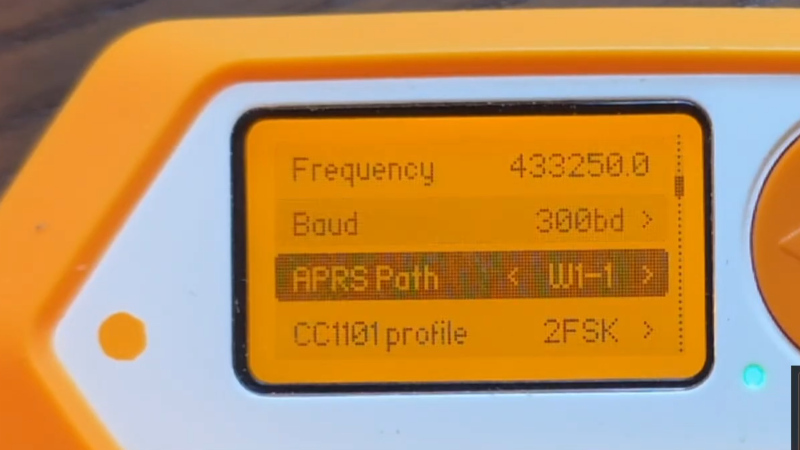
Why it matters: It demonstrates the continued evolution of the Flipper Zero from a pre-built penetration testing tool into a flexible, community-hacked RF platform, lowering the barrier to entry for experimental packet radio.
Context: The Flipper Zero’s role in hacker culture is contested, often seen as a script-kiddie toy, but persistent hardware and software hacks by the community steadily repurpose it for legitimate RF experimentation and cypherpunk-adjacent infrastructure.
"The Flipper Zero RF hacker’s multi tool normally needs to be hooked up to an external transmitter to do APRS, but [Richard YO3GND] has made his Flipper do the job without any external parts at all." — HACKADAY
Commentary: Archetype: Tool release / hardware-hacking signal. This is a village/workshop signal showing the device’s RF subsystem being pushed beyond its marketed use-case. The practical consequence is a reduction in the material and financial overhead for creating a basic APRS beacon, which could subtly shift its application from pure pentesting toward grassroots, ad-hoc communication networks. The caveat about non-standard modulation underscores the hacker ethic of ‘good enough’ functionality over strict compliance, prioritizing accessibility and experimentation.
Date: April 21, 2026 12:00 AM ET
URL: https://hackaday.com/2026/04/21/flipper-zero-transmits-aprs-with-no-extra-parts/
AI Sentiment Score: Negative (66%)
AI Credibility Score: 9.9/10 — High
Scores and text generated by AI analysis of the source article indicated.
Pluralistic: There’s no such thing as "age verification" (19 May 2026) (Pluralistic.Net)
Summary: Cory Doctorow’s Pluralistic column argues that ‘age verification’ is a political consensus hallucination with no technical basis, requiring total attribution of all internet activity to identified persons. He frames it as the latest iteration of Bruce Schneier’s ‘security syllogism’—’Something must be done! There, I’ve done something’—which predictably leads to collateral damage and escalatory measures like VPN bans. The piece cites concrete legislative moves in Utah and the UK to regulate or ban VPNs as the foreseen next step.

Why it matters: This is a core digital-rights fight with immediate consequences for privacy, security, and the architecture of the open internet, directly challenging a wave of poorly conceived legislation.
Context: The argument extends Doctorow’s long-standing critique of ‘thinking of the children’ as a pretext for surveillance and control, paralleling historical fights over DRM, crypto bans, and the ‘war on general-purpose computing.’
"Today’s links – There’s no such thing as "age verification": The foreseeable and foreseen consequences of "something must be done"/"there, I’ve done something." – Hey look at this: Delights to delectate. -." — PLURALISTIC.NET
Commentary: The piece correctly identifies the operational reality: age verification mandates are a backdoor for pervasive identity logging, creating systemic security debt. The shift to targeting VPNs confirms the policy’s inherent escalation, moving the battlefield from content platforms to core infrastructure. For the hacker community, this represents both a threat vector—expanding attack surfaces for data brokers—and a mobilization signal for building and deploying censorship-circumvention tools.
Date: Tue, 19 May 2026 07:17:09 +0000
URL: https://pluralistic.net/2026/05/19/shes-dead-of-course/
AI Sentiment Score: Negative (83%)
AI Credibility Score: 10.0/10 — High
Scores and text generated by AI analysis of the source article indicated.
Destroy Big Tech With a Salvaged Cyberdeck – Make: (Makezine)
Summary: A surge in DIY ‘cyberdeck’ builds, using salvaged components from discarded laptops, old phones, and thrift-store finds, is being framed as a direct response to forced obsolescence and the surveillance economy of Big Tech. The movement, exemplified by makers like Annike Tan and Claudia (@bossbratbimbo), prioritizes aesthetic maximalism, digital minimalism, and physical ownership over consumer convenience. Builds range from Raspberry Pi-based portables to ESP32-powered minimalist devices and enclosures crafted from purses, record players, and toy computers. This represents a material shift from merely modifying existing products to constructing entire personal computing ecosystems from scrap.
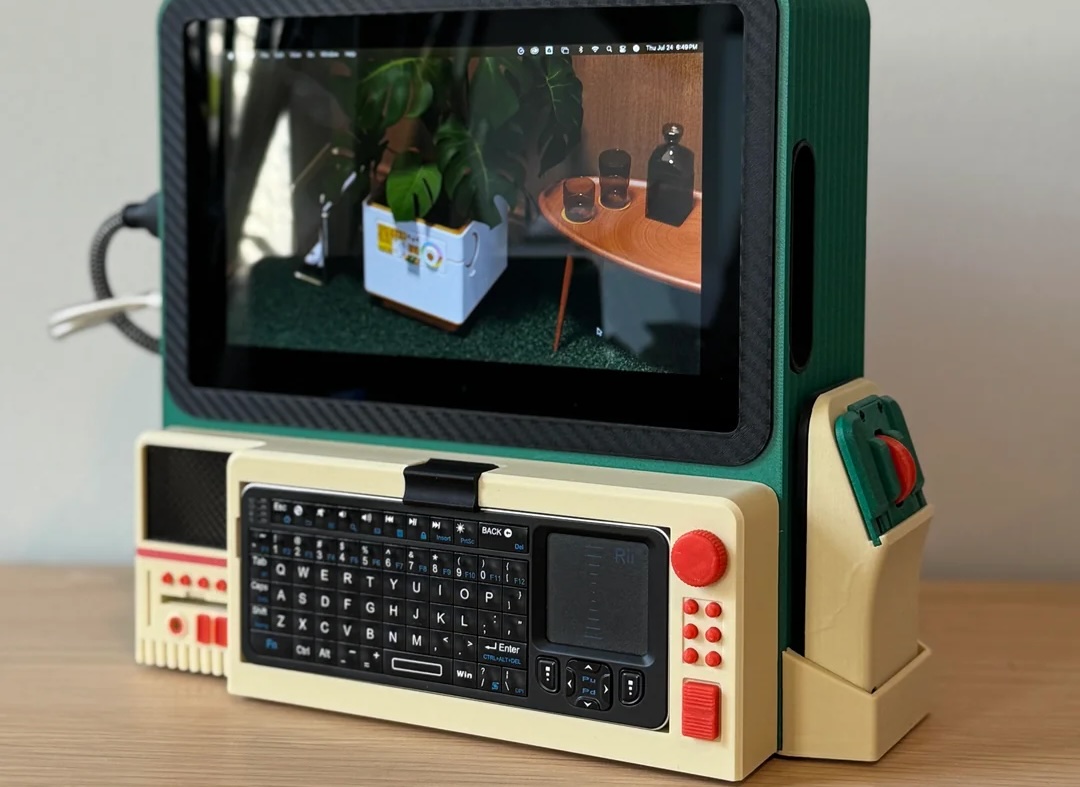
Why it matters: This signals a maturation of the right-to-repair and anti-surveillance ethos into a tangible, creative hardware movement that bypasses commercial supply chains and redefines personal computing.
Context: The cyberdeck concept has evolved from a niche hacker aesthetic to a broader workshop practice, fueled by platform resentment, component standardization (e.g., Raspberry Pi), and the growing accessibility of 3D printing and adapter boards.
"It seems that companies forcing people to rent media they used to own and tracking users at every turn have soured a few folks on buying from big tech, and turned them to building their own devices instead." — MAKEZINE
Commentary: This is a hackerspace-to-mainstream pipeline signal, demonstrating how political grievances are catalyzing practical skill-building. The diversity of builds—from functional laptops to purpose-limited writing machines—shows the movement is fragmenting into specialized toolchains tailored to individual threat models and desires, moving beyond protest towards constructing parallel, owner-controlled infrastructure. The explicit avoidance of new component purchases, when possible, adds a supply-chain resistance layer to the digital rights fight.
Date: May 11, 2026 12:00 AM ET
URL: https://makezine.com/article/technology/computers-mobile/destroy-big-tech-with-a-salvaged-cyberdeck/
AI Sentiment Score: Negative (80%)
AI Credibility Score: 10.0/10 — High
Scores and text generated by AI analysis of the source article indicated.
PocketPD – USB-C Portable Bench Power Controller (Hackaday.Io)
Summary: PocketPD, a USB-C portable bench power supply controller, has progressed from a crowdfunding campaign to a commercially available, open-source hardware product. The project, documented on Hackaday.io, has iterated through multiple hardware and firmware versions, navigated manufacturing and compliance hurdles, and established a direct sales channel after withdrawing from its initial CrowdSupply campaign. Its design philosophy emphasizes physical knobs and buttons for reliability over networked interfaces, targeting applications from custom chargers to reflow ovens.

Why it matters: It represents a mature, community-vetted tool release that validates a specific design ethos—prioritizing tactile, reliable control—within the hardware-hacking ecosystem, moving from prototype to sustained production.
Context: This fits the ‘hackerspace-to-mainstream pipeline’ and ‘tool release’ archetypes, reflecting a trend where open-source hardware projects achieve commercial sustainability while retaining a DIY ethos, often after navigating the complex logistics of global manufacturing and compliance.
"As the DIY community has grown, there are multiple ways to implement control features like adjusting parameters via Wifi, Bluetooth, or touch screen. We want to keep the design language simple, just physical knobs and buttons to control. This will give the system higher reliability when you need it to work." — HACKADAY.IO
Commentary: The explicit rejection of networked interfaces in favor of physical controls is a deliberate, consequential design choice that addresses real-world reliability concerns in workshop environments. Its successful transition from crowdfunding to direct sales, including handling EU compliance and international tariffs, signals a project maturing beyond the prototype phase into a sustainable supply chain. This creates a reliable, community-supported component for other hardware projects, reducing the ‘security debt’ and complexity inherent in internet-connected bench tools.
Date: May 19, 2026 12:00 AM ET
URL: https://hackaday.io/project/194295-pocketpd-usb-c-portable-bench-power-controller
AI Sentiment Score: Negative (50%)
AI Credibility Score: 10.0/10 — High
Scores and text generated by AI analysis of the source article indicated.
danjovic’s Profile (Hackaday.Io)
Summary: A Hackaday.io user profile documents three distinct hardware preservation and reverse-engineering projects: a Yamaha YPVS controller schematic rescued from defunct forums, a recreated ROM cartridge for the obscure CP400 Color Computer, and a guide for compiling the SDCC toolchain to support PIC microcontrollers on Linux. Each entry represents a discrete act of salvage and knowledge transfer, executed with practical, low-fidelity methods.

Why it matters: This profile is a microcosm of the essential, unglamorous work that sustains hardware-hacking culture: recovering orphaned designs, preserving obscure platforms, and maintaining toolchains that commercial vendors abandon.
Context: These are classic ‘village/workshop signals’—the quiet, persistent work of individual practitioners that collectively forms the archival and operational backbone of the retrocomputing and embedded hardware communities.
"I like to superpose the bottom and top pcb images to figure out the connections using Libre Office Draw. Other programs can be used as long as they provide to adjust the transparency of the images." — HACKADAY.IO
Commentary: The methodology—using general office software for PCB reverse-engineering—highlights the improvisational, resource-constrained reality of hardware preservation. The real threat isn’t technical complexity, but knowledge entropy: schematics lost to dead forums and toolchains that cease to compile on modern systems without manual intervention.
Date: May 18, 2026 12:00 AM ET
URL: https://hackaday.io/danjovic
AI Sentiment Score: Negative (66%)
AI Credibility Score: 10.0/10 — High
Scores and text generated by AI analysis of the source article indicated.
Jenny’s Daily Drivers: Going 32-Bit With SliTaz In 2026 (Hackaday)
Summary: A Hackaday contributor tests the practical limits of 32-bit computing in 2026 by installing the minimalist SliTaz distribution on a 2005-era Dell Latitude D610. The experiment suggests the machine remains usable for basic tasks, a testament to niche open-source maintenance, but concludes the exercise is largely pointless given the superior longevity of slightly newer 64-bit hardware. The piece functions as a real-world audit of the shrinking software ecosystem for legacy architectures.

Why it matters: It provides a concrete, dated benchmark for the end-of-life of mainstream 32-bit support, highlighting the specific maintenance burden shifting to a small cadre of open-source developers and the practical cutoff for hardware preservation.
Context: Major Linux distributions and browsers have been systematically dropping 32-bit x86 support, forcing users of older hardware into increasingly esoteric software forks and minimalist distributions.
"Researching this piece though it’s very obvious that much of the software necessary for modern computing is slipping out of 32 bit support, so I have to question how much longer they can keep it up. Considering that this machine has about the same intrinsic monetary value as a Core2-based machine made a little over a year later which supports 64 bit code I have to concede that what I’ve just done is a fairly pointless exercise." — HACKADAY
Commentary: This is a village/workshop signal: a hands-on stress test that moves the community conversation from theoretical support timelines to a dated, practical expiration. The author’s conclusion—favoring a 2007 64-bit machine—marks a strategic pivot for the repair/hardware-preservation community, shifting effort from architectural salvage to more sustainable hardware generations. The real implication is the delineation of a new ‘junk line’ for hacker spaces: pre-2006 32-bit machines are transitioning from challenge projects to historical curiosities, concentrating maintenance labor on a narrower band of legacy tech.
Date: Thu, 30 Apr 2026 17:00:22 +0000
URL: https://hackaday.com/2026/04/30/jennys-daily-drivers-going-32-bit-with-slitaz-in-2026/
AI Sentiment Score: Negative (55%)
AI Credibility Score: 10.0/10 — High
Scores and text generated by AI analysis of the source article indicated.
Your cyberpunk games are dangerous – openDemocracy (Opendemocracy.Net)
Summary: A historical analysis revisits the 1990 US Secret Service raid on Steve Jackson Games, which seized the manuscript for the GURPS Cyberpunk role-playing game and the author’s computers. The operation, part of a hacking investigation, conflated speculative game design with criminal instruction manuals, mistaking the republished text of a Bell South 911 document for a direct threat. The incident, alongside a similar 1980 FBI visit to TSR Hobbies, catalyzed the formation of the Electronic Frontier Foundation by John Perry Barlow and allies.

Why it matters: This raid is a foundational case study in state overreach against speculative fiction, demonstrating how law enforcement’s technical illiteracy can criminalize creative works and directly spur organized digital rights defense.
Context: The 1990 raid is a canonical ‘ignored warning’ in hacker lore, illustrating the ‘WarGames script’ where authorities fail to distinguish between a game about a threat and an operational threat. It directly led to the EFF’s founding as a cypherpunk infrastructure response.
"It is easy to put yourself in the hysterical script of the movie WarGames when you lack the technical expertise to distinguish a game about hacking from reality." — OPENDEMOCRACY.NET
Commentary: The raid’s legacy is not just historical; it established the playbook for contemporary repair fights and surveillance-resistance advocacy by proving that institutional ignorance creates its own targets. The concrete consequence was the mobilization of Silicon Valley capital and legal expertise into a permanent digital rights institution, turning a village/workshop signal into a mainstream pipeline for hacker-world concerns.
Date: April 22, 2026 12:00 AM ET
URL: https://www.opendemocracy.net/your-cyberpunk-games-are-dangerous/
AI Sentiment Score: Negative (87%)
AI Credibility Score: 10.0/10 — High
Scores and text generated by AI analysis of the source article indicated.
Flipper Zero Toolkit: 10 Smart Uses You Didn’t Know 🔥 (Youtube)
Summary: A YouTube video from April 2026 catalogs ten niche applications for the Flipper Zero, focusing on its ability to clone RFID access cards, replay unencrypted RF signals for garage doors, brute-force PINs on weak systems, and test older car remotes. The presentation frames these as educational demonstrations of pervasive security vulnerabilities in everyday systems, emphasizing ethical use with permission. The core narrative is that the device reveals how many common technologies operate on outdated, trust-based protocols.

Why it matters: It signals the mainstreaming of hardware penetration testing tools and documents the specific, exploitable security debt in physical access systems that the hacker community has long warned about.
Context: The Flipper Zero has evolved from a niche hacker toy to a standard piece of kit for security workshops and red-team demonstrations, highlighting the gap between theoretical vulnerabilities and their trivial, real-world exploitation.
"In this video, we explore the powerful capabilities of the Flipper Zero and reveal 10 smart uses you probably didn’t know. This compact device is widely used for learning cybersecurity, testing wireless." — YOUTUBE
Commentary: This is a hackerspace-to-mainstream pipeline signal, demonstrating how workshop-level tools concretely validate repeated warnings about unencrypted RF and static-coded access systems. The video’s pedagogical framing normalizes threat modeling for physical infrastructure, pushing the conversation from abstract risk to operational consequence for building managers and IT staff. Its persistence indicates these vulnerabilities remain widespread, creating a durable market for both exploitation and remediation tools.
Date: April 29, 2026 12:00 AM ET
URL: https://www.youtube.com/watch?v=L8O_KrRcDsc
AI Sentiment Score: Negative (75%)
AI Credibility Score: 10.0/10 — High
Scores and text generated by AI analysis of the source article indicated.
Post ID: 8cbccdf5