
Apparel and Textile Manufacturing Reshoring & Automation
Apparel brands support unspun’s automated manufacturing hu (Specialtyfabricsreview)
Summary: Unspun, an automated manufacturing technology company, has secured letters of support from major brands including Walmart and REI for its plan to build domestic apparel production hubs in the U.S. The initiative, backed by over $50 million in VC funding and partnerships with Bethel Industries, Peckham, and PDS Ltd./GSC Link, will deploy the company’s AI-enabled 3D weaving technology. This system weaves semi-finished garments directly from yarn in minutes, aiming to replace traditional cut-and-sew operations.

Why it matters: This signals a concrete, capital-backed push to reconfigure the apparel supply chain for onshore, demand-responsive production, directly affecting sourcing strategies, inventory management, and domestic labor markets.
Context: The move aligns with broader industry pressure for supply chain resilience and nearshoring, but faces the persistent challenges of scaling automated textile manufacturing and competing on cost with established offshore labor.
"Automated manufacturing technology company unspun announced that brands, including Walmart and REI, have signed letters of support for the company’s plan to build domestic manufacturing capacity in the U.S. In partnership with." — SPECIALTYFABRICSREVIEW
Commentary: The operational bet is that automation can offset domestic labor costs enough to justify proximity for speed and inventory reduction. For brands, the test is whether the promised ‘same-season reorder’ capability materially improves margin protection against demand volatility. If successful, it pressures incumbent cut-and-sew contractors and reshuffles vendor management for participating retailers.
Date: April 20, 2026 12:00 AM ET
URL: https://specialtyfabricsreview.com/2026/04/20/unspun-2/
AI Sentiment Score: Negative (80%)
AI Credibility Score: 10.0/10 — High
Scores and text generated by AI analysis of the source article indicated.
Automated Garment Manufacturing Could Reshape Global Supply Chains – Buyback Announcement Report (Newser)
Summary: Advancements in robotic sewing and knitting, led by firms like SoftWear Automation, Sewbo, and Kniterate, are automating the handling of flexible fabrics. This reduces the labor-cost advantage of Asian manufacturing hubs, making reshoring of apparel production to Western countries more economically viable. The shift enables potential for micro-factories and faster, localized supply chains, particularly for high-volume basics.

Why it matters: For domestic manufacturers and brands, this changes the calculus on production location, shifting the competitive advantage from pure labor arbitrage to speed, resilience, and proximity to market.
Context: Apparel manufacturing has been concentrated in low-cost Asian regions for decades due to labor-intensive processes. Automation has historically struggled with soft materials, but new systems are overcoming this technical barrier.
"New robotic sewing and knitting machines may enable apparel production to return to Western countries, challenging Asia’s dominance in garment manufacturing. These technologies could reduce labor costs and shorten supply chains, potentially." — NEWSER
Commentary: The operational consequence is a bifurcation: high-volume, simple garment production becomes a candidate for automated reshoring, while complex, low-volume, or delicate items likely remain offshore. This pressures Asian hubs to automate or move up the value chain, and creates a new vendor ecosystem for robotics maintenance and micro-factory operation in the West. The real constraint isn’t the robot’s sticker price, but the total system cost and the skilled labor required to run it—reshoring shifts the labor profile from low-wage sewing to higher-wage technicians.
Date: May 23, 2026 12:00 AM ET
URL: https://www.newser.com/expert-time/Automated-Garment-Manufacturing-Could-Reshape-Global-Supply-Chains-21-3773
AI Sentiment Score: Negative (58%)
AI Credibility Score: 10.0/10 — High
Scores and text generated by AI analysis of the source article indicated.
Automated Garment Manufacturing Could Reshape Global Supply Chains – Peak Earnings Alert (Newser)
Summary: Emerging robotic sewing and assembly systems, known as ‘sewbots,’ are automating labor-intensive garment production steps like stitching and cutting. This technology is enabling pilot manufacturing runs for basic items like t-shirts in the US and Europe, challenging the cost structure of Asian production. The core proposition is that automation can offset low-wage labor advantages, making domestic manufacturing economically viable for Western brands.
Why it matters: For domestic manufacturers and brands, this signals a potential shift in sourcing calculus from pure labor cost to a mix of automation capital expenditure, supply chain resilience, and speed-to-market, altering vendor selection and facility planning.
Context: Apparel manufacturing has been concentrated in Asia for decades due to insurmountable labor cost differentials, creating long, fragile supply chains. Automation represents the first credible technological challenge to that geographic lock-in.
"A new wave of automated sewing and assembly machines may enable t-shirt production to return to Western economies, challenging the long-established dominance of Asian manufacturing hubs. While most apparel is still made." — NEWSER
Commentary: The immediate operational consequence is a new capital-intensive pathway for nearshoring, but it’s constrained by high upfront investment and a narrow product focus (basic garments). This won’t repatriate the entire industry overnight but creates a viable niche for fast-replenishment, low-variety items, forcing a reevaluation of inventory and logistics models. The labor shift isn’t a simple repatriation; it exchanges high-volume, low-skill jobs abroad for a smaller number of higher-skilled technical roles domestically, presenting a workforce retraining challenge.
Date: May 21, 2026 12:00 AM ET
URL: http://www.newser.com/expert-time/Automated-Garment-Manufacturing-Could-Reshape-Global-Supply-Chains-20-141
AI Sentiment Score: Negative (55%)
AI Credibility Score: 10.0/10 — High
Scores and text generated by AI analysis of the source article indicated.
Leading Brands Back unspun’s Automated U.S. Apparel … – IICTF – (Iictf.In)
Summary: unspun, a San Francisco-based company, is advancing its AI-enabled 3D weaving technology toward commercial deployment in the United States. The system converts yarn directly into semi-finished garments in minutes, collapsing dozens of traditional cut-and-sew steps into a single automated cycle. The initiative has secured letters of support from major retailers Walmart and REI, along with supply chain partners Bethel Industries, Peckham, and PDS Ltd / GSC Link. With over $50 million in venture funding, the company is evaluating potential manufacturing hub sites across multiple states.

Why it matters: This signals a potential structural shift in domestic apparel manufacturing, moving from labor-intensive, geographically dispersed assembly to automated, consolidated production, which could alter cost models, supply chain resilience, and workforce requirements.
Context: The push for onshore manufacturing has long been constrained by high labor costs and complex supply chains; automation offers a path to economic viability but requires significant capital and operational integration.
"Automated production that converts yarn directly into a semi-finished garment in minutes — compressing dozens of discrete cut-and-sew steps into a single programmable cycle — is no longer confined to a pilot facility." — IICTF.IN
Commentary: The commitment from Walmart and REI provides crucial demand-side validation, reducing the customer acquisition risk for unspun’s capital-intensive hubs. For domestic manufacturers and brands, this technology could rebalance the calculus between offshore cost and onshore speed/resilience, but it could pressure existing cut-and-sew contractors and require new technical skill sets in facility operations and maintenance. The real test will be scaling the technology outside a controlled pilot while maintaining quality and cost targets across diverse apparel categories.
Date: April 23, 2026 12:00 AM ET
URL: https://iictf.in/unspun-automated-apparel-manufacturing-us-hubs/
AI Sentiment Score: Negative (66%)
AI Credibility Score: 10.0/10 — High
Scores and text generated by AI analysis of the source article indicated.
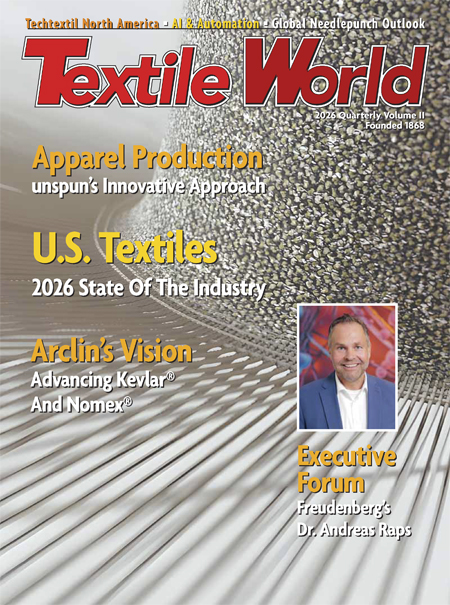
Apparel Brands Back unspun’s U.S. Automated Manufacturing Push (Textileworld)
Summary: Unspun, a venture-backed startup, has secured letters of support from major retailers Walmart and REI to build automated apparel manufacturing hubs in the United States. Its proprietary system uses AI-enabled 3D weaving to produce semi-finished garments directly from yarn in minutes, aiming to replace traditional cut-and-sew processes. The company is now evaluating U.S. sites and workforce training programs for deployment, with initial production expected soon.

Why it matters: This signals a concrete, capital-intensive push to re-shore apparel manufacturing, directly impacting sourcing strategies, inventory models, and the labor profile required for domestic production.
Context: The push for onshoring apparel has long been hampered by high labor costs and complex assembly; automation is the proposed lever to overcome these constraints.
"San Francisco-based unspun, backed by more than $50 million in venture funding, has secured letters of support from Walmart and REI to build U.S.-based automated apparel manufacturing hubs using AI-enabled 3D weaving." — TEXTILEWORLD
Commentary: The commitment from Walmart and REI provides crucial demand signaling for unspun’s capital-intensive model, but the real test is operational: scaling a novel 3D weaving process to meet retail volumes while managing the new labor constraints of maintaining advanced robotics. If successful, it could shift the calculus for in-season production and inventory reduction, but it also creates a new vendor dependency for brands on a single, unproven-at-scale technology stack.
Date: Sun, 31 May 2026 22:19:46 +0000
URL: https://www.textileworld.com/textile-world/textile-news/2026/05/apparel-brands-back-unspuns-u-s-automated-manufacturing-push/
AI Sentiment Score: Negative (50%)
AI Credibility Score: 10.0/10 — High
Scores and text generated by AI analysis of the source article indicated.
Can Footwear Manufacturing Return to the USA? | STRIDE USA 2026 (Youtube)
Summary: A 2026 industry discussion frames the practical bifurcation of US footwear manufacturing, positioning it for premium, low-volume, and rapid prototyping roles while conceding high-volume production to overseas facilities. The argument hinges on cost, risk, and material availability, treating ‘Made in USA’ as a specific operational capability rather than a blanket patriotic goal. Onshoring efforts are prioritized for materials production where possible, acknowledging that final assembly location is a function of design, style, and scale.
Why it matters: For brands and manufacturers, this clarifies the investment thesis and operational footprint required for domestic production, separating realistic niche opportunities from volume-driven fantasy.
Context: The reshoring debate often oscillates between aspirational rhetoric and hard economics; this segment grounds it in a specific industry’s supply-chain realities.
"These are things that are relatively inexpensive, they are low cost, they are low risk, but they help {ts:366} show what’s possible. … The Made in US is premium product. The {ts:516}." — YOUTUBE
Commentary: This explicitly codifies a two-track strategy, forcing brands to choose a lane: domestic for high-margin, agile, or marketing-driven lines, and offshore for margin-sensitive volume. It shifts the policy conversation from ‘bringing jobs back’ to securing material inputs and prototyping ecosystems, which have different capital and labor requirements. The admission that high-volume production could remain overseas is a sobering constraint for any national industrial plan targeting consumer goods.
Date: May 19, 2026 12:00 AM ET
URL: https://www.youtube.com/watch?v=GiXYTuIRfG4
AI Sentiment Score: Negative (62%)
AI Credibility Score: 10.0/10 — High
Scores and text generated by AI analysis of the source article indicated.
INTRODUCING: USA MADE APPAREL (Youtube)
Summary: MKC has launched a Heritage Hoodie marketed as a fully domestic product, with a supply chain traced from Texas cotton fields to a final assembly and shipping point in Missoula, Montana. The product narrative explicitly details each manufacturing stage—ginning, milling, dyeing, cutting, sewing, and printing—as occurring within the United States. This represents a concrete case study in building and marketing a vertically integrated, all-American apparel pipeline.
Why it matters: For manufacturers and brands evaluating domestic production, this case highlights the operational reality and marketing necessity of mapping and verifying every stage of the supply chain to claim ‘Made in USA’ credibly.
Context: Consumer demand for supply chain transparency and domestic manufacturing resilience has pressured brands to move beyond final assembly claims to full material and process provenance.
"The cotton starts in Texas fields, then makes its way west to California where it’s processed, dyed, knit, patterned, cut, and sewn before it ships to us in Missoula, MT." — YOUTUBE
Commentary: The operational significance is the explicit geographical stitching of the pipeline, which imposes constraints on cost, lead time, and vendor selection. For practitioners, this raises the benchmark for ‘domestic’ claims from a single factory to a networked, continent-spanning production system, complicating logistics but potentially justifying a premium. The real test will be whether this model scales beyond limited-run heritage items to core inventory.
Date: April 24, 2026 12:00 AM ET
URL: https://www.youtube.com/watch?v=iBbHxjyqh3s
AI Sentiment Score: Negative (75%)
AI Credibility Score: 10.0/10 — High
Scores and text generated by AI analysis of the source article indicated.
INTRODUCING: USA MADE APPAREL (Youtube)
Summary: MKC has launched a Heritage Hoodie marketed as a fully domestic product, with cotton sourced from Texas and manufacturing processes spanning California before final assembly in Missoula, Montana. The product is positioned as a direct response to consumer demand for American-made apparel. The announcement frames the supply chain as a point of differentiation, tracing the material and labor geography in detail.
Why it matters: For brands and manufacturers evaluating reshoring, this case highlights the operational complexity and marketing narrative of a multi-state domestic supply chain, testing the viability and cost structure of such a model.
Context: The ‘Made in USA’ apparel segment has been growing, driven by consumer sentiment and supply chain resilience concerns, but is constrained by limited domestic textile processing capacity and higher labor costs.
"The cotton starts in Texas fields, then makes its way west to California where it’s processed, dyed, knit, patterned, cut, and sewn before it ships to us in Missoula, MT." — YOUTUBE
Commentary: The explicit mapping of the supply chain is a marketing asset but also reveals the logistical friction of continental production; success hinges on whether the premium price covers the inefficiencies of moving semi-finished goods across thousands of miles. This model pressures brands to justify higher unit costs through storytelling, while the actual scalability depends on the fragile network of surviving U.S. mills and cut-and-sew operators.
Date: April 24, 2026 12:00 AM ET
URL: https://www.youtube.com/watch?v=iBbHxjyqh3s&vl=id
AI Sentiment Score: Positive (50%)
AI Credibility Score: 10.0/10 — High
Scores and text generated by AI analysis of the source article indicated.
Threads of Change : Slow fashion makers and textile outfits are shifting what it means to care about what we wear | WNC Magazine (Wncmagazine)
Summary: A network of small-scale, domestic manufacturers in Western North Carolina is operationalizing the ‘slow fashion’ ethos through artisanal production, domestic supply chains, and textile recycling. Businesses like Twin Denim Co., Appalachia Blues, Shining Rock Goods, and contract manufacturer Sew Co. prioritize durability, custom work, and low-waste processes, rejecting fast fashion’s volume-driven model. Their viability hinges on consumer willingness to pay premium prices for longevity and on regional infrastructure like the Carolina Textile District and Material Return, which support skills retention and circular material flows.

Why it matters: This demonstrates a viable, though niche, operational model for domestic manufacturing that prioritizes resilience, skilled labor retention, and supply chain transparency over scale and cost-minimization.
Context: The U.S. textile industry’s decline has created a capacity and skills gap, making small-batch domestic production expensive and rare; the pandemic highlighted vulnerabilities in global apparel supply chains.
"In a dingy warehouse tucked in a rural pocket of West Asheville, Lea Panteliodis’s sewing studio brims with rolls of deadstock denim and other fabrics, spools of thread, bins of heavy-duty snaps,." — WNCMAGAZINE
Commentary: The model’s scalability is limited by labor intensity and material costs, making it a premium service rather than a mass-market alternative. However, it functions as a critical skills reservoir and R&D lab for domestic supply chain resilience, with entities like Sew Co. providing essential contract manufacturing capacity for independent labels that global suppliers won’t service.
Date: April 17, 2026
URL: https://wncmagazine.com/feature/threads_change
AI Sentiment Score: Negative (85%)
AI Credibility Score: 9.7/10 — High
Scores and text generated by AI analysis of the source article indicated.
People 2026 Quarterly Volume 2 (Textileworld)
Summary: A wave of executive appointments across the U.S. textile and advanced materials sector signals a strategic focus on scaling innovation and operational resilience. Key moves include Arne Arens joining unspun to guide its automated apparel manufacturing scale-up, and leadership changes at Universal Fibers, Toray CMA, and LYCRA Company emphasizing materials science and sustainability. The appointments cluster around technical innovation, sustainability strategy, and sales expansion, reflecting industry efforts to build domestic capacity and expertise.

Why it matters: Executive hires dictate resource allocation and strategic pace, directly impacting the operational capacity and technical roadmaps for domestic manufacturing and supply chain resilience.
Context: The textile and advanced materials industry is under pressure to onshore production and develop sustainable, automated processes, requiring specialized leadership to navigate technical and commercial constraints.
"Arens will guide unspun’s next phase of growth as it scales automated, localized manufacturing infrastructure for the apparel industry." — TEXTILEWORLD
Commentary: The appointments of Arens at unspun and Rolland at Carbon indicate a dual-track investment: scaling automated, localized production systems and deepening proprietary materials science. Placing seasoned apparel brand operators like Arens into tech-driven manufacturing roles suggests a pivot from pure R&D to commercial execution and supply chain integration. Concurrently, the creation of roles like LYCRA’s VP of Product Sustainability and the promotion of long-tenured technical leaders at Toray CMA point to a industry-wide operationalization of sustainability and advanced materials, moving from pilot projects to embedded production mandates.
Date: Sun, 31 May 2026 23:41:09 +0000
URL: https://www.textileworld.com/textile-world/people/2026/05/people-2026-quarterly-volume-2/
AI Sentiment Score: Negative (75%)
AI Credibility Score: 10.0/10 — High
Scores and text generated by AI analysis of the source article indicated.
Precision Textiles West Coast Facility Reports Production Gains, Strong Mattress Burn Test Results (Textileworld)
Summary: Precision Textiles reports its Arizona manufacturing and distribution facility is meeting operational targets, including successful full-scale mattress burn tests for high-fuel-load applications under CFR 1633. The 60,000-square-foot plant, opened in 2021 to serve West Coast customers, has expanded its team from 11 to 13 and increased daily shipping volume beyond its initial two-truckload baseline. The facility produces a range of FR and non-FR bedding components, with the company citing gains in efficiency, product consistency, and regional responsiveness.

Why it matters: For domestic manufacturers and their supply chain partners, this demonstrates the tangible payoff of regionalizing production: validated compliance capacity, reduced freight costs, and shorter lead times are now being realized, not just planned.
Context: The strategic shift toward regional U.S. manufacturing hubs, particularly in the West, is driven by demand for supply chain resilience and cost control, but success hinges on replicating core technical competencies like specialized testing at scale.
"During a day of full-scale mattress burn testing conducted in February, multiple latex mattresses incorporating PurLoft® Organic, produced at the West Coast facility, were evaluated under CFR 1633, including several constructions with elevated fuel loads. These represent some of the more demanding test scenarios, and the results confirmed consistent performance across a range of challenging builds." — TEXTILEWORLD
Commentary: The burn test results are the critical operational proof point; they validate that the Arizona facility can independently produce materials that meet stringent federal flammability standards, which is a non-negotiable requirement for mattress makers. This reduces dependency on legacy East Coast production for certified FR components, directly impacting procurement decisions and inventory strategies for West Coast brands. The modest team expansion suggests the efficiency gains are being driven by process optimization rather than just headcount, a key indicator for the scalability of such regional facilities. For competitors, the benchmark is now set: regional presence must be backed by demonstrable technical parity, not just warehouse space.
Date: Fri, 15 May 2026 18:28:22 +0000
URL: https://www.textileworld.com/textile-world/2026/05/precision-textiles-west-coast-facility-reports-production-gains-strong-mattress-burn-test-results/
AI Sentiment Score: Negative (71%)
AI Credibility Score: 10.0/10 — High
Scores and text generated by AI analysis of the source article indicated.
Bally Ribbon Mills To Highlight Berry-Compliant Webbing And High-Performance Tapes At FedTex 2026 (Textileworld)
Summary: Bally Ribbon Mills (BRM) will exhibit its Berry Amendment-compliant webbing and high-performance tapes at FedTex 2026. The company emphasizes customization for military applications, including aircraft seat belts, harnesses, and load-bearing systems, manufactured to meet U.S. MIL and PIA specifications. The announcement highlights capabilities for small production runs and in-house engineering support for application-specific solutions.

Why it matters: For defense contractors and federal procurement officers, BRM’s showcase signals accessible, compliant domestic manufacturing capacity for specialized textiles, directly impacting supply chain resilience and contract fulfillment timelines.
Context: The Berry Amendment mandates the U.S. Department of Defense to preferentially procure food, clothing, fabrics, and certain other items that are grown, reprocessed, reused, or produced in the United States, creating a protected market for domestic manufacturers like BRM.
"BRM will highlight its 100% Berry Amendment-compliant woven tapes and webbing, designed to support Department of Defense contractors and federal agencies requiring domestically manufactured materials." — TEXTILEWORLD
Commentary: BRM’s focus on small-batch customization and in-house engineering support addresses a critical bottleneck in defense procurement: the need for agile, specification-perfect production without offshore lead times. This operational model allows prime contractors to de-risk compliance and accelerate prototyping, though it tests the scalability and cost-competitiveness of U.S. textile manufacturing against volume-driven foreign suppliers.
Date: April 27, 2026 12:00 AM ET
URL: https://www.textileworld.com/textile-world/nonwovens-technical-textiles/2026/04/bally-ribbon-mills-to-highlight-berry-compliant-webbing-and-high-performance-tapes-at-fedtex-2026/
AI Sentiment Score: Negative (57%)
AI Credibility Score: 10.0/10 — High
Scores and text generated by AI analysis of the source article indicated.
AGY, SAERTEX Develop Advanced S-2 Glass Non-Crimp Fabrics (Textileworld)
Summary: AGY, a U.S. specialty glass fiber manufacturer, and SAERTEX, a German non-crimp fabric (NCF) producer, have announced a joint development to integrate AGY’s high-strength S-2 Glass fiber into SAERTEX’s engineered multiaxial fabrics. The collaboration aims to create lightweight, high-performance composite solutions targeting aerospace, defense, and advanced mobility sectors. The partnership is currently qualifying multiple fabric constructions for structural applications.

Why it matters: This material development directly impacts domestic supply chain resilience and cost-performance trade-offs for U.S. manufacturers in critical defense and aerospace sectors, offering a potential alternative to more expensive or foreign-sourced advanced composites.
Context: The push for advanced, lightweight materials in aerospace and defense is intensifying, with a parallel focus on securing domestic manufacturing capacity and reducing reliance on single-source or overseas suppliers for critical components.
"Aiken, S.C.-based AGY, a global supplier of specialty glass fiber reinforcements, and Saerbeck, Germany-based SAERTEX, manufacturer of multiaxial non-crimp fabrics, announced a joint development focused on using AGY’s high-strength S-2 Glass fiber." — TEXTILEWORLD
Commentary: The collaboration signals a strategic move to elevate a domestic fiber (S-2 Glass) into higher-value engineered preforms, potentially altering vendor selection for U.S. prime contractors. For fabricators and engineers, this expands the material palette with a solution promising easier processing (via NCF) than traditional prepregs, potentially reducing layup time and scrap. The qualification of multiple constructions suggests this is not a niche product but a platform aimed at capturing volume in programs where weight, cost, and domestic content are concurrent constraints.
Date: Sun, 31 May 2026 22:28:15 +0000
URL: https://www.textileworld.com/textile-world/textile-news/2026/05/agy-saertex-develop-advanced-s-2-glass-non-crimp-fabrics/
AI Sentiment Score: Negative (62%)
AI Credibility Score: 10.0/10 — High
Scores and text generated by AI analysis of the source article indicated.
Dimension-Polyant Launches X-Pac hyperTEC Fabric Series (Textileworld)
Summary: Dimension-Polyant has launched the X-Pac hyperTEC fabric series, a new line of advanced laminates engineered for high-performance outdoor gear. The fabrics utilize high-modulus fiber architecture, specifically Ultra-PE (UHMWPE), to achieve an ultra-light weight with a high strength-to-weight ratio. The series includes specific variants like UX10, UX10 ST, and UX20 ST, each with defined gram-per-square-meter weights for different durability requirements.
Why it matters: This matters because it represents a tangible shift in material science for domestic gear manufacturing, directly affecting product design, sourcing decisions, and the performance-cost-resilience calculus for U.S.-based outdoor brands.
Context: The push for domestic manufacturing resilience in technical textiles often conflicts with the availability of cutting-edge, high-performance materials that can compete with Asian-sourced alternatives on both specs and cost.
"Putnam, Conn.-based Dimension-Polyant introduced X-Pac hyperTEC, a family of advanced performance fabrics engineered for mountaineering, climbing, skiing and bikepacking applications. “What sets X-Pac hyperTEC fabrics apart is their high-modulus fiber architecture,” said." — TEXTILEWORLD
Commentary: The launch signals that U.S. fabric innovation is focusing on high-value, low-volume performance segments where technical superiority can offset higher domestic production costs. For gear makers, this provides a viable domestic sourcing option for flagship products, but the specialized nature and likely premium pricing will constrain its use to top-tier lines, leaving bulk production reliant on existing supply chains. It pressures competing mills to match these specs and forces brands to re-evaluate their material pipelines for critical SKUs where weight and strength are non-negotiable.
Date: Sun, 31 May 2026 22:26:54 +0000
URL: https://www.textileworld.com/textile-world/textile-news/2026/05/dimension-polyant-launches-x-pac-hypertec-fabric-series/
AI Sentiment Score: Negative (50%)
AI Credibility Score: 10.0/10 — High
Scores and text generated by AI analysis of the source article indicated.
US Textile Sector Stable in 2025 Amid $60.9bn Output (News.Yrules)
Summary: The US textile sector’s 2025 output held at $60.9 billion, a modest decline from $63.9 billion the prior year, demonstrating resilience amid broader economic disruption. Exports dipped slightly to $27 billion. The stability is underpinned by sustained capital investment, with a record $5.5 billion spent on new plants and equipment in 2024, part of a $34.3 billion advanced manufacturing push since 2017.

Why it matters: For domestic manufacturers and brands sourcing in the US, the data signals a mature, capital-intensive industrial base prioritizing automation and compliance over rapid growth, directly affecting cost structures and supply chain planning.
Context: This follows a multi-year trend of strategic investment aimed at nearshoring, supply chain resilience, and meeting stringent sourcing requirements for defense and trade pacts like the USMCA.
"The $34.3bn invested in advanced manufacturing since 2017 reflects a long-term bet on automation, traceability, and nearshoring — trends increasingly critical for compliance with defence sourcing rules and regional trade agreements." — NEWS.YRULES
Commentary: The flatlining output amidst heavy investment indicates the sector is hitting capacity and cost constraints; growth now depends on productivity gains, not expansion. For procurement officers, this means stable but inelastic domestic supply, with pricing increasingly tied to amortizing this automation capex. The focus on traceability and defense rules reshapes vendor qualification, favoring integrated mills over fragmented contractors.
Date: April 20, 2026 12:00 AM ET
URL: https://news.yrules.com/en/archives/14851
AI Sentiment Score: Negative (50%)
AI Credibility Score: 7.0/10 — Medium
Scores and text generated by AI analysis of the source article indicated.
DPP for Textiles in Practice: Learnings from Fusion Sportswear … (Carbonfact)
Summary: The EU’s forthcoming Digital Product Passport (DPP) regulation is forcing apparel and footwear brands to operationalize environmental and supply chain data. A new analysis from Carbonfact outlines four distinct implementation approaches—marketing-led, traceability-led, LCA-led, and layered systems—each reflecting a brand’s internal priorities and maturity. The piece details the technical pipeline required, from data consolidation to QR code generation and label integration, highlighting the multi-year lead time needed to build compliant systems ahead of the 2027 textile rules.

Why it matters: For US-based manufacturers and brands selling into the EU, this mandates a concrete, resource-intensive data infrastructure project that could reshape internal workflows and supplier relationships.
Context: The DPP is a core component of the EU’s Ecodesign for Sustainable Products Regulation (ESPR), moving from voluntary disclosure to a mandatory, product-level data standard.
"###### Last Updated May 20, 2026 The Digital Product Passport (DPP) is expected to become a key element of the EU’s Ecodesign for Sustainable Products Regulation (ESPR), aiming to make product information." — CARBONFACT
Commentary: The taxonomy of approaches reveals a strategic fork: brands must choose whether the DPP is primarily a compliance cost, a risk management tool, or a consumer-facing asset. The technical steps described, particularly the need to ‘retrieve and clean data’ from fragmented PLM and ERP systems, could become a significant operational bottleneck and a new line item for vendor services like Carbonfact. For domestic producers, the ‘traceability-led’ and ‘LCA-led’ paths will be most burdensome, requiring unprecedented data granularity from often-opaque material supply chains.
Date: May 20, 2026 12:00 AM ET
URL: https://www.carbonfact.com/blog/policy/dpp-case-study
AI Sentiment Score: Negative (50%)
AI Credibility Score: 7.0/10 — Medium
Scores and text generated by AI analysis of the source article indicated.
Origin Traceability for a Textile Digital Product Passports (Tracextech)
Summary: The EU’s Digital Product Passport (DPP) regulation for textiles, under the Ecodesign for Sustainable Products Regulation (ESPR), mandates verifiable, fibre-level traceability from farm to finished garment by 2027-2029. This requires brands to establish a digital, immutable chain of custody across a typically fragmented, multi-country supply chain. The operational gap between current paper-based certifications and the required live, auditable data is significant, with non-compliance posing a market access risk in the EU.

Why it matters: For US manufacturers and brands selling into the EU, this is a hard operational deadline requiring a multi-year overhaul of supply chain data infrastructure, with direct implications for sourcing, vendor management, and compliance costs.
Context: This mandate converges with other regulatory pressures like the UFLPA and the forthcoming EU Forced Labour Regulation, making traceability a foundational requirement for market access and claim substantiation, not just a sustainability initiative.
"The uncomfortable reality? 67% trace cotton (top fibre), but consumers prioritize origin (69%) over farm (20%); fragmentation hinders full-chain mapping (Sourcing Journal and Cotton Incorporated Industry Traceability Survey, 2024)." — TRACEXTECH
Commentary: The data reveals a critical misalignment: brands track the easiest metric (cotton), but the regulatory and consumer demand is for granular origin provenance, which most lack. This forces a re-engineering of Tier 3 and 4 data capture, likely requiring mobile-first tools for smallholder farms, and will bifurcate brands between those with integrated digital systems and those reliant on unverifiable mass-balance accounting that will fail compliance.
Date: 2 weeks ago
URL: https://tracextech.com/origin-traceability-textile-digital-product-passports/
AI Sentiment Score: Negative (75%)
AI Credibility Score: 10.0/10 — High
Scores and text generated by AI analysis of the source article indicated.
Movers and Shakers April 2026: Circulose and CTA to … (Fiberjournal)
Summary: The textile and nonwovens industry is consolidating its supply chains and advancing material circularity through strategic partnerships and M&A. Symtech’s acquisition of McDaniel Textile Services consolidates critical maintenance services for U.S. spinners, while IND HEMP’s MOU with Vietnamese partners creates a new trans-Pacific hemp fiber pipeline. Concurrently, Circulose and CTA are commercializing lyocell from recycled pulp, and Kornit Digital is expanding on-demand digital printing into technical textiles with new durability enhancements.

Why it matters: For U.S. manufacturers, these moves signal a tightening of domestic service ecosystems and the opening of new, traceable offshore production routes for sustainable fibers, altering both cost and resilience calculations.
Context: The INDA 2026 report frames a North American nonwovens sector in cautious, resilient growth, prioritizing sustainability investments amid trade uncertainty, which aligns with the commercial pushes for bio-based and recycled materials detailed elsewhere.
"Supply will be limited in 2026, with the ambition to scale capacity to meet demand during 2027. Commercial volumes in 2026 will be available only to selected brands, while those seeking access in 2027 are invited to engage in product development already now." — FIBERJOURNAL
Commentary: The Circulose-CTA deal exemplifies the controlled, brand-partnered rollout now standard for scaling novel sustainable materials, forcing brands to commit development resources years ahead of volume. Symtech’s acquisition points to continued consolidation of specialized technical labor in the U.S., a critical constraint for maintaining aging spinning infrastructure. The IND HEMP Vietnam pipeline is a direct operational workaround for brands seeking ‘U.S.-grown’ fiber provenance paired with Asian manufacturing cost structures, creating a new, compliant import-export workflow.
Date: April 28, 2026 12:00 AM ET
URL: https://www.fiberjournal.com/movers-and-shakers-april-2026/
AI Sentiment Score: Negative (71%)
AI Credibility Score: 9.4/10 — High
Scores and text generated by AI analysis of the source article indicated.
Polytag and Xact target gap in market with launch of turnkey digital product passport solution — Retail Technology Innovation Hub (Retailtechinnovationhub)
Summary: Polytag and Xact have launched an integrated turnkey solution for Digital Product Passports (DPPs), combining data management, compliant inline printing, and consumer-facing digital experiences. The partnership directly addresses the operational friction of managing multiple vendors for printing, data, and compliance, which has led to dead links and fragmented data in early trials. The launch is timed against the EU’s Ecodesign for Sustainable Products Regulation, which will mandate DPPs for certain products starting in 2027.

Why it matters: For US manufacturers and brands targeting the EU market, this reduces the integration burden and technical risk of upcoming compliance, while also creating a new, scalable channel for direct consumer engagement.
Context: DPP implementation has been fragmented, requiring separate systems for data, printing, and digital interfaces, creating a reliability and analytics gap that hinders scalability.
"Brands don’t want multiple vendors, technical friction or fragmented data. They want one solution, ready to go, that handles printing, data, compliance and consumer experience." — RETAILTECHINNOVATIONHUB
Commentary: The move consolidates a nascent but critical compliance pipeline into a single vendor relationship, shifting the operational burden from systems integration to data governance. For domestic producers, the cost of compliance for EU exports just became more predictable, but is now tied to a specific technical stack. The real shift is turning a regulatory mandate into a owned marketing channel, where every product unit becomes a direct, brand-controlled touchpoint.
Date: 1 week ago
URL: https://retailtechinnovationhub.com/home/2026/5/7/polytag-and-xact-target-gap-in-market-with-launch-of-turnkey-digital-product-passport-solution
AI Sentiment Score: Negative (80%)
AI Credibility Score: 10.0/10 — High
Scores and text generated by AI analysis of the source article indicated.
whatt.io Introduces Aegis Vault, a New Physical-Edge Infrastructure for Immutable Digital Product Passport Persistence | whatt.io – Lostboyslab (Mynewsdesk)
Summary: whatt.io is launching Aegis Vault, a physical-edge infrastructure system designed to ensure the long-term persistence of Digital Product Passport (DPP) data. The system combines hardened local hardware nodes, Starlink satellite connectivity, blockchain anchoring on Polygon, and Cloudflare Zero Trust access to create a resilient, vendor-independent archive. It addresses the ‘Zombie Passport’ risk where DPP data becomes inaccessible due to platform failure, insolvency, or infrastructure disruption.

Why it matters: For manufacturers and brands facing stringent EU DPP regulations, this introduces a new operational layer and cost center focused on long-term regulatory compliance and data sovereignty, moving persistence from a software service to a managed physical infrastructure problem.
Context: The EU’s Ecodesign for Sustainable Products Regulation (ESPR) is mandating DPPs that must remain accessible for years, creating a persistence challenge that existing cloud-dependent models are ill-equipped to solve.
"Press release — whatt.io Introduces Aegis Vault, a New Physical-Edge Infrastructure for Immutable Digital Product Passport Persistence Combining physical vault nodes, Starlink satellite connectivity, blockchain anchoring, and Cloudflare Zero Trust to secure." — MYNEWSDESK
Commentary: This shifts the DPP compliance burden from pure software to a hybrid physical-digital operations model, requiring brands to manage secure hardware nodes and satellite links. It effectively creates a new vendor category for ‘compliance infrastructure as a service,’ with implications for IT procurement, disaster recovery planning, and audit readiness. The architecture acknowledges that regulatory data must outlive the companies that create it, introducing a tangible cost for long-term resilience that will factor into total cost of compliance calculations.
Date: 5 days ago
URL: https://www.mynewsdesk.com/whatt-io/pressreleases/whatt-dot-io-introduces-aegis-vault-a-new-physical-edge-infrastructure-for-immutable-digital-product-passport-persistence-3448442
AI Sentiment Score: Negative (83%)
AI Credibility Score: 7.0/10 — Medium
Scores and text generated by AI analysis of the source article indicated.
Unlocking Value Through Digital Product Passports (Deloitte)
Summary: Mandatory Digital Product Passports (DPPs) are emerging as a regulatory and market-driven requirement, creating a complex new data layer for physical goods. These digital records track a product’s lifecycle from material origin to end-of-life, aiming to enforce supply chain transparency and circularity. For domestic manufacturers, this represents a significant operational hurdle requiring new data capture, verification, and reporting systems.

Why it matters: Compliance will directly impact production costs, vendor selection, and competitive positioning for US-based makers, forcing a hard look at data infrastructure and supply chain traceability.
Context: This follows the EU’s Digital Product Passport initiative under the Ecodesign for Sustainable Products Regulation (ESPR) and similar proposals in the US, shifting from voluntary ESG reporting to mandated, auditable data disclosure.
"20 May 2026 … Digital Product Passports are becoming mandatory – but implementation is complex. … Digital Product Passports (DPPs) are digital records that contain data spanning the entire lifecycle of a." — DELOITTE
Commentary: The mandate transforms transparency from a marketing feature into a core production constraint. Domestic producers must now audit and digitize their entire material pipeline, a task complicated by fragmented domestic subcontracting and a lack of standardized data protocols. This will advantage vertically integrated manufacturers and create a new vendor class for DPP compliance services, while potentially disadvantaging smaller shops reliant on opaque global material sourcing. The real cost isn’t just the software, but the labor and process redesign required to generate verifiable, granular data at each production stage.
Date: May 20, 2026 12:00 AM ET
URL: https://www.deloitte.com/be/en/issues/climate/digital-product-passports-sustainability.html
AI Sentiment Score: Negative (71%)
AI Credibility Score: 10.0/10 — High
Scores and text generated by AI analysis of the source article indicated.
Post ID: 137ed796