Space Telescope Discoveries and Future Observatories
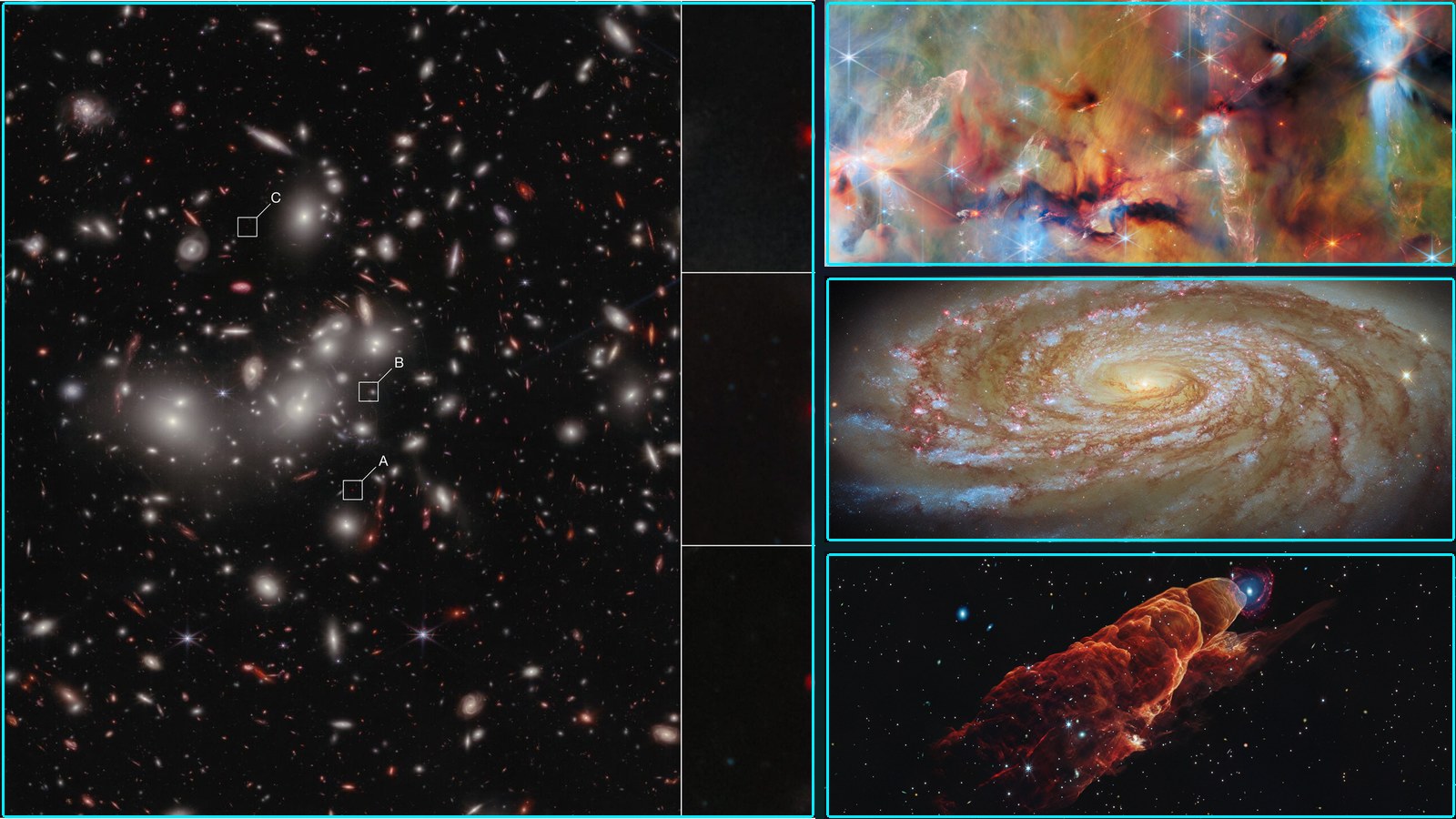
Webb reveals black hole that formed before its galaxy (Esa.Int)
Summary: The James Webb Space Telescope has provided the first direct mass measurement of a supermassive black hole in the early universe, within galaxy Abell2744-QSO1. The data shows the black hole, at roughly 50 million solar masses, comprises about two-thirds of the galaxy’s total mass and is surrounded by pristine, low-metallicity gas. This extreme mass ratio and elemental composition indicate the black hole formed before its host galaxy, likely via a primordial or direct-collapse mechanism, not from stellar evolution.

Why it matters: It challenges the standard model of galactic evolution where black holes grow within galaxies, forcing a re-evaluation of supermassive black hole origins and their role in early cosmic structure formation.
Context: Webb’s discovery of numerous ‘Little Red Dots’ has hinted at early, massive black holes, but previous mass estimates were indirect and relied on local-universe assumptions.
"Webb reveals black hole that formed before its galaxy Using the unprecedented imaging and spectroscopic power of the NASA/ESA/CSA James Webb Space Telescope, researchers have mapped the motion and composition of gas." — ESA.INT
Commentary: The direct, kinematics-based measurement validates Webb’s earlier indirect findings, reducing uncertainty about early-universe black hole masses. The implied formation pathway—primordial or direct collapse—shifts the research focus from growth models to seed origin theories. For mission planning, this underscores the critical role of Webb’s integral field spectroscopy in resolving fundamental astrophysical questions that were previously speculative.
Date: Wed, 27 May 2026 17:00:00 +0200
URL: https://www.esa.int/Science_Exploration/Space_Science/Webb/Webb_reveals_black_hole_that_formed_before_its_galaxy
AI Sentiment Score: Negative (71%)
AI Credibility Score: 10.0/10 — High
Scores and text generated by AI analysis of the source article indicated.
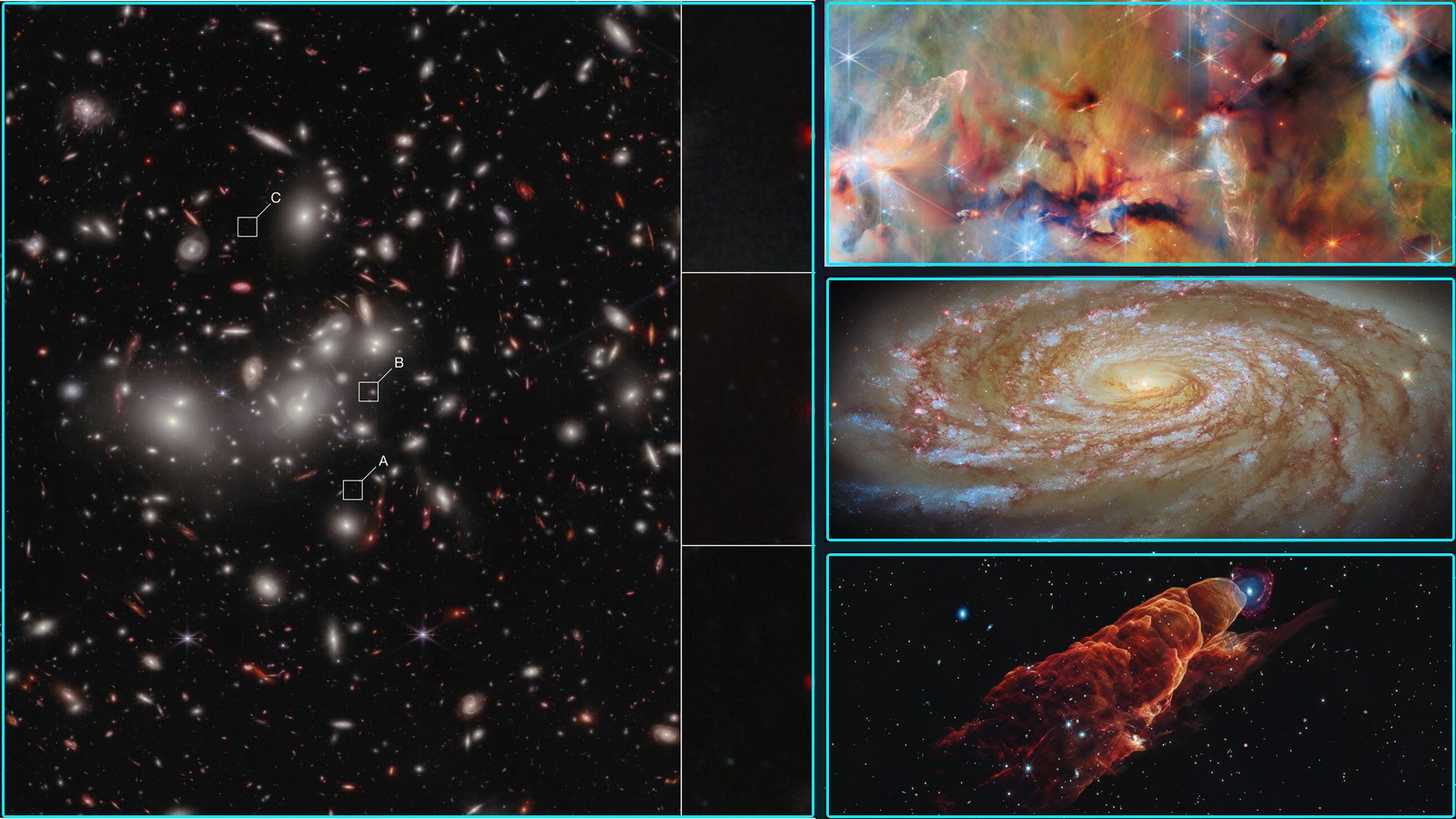
Webb unveils young stars across every stage of formation (Esa.Int)
Summary: The James Webb Space Telescope has imaged a northern portion of the Orion Molecular Cloud 2 (OMC-2), located 1,280 light-years away. The observation captures a 150-light-year-wide cross-section containing every stage of star formation, from embryonic protostars to pre-main sequence stars. The data, collected under programme #5804, is intended to study how stellar outflows influence star formation and the chemistry of future planetary systems. This region serves as a nearby laboratory for understanding stellar evolution.

Why it matters: It provides a contiguous, high-resolution dataset of a star-forming region’s entire lifecycle, enabling comparative astrophysics on processes like accretion, outflow feedback, and disk chemistry that are otherwise studied in isolation.
Context: Webb’s infrared capability systematically maps regions opaque to visible light, turning molecular clouds like OMC-2 from theoretical models into observable laboratories for stellar physics.
"Every stage of star formation – from the youngest stellar embryos, to protoplanetary discs, to newly-minted pre-main sequence stars – is contained within just this scene, which stretches 150 light-years across." — ESA.INT
Commentary: The operational significance is Webb delivering on its core infrared promise: turning a single field of view into a time-lapse of stellar evolution. For mission planners, this validates the targeting strategy for programme #5804, where proximity enables detailed spectroscopy of outflows and disk chemistry—data that will constrain models of planetary system formation for years.
Date: June 05, 2026 04:00 AM ET
URL: https://www.esa.int/ESA_Multimedia/Images/2026/06/Webb_unveils_young_stars_across_every_stage_of_formation
AI Sentiment Score: Positive (50%)
AI Credibility Score: 10.0/10 — High
Scores and text generated by AI analysis of the source article indicated.
Journey to the Center of the Virgo Cluster (Nasa.Gov)
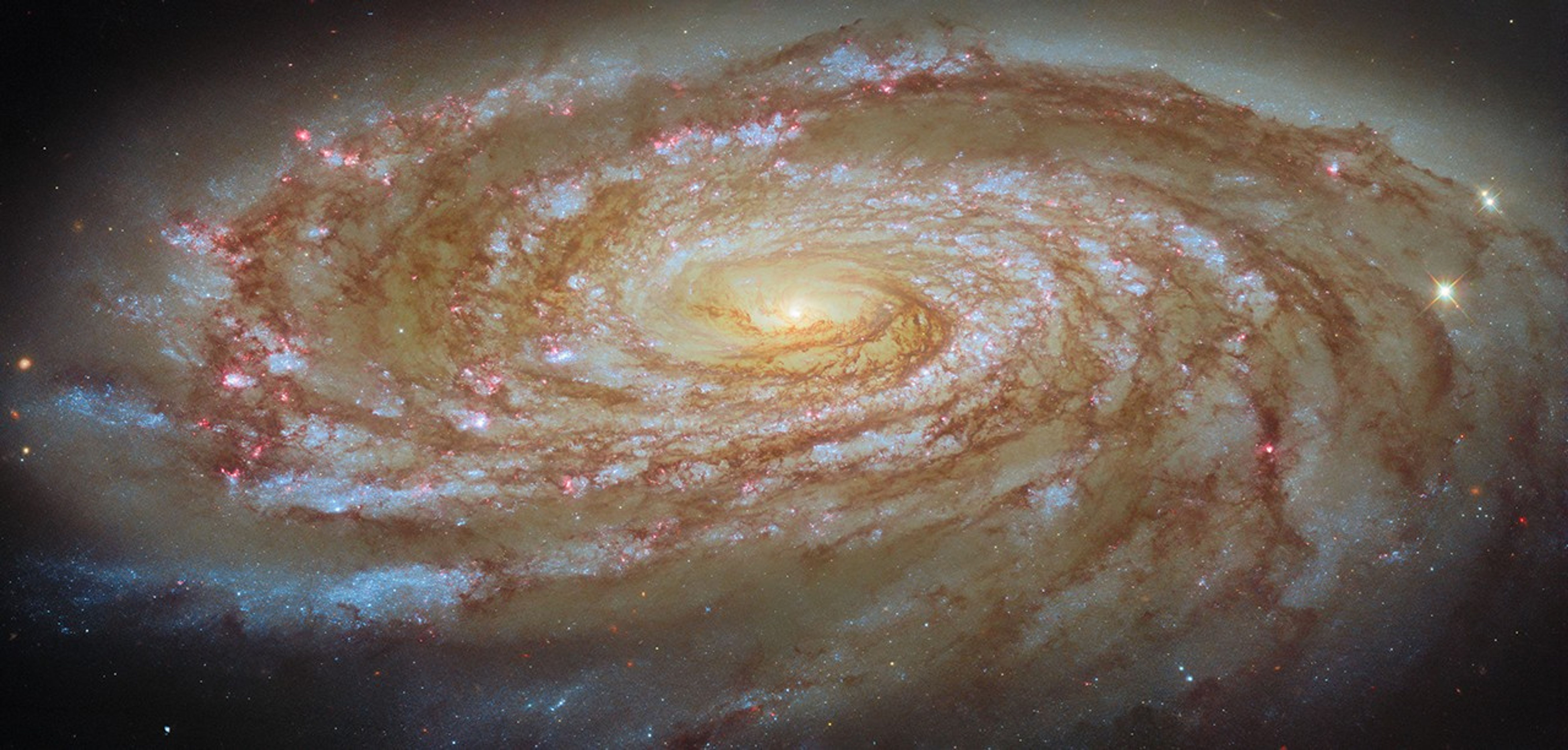
Summary: NASA/ESA Hubble Space Telescope imagery released on May 29, 2026, details Messier 88 (M88), an active spiral galaxy 63 million light-years distant. The galaxy’s core hosts a supermassive black hole, estimated at 100 million solar masses, which is actively accreting material and driving outflows of gas.
Why it matters: This observation provides a proximate, high-resolution case study of galactic-scale feedback mechanisms, a critical process in galaxy evolution models.
Context: Hubble continues its extended mission, delivering foundational astrophysical data on active galactic nuclei and their environments, complementing newer observatories.
"M88 is an active galaxy, which means that its center harbors a supermassive black hole that is snacking on gas and dust. Astronomers estimate the black hole is around 100 million times as massive as the Sun, and it appears to be powering outflows of gas from the galaxy’s center." — NASA.GOV
Commentary: The release is a routine data product, not a discovery, underscoring Hubble’s enduring role as a workhorse for detailed morphological analysis. Its value lies in adding another calibrated data point to the census of black hole masses and their observed activity states, informing simulations of baryonic cycles.
Date: Wed, 03 Jun 2026 15:48:44 +0000
URL: https://www.nasa.gov/image-article/journey-to-the-center-of-the-virgo-cluster/
AI Sentiment Score: Negative (60%)
AI Credibility Score: 10.0/10 — High
Scores and text generated by AI analysis of the source article indicated.
Colorful, Chaotic Jupiter (Nasa.Gov)
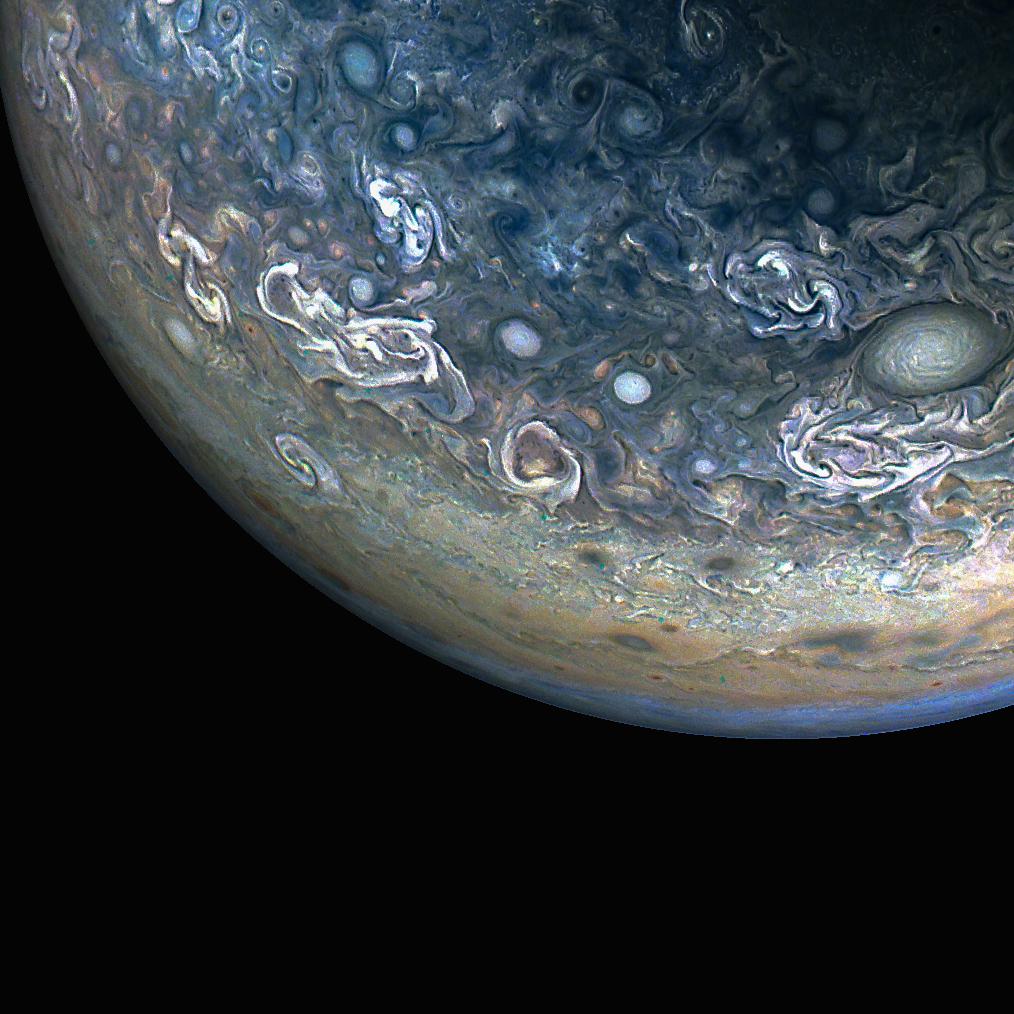
Summary: NASA’s Juno spacecraft continues its extended mission, capturing raw data during its 61st perijove on May 12, 2024. A citizen scientist processed JunoCam data to produce a color-enhanced image highlighting a turbulent ‘folded filamentary region’ in Jupiter’s northern hemisphere. These regions are characterized by the breakdown of the planet’s stable zonal jet streams, leading to chaotic, rapidly evolving cloud structures.
Why it matters: It demonstrates the operational longevity and continued scientific return of the Juno mission, while highlighting the evolving role of citizen science in data analysis and public engagement for planetary science.
Context: Juno entered Jupiter’s orbit in 2016; its mission has been extended multiple times, allowing for an unprecedented long-term study of the gas giant’s atmosphere and interior. The JunoCam instrument was specifically designed with public engagement in mind, providing raw data for amateur processing.
"It provides a detailed view of chaotic clouds and cyclonic storms in an area known to scientists as a folded filamentary region. In these regions, the zonal jets that create the familiar banded patterns in Jupiter’s clouds break down, leading to turbulent patterns and cloud structures that rapidly evolve over the course of only a few days." — NASA.GOV
Commentary: The image is a product of a mature, funded mission operating beyond its primary timeline, yielding new atmospheric dynamics data. The citizen science pipeline, from NASA’s raw data release to public processing, is now a standard, low-cost method for generating supplemental visual products and maintaining mission visibility. The focus on transient filamentary regions underscores a shift from studying Jupiter’s static belts to analyzing its dynamic instability mechanisms.
Date: Thu, 04 Jun 2026 15:58:03 +0000
URL: https://www.nasa.gov/image-article/colorful-chaotic-jupiter/
AI Sentiment Score: Negative (80%)
AI Credibility Score: 10.0/10 — High
Scores and text generated by AI analysis of the source article indicated.
HWO Call for Papers (Science.Nasa.Gov)
Summary: NASA has issued a call for papers for a special issue of the Royal Astronomical Society’s Techniques and Instrumentation (RASTI) journal, focused on software, tools, and methodologies for the Habitable World Observatory (HWO) mission concept. The deadline is 31 August 2026, with guest editors from NASA, STScI, and MIT. The scope includes data simulators, exposure calculators, AI/ML applications, and integrated modeling for mission lifecycle support, indicating a structured, community-driven approach to maturing the flagship observatory concept.
Why it matters: This formalizes the transition of HWO from a high-level goal into a technical engineering and science program, establishing the academic and institutional pathways for community input and tool development that will define the mission’s architecture.
Context: HWO is NASA’s planned flagship successor to the Roman Space Telescope, targeting direct imaging of Earth-like exoplanets. This call follows the 2024 Astrophysics Decadal Survey recommendation and represents the early ‘Phase A’ style concept work, where foundational software and analysis methods are established before major hardware contracts.
"To prepare for HWO, NASA has begun early mission concept maturation activities with extensive community participation to explore the mission trade space spanning science, engineering, and science-engineering interfaces." — SCIENCE.NASA.GOV
Commentary: The call signals NASA is building the HWO toolchain in the open academic literature, not solely inside contractors. This creates a public technical baseline, reduces future procurement risk, and allows a broader pool of researchers to influence design trades. The guest editor list—spanning HQ, a research center, STScI, and MIT—shows a deliberate effort to integrate operations, science, and software perspectives from the start.
Date: Thu, 04 Jun 2026 20:22:06 +0000
URL: https://science.nasa.gov/astrophysics/programs/cosmic-origins/community/hwo-call-for-papers/
AI Sentiment Score: Negative (66%)
AI Credibility Score: 10.0/10 — High
Scores and text generated by AI analysis of the source article indicated.
ASTRA Space Interferometry Webinar, 5 June 2026 (Science.Nasa.Gov)
Summary: NASA’s Cosmic Origins program office is hosting a virtual webinar on June 5, 2026, to survey the state of space-based optical interferometry. The agenda, featuring speakers from JPL, academia, and Goddard, moves from technical primers and mission architectures to specific science applications in exoplanet detection, characterization, and cosmology. The event is framed as both an educational primer and a community discussion to support the ASTRA (Astrophysics Strategic Technology Roadmap Activity) process.
Why it matters: This webinar signals a coordinated push to mature space interferometry from a conceptual challenge to a funded technology roadmap, directly informing NASA’s strategic planning for next-generation astrophysics missions.
Context: Space interferometry, which combines light from multiple telescopes to achieve unprecedented angular resolution, has long been a high-priority but technically daunting goal for astrophysics; past studies (e.g., for the Terrestrial Planet Finder Interferometer) have stalled due to cost and complexity.
"The event is intended both as an introduction for scientists and technologists interested in the field and as a forum for community discussion in support of the ASTRA process." — SCIENCE.NASA.GOV
Commentary: The structured agenda, moving from technology enablers to specific science cases, indicates a methodical effort to build consensus and identify critical path technologies. The inclusion of ASTRA explicitly ties this technical discussion to budget and policy timelines, making it a key signal for institutional and industrial players positioning for future RFPs. The speaker list, heavy with JPL and established principal investigators, suggests this is an effort to align the core astrophysics community behind a viable architecture ahead of a potential major mission proposal in the 2030s.
Date: Thu, 04 Jun 2026 11:22:03 +0000
URL: https://science.nasa.gov/astrophysics/programs/cosmic-origins/community/astra-space-interferometry-webinar-5-june-2026/
AI Sentiment Score: Negative (66%)
AI Credibility Score: 10.0/10 — High
Scores and text generated by AI analysis of the source article indicated.
HWO SIG Seminar, June 10, 2026 (Science.Nasa.Gov)
Summary: NASA’s Habitable Worlds Observatory (HWO) science interest group will hold a seminar on June 10, 2026, featuring updates on conference activities, the project’s technology development (CSIT), its strategic alignment with the ASTRA framework and the Astro2020 Decadal Survey, and findings from pre-proposal instrument studies.
Why it matters: The seminar’s agenda signals the project’s progression from concept to structured planning, revealing key technical and bureaucratic integration points that will shape the next flagship astrophysics mission.
Context: HWO, a direct imaging space telescope concept for studying exoplanet atmospheres, is NASA’s planned successor to JWST, currently in its formative study and technology maturation phase following the Astro2020 Decadal’s recommendation.
"HWO SIG Seminar, June 10, 2026 4 June 2026 Please join us for the next Habitable Worlds Observatory science interest group seminar. 1:00pm – 2:00pm ET Agenda HWO SIG Host: Jessie Christiansen." — SCIENCE.NASA.GOV
Commentary: The inclusion of a session on ASTRA and the next Decadal (Astro2030) is a clear institutional signal; HWO’s architects are already working to embed the project within the next strategic cycle, aiming to preempt budget volatility and ensure continuity beyond the current political and funding window.
Date: Thu, 04 Jun 2026 20:22:31 +0000
URL: https://science.nasa.gov/astrophysics/programs/cosmic-origins/community/hwo-sig-seminar-june-10-2026/
AI Sentiment Score: Negative (50%)
AI Credibility Score: 10.0/10 — High
Scores and text generated by AI analysis of the source article indicated.
HWO SIG Seminar, 10 June 2026 (Science.Nasa.Gov)
Summary: NASA’s Habitable Worlds Observatory (HWO) Science Interest Group will hold a virtual seminar on June 10, 2026. The agenda includes updates on community events at the American Astronomical Society, the status of the Coronagraph and Starshade Instrument Testbed (CSIT), HWO’s positioning within the ASTRA initiative and the Astro2030 Decadal Survey, and a report-out from a pre-proposal instrument study meeting.
Why it matters: This seminar signals the continued, structured progression of HWO from concept to mission definition, providing a key channel for technical and strategic updates to the scientific community ahead of critical development phases.
Context: HWO is NASA’s planned flagship direct-imaging space telescope for the 2040s, designed to characterize exoplanet atmospheres for signs of habitability. Its development follows a staggered, technology-driven path distinct from the rushed development of the James Webb Space Telescope.
"HWO SIG Seminar Habitable Worlds Observatory Science Interest Group Location Virtual dates 10 June 2026 10:00am PT / 1:00pm ET Community HWO SIG Type Seminar Agenda HWO SIG Host: Jessie Christiansen Seminar." — SCIENCE.NASA.GOV
Commentary: The agenda’s focus on CSIT (a critical technology demonstrator), ASTRA integration, and instrument study reports indicates the program is moving from broad architecture studies into specific technology validation and instrument trade-space definition. The scheduled date, over two years out, reflects a deliberate, milestone-driven planning cadence aimed at avoiding the programmatic shocks that have plagued other flagship missions.
Date: Thu, 04 Jun 2026 11:16:14 +0000
URL: https://science.nasa.gov/astrophysics/programs/cosmic-origins/community/hwo-sig-seminar-10-june-2026/
AI Sentiment Score: Neutral (33%)
AI Credibility Score: 10.0/10 — High
Scores and text generated by AI analysis of the source article indicated.
Nighttime Temperatures at the Moon’s North Pole (Science.Nasa.Gov)
Summary: NASA’s Lunar Reconnaissance Orbiter (LRO) has mapped nighttime temperatures at the Moon’s north pole using its Diviner instrument. The data visualization reveals a complex thermal environment, with colder areas shown in blue and purple and warmer areas in orange and red. This contradicts a simple expectation of a stark, hemispheric temperature divide at the poles.
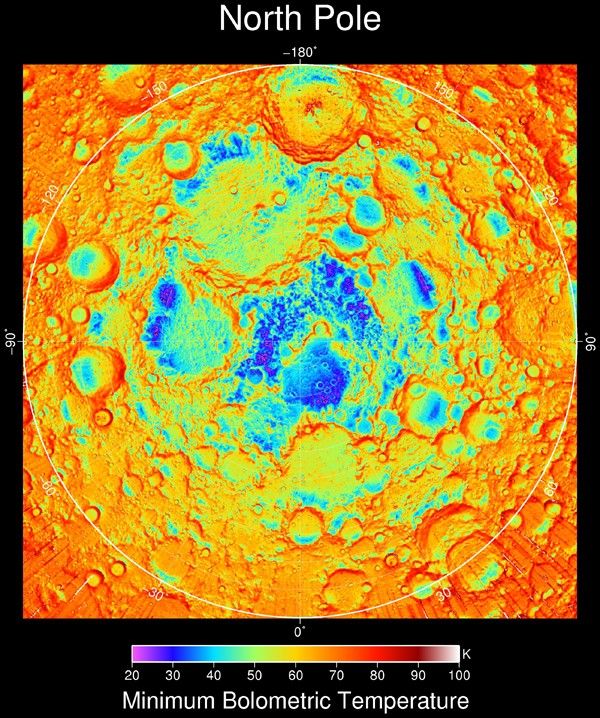
Why it matters: Accurate thermal maps are critical for selecting landing sites, designing hardware, and planning sustained operations for Artemis and commercial lunar ventures, as temperature extremes define survivability and energy budgets.
Context: LRO’s Diviner instrument has been the definitive source for lunar surface temperature data since 2009, informing all modern polar exploration planning. This specific analysis feeds directly into site selection for Artemis III and identifying potential volatile reservoirs in Permanently Shadowed Regions (PSRs).
"At the poles, we might expect that half of the image would be much hotter than the other." — SCIENCE.NASA.GOV
Commentary: The finding that the polar thermal map is not a simple binary split indicates significant local terrain effects—likely from crater shadows creating micro-cold traps and sunlit ridges creating warm anomalies. This granularity forces mission planners to move beyond broad ‘hot side/cold side’ models to site-specific thermal engineering, impacting everything from battery sizing to cryogenic propellant storage for long-duration stays.
Date: Thu, 04 Jun 2026 20:37:27 +0000
URL: https://science.nasa.gov/resource/nighttime-temperatures-at-the-moons-north-pole/
AI Sentiment Score: Negative (50%)
AI Credibility Score: 10.0/10 — High
Scores and text generated by AI analysis of the source article indicated.
Post ID: a9d2c311