

Industry Deals, Finance, and Labor Updates
How LA’s Fight for Its Entertainment Future May Tilt a Tight City Election (Thewrap)
Summary: The Los Angeles mayoral and city council elections are pivoting on the city’s ability to retain film and television production. Incumbent Mayor Karen Bass has made bureaucratic streamlining a core policy, appointing a film liaison with mayoral authority to resolve interdepartmental conflicts, while challengers Nithya Raman and Spencer Pratt offer competing visions of structural reform and aggressive deregulation. In a key Westside council race, incumbent Traci Park highlights her hands-on role in securing ‘Baywatch’ for local shoots, while challenger Faizah Malik links production retention to broader affordability crises for crew members. The political focus follows a recent 10% quarterly increase in local shoot days, attributed to California’s expanded tax credit, which advocates see as a fragile recovery requiring further political action.

Why it matters: The election outcome will determine the operational environment for productions in Los Angeles, affecting permitting timelines, location costs, and the city’s competitiveness against rival jurisdictions.
Context: This follows a two-year decline in local production, a recent state tax credit increase to $750 million, and mounting layoffs, which have galvanized advocacy groups like Stay in LA.
"Just over a year after helping to establish the grassroots group Stay in LA in the aftermath of the Palisades and Altadena wildfires, Kate Holguin is finally starting to see some signs." — THEWRAP
Commentary: The campaigns reveal a shift from pure tax incentive competition to a focus on municipal operational friction. Bass’s case-by-case, liaison-driven model offers immediate relief but depends on executive attention, while Raman’s call for a permanent office and Pratt’s promise of blanket deregulation represent more systemic, but politically risky, reforms. The explicit linkage by candidates like Malik between location filming and crew housing affordability signals that future production retention efforts will be evaluated against broader labor sustainability metrics, not just permit speed.
Date: Mon, 01 Jun 2026 13:23:03 +0000
URL: https://www.thewrap.com/media-platforms/politics/los-angeles-mayor-cd11-election-hollywood/
AI Sentiment Score: Positive (40%)
AI Credibility Score: 10.0/10 — High
Scores and text generated by AI analysis of the source article indicated.
Governor Newsom announces 38 new film projects – from animated … (Gov.Ca.Gov)
Summary: The California Film Commission has allocated tax credits to 38 productions, generating an estimated $796 million in economic activity. This round notably includes the first animated features eligible under the expanded program, such as ‘The Simpsons Movie 2’ and a new DreamWorks film. The slate reflects a mix of major studio tentpoles and independent projects, with significant filming scheduled outside the traditional Los Angeles zone.
Why it matters: The scale and composition of this allocation signals California’s aggressive defense of its production base, directly impacting crew hiring, vendor spending, and location scouting decisions for the next 18-24 months.
Context: California recently more than doubled its annual tax credit pool to $750 million and expanded eligibility to include animated features, a direct response to runaway production and competition from other states and nations.
"Apr 23, 2026 # Governor Newsom announces 38 new film projects – from animated features to big budget productions and independents – coming to the Golden State What you need to know:." — GOV.CA.GOV
Commentary: The 53% year-over-year increase in approved projects demonstrates the immediate pull-through of the expanded credit. For below-the-line labor and regional vendors, the mandated 463 out-of-zone filming days represent a deliberate policy shift to distribute economic benefits, creating new production hubs and logistical challenges. The inclusion of animation features locks in high-wage, long-term post-production work that was previously at risk of leaving the state. This round solidifies the program as a non-negotiable cost of doing business for studios, effectively subsidizing a significant portion of the California production pipeline.
Date: April 23, 2026 12:00 AM ET
URL: https://www.gov.ca.gov/2026/04/23/governor-newsom-announces-38-new-film-projects-from-animated-features-to-big-budget-productions-and-independents-coming-to-the-golden-state/
AI Sentiment Score: Positive (50%)
AI Credibility Score: 10.0/10 — High
Scores and text generated by AI analysis of the source article indicated.
Governor Newsom announces 38 new film projects – from … (Business.Ca.Gov)
Summary: California’s Film Commission has allocated tax credits to 38 productions, including major studio animated features now eligible for the first time, in its latest funding round. The slate, generating an estimated $796 million in economic activity, signals a strategic expansion of the state’s incentive program to $750 million annually. Key projects include ‘The Simpsons Movie 2’ (20th Century Studios), a DreamWorks Animation feature, and independent productions from Gloria Sanchez Productions and Artists Equity.

Why it matters: The scale and composition of this allocation reveal California’s aggressive counter-programming against out-of-state and international competitors, directly impacting where above-the-line spending and below-the-line jobs are anchored.
Context: The state more than doubled its tax credit pool earlier this year and expanded eligibility to include animated features, a direct response to production flight and a bid to secure high-employment, long-term post-production work.
"# Governor Newsom announces 38 new film projects – from animated features to big budget productions and independents – coming to the Golden State Apr 23, 2026 | Press Release **What you." — BUSINESS.CA.GOV
Commentary: The 53% year-over-year surge in approved projects demonstrates the immediate leverage of the expanded credit, effectively monetizing policy into pipeline. Including animation broadens the program’s reach into a high-wage, vendor-dependent sector, locking in post and VFX workflows. The mix of tentpole franchises and indie productions suggests the commission is balancing job volume with portfolio diversity, though the real test is whether this volume sustains crew availability and mitigates cost inflation.
Date: April 23, 2026 12:00 AM ET
URL: https://business.ca.gov/governor-newsom-announces-38-new-film-projects-from-animated-features-to-big-budget-productions-and-independents-coming-to-the-golden-state/
AI Sentiment Score: Positive (44%)
AI Credibility Score: 10.0/10 — High
Scores and text generated by AI analysis of the source article indicated.
38 Film Projects Receive State Tax Credits to Preserve Local … (Mynewsla)
Summary: The California Film Commission has allocated tax credits to 38 projects, including major animated features from DreamWorks, Disney, and 20th Century Studios, alongside live-action productions. The round is notable for its inclusion of animated features, a category newly eligible under the program’s recent expansion. The approved projects are projected to generate nearly $800 million in in-state economic activity and over 460 filming days outside the Los Angeles studio zone.

Why it matters: The allocation signals where the state is placing its financial incentives to retain high-value production, directly impacting studio financing decisions, crew hiring pipelines, and vendor contracts across California.
Context: California expanded its film tax credit program last year, increasing the annual allocation from $330 million to $750 million to combat runaway production to other states and countries.
"Since the state’s tax credit program was expanded last year in a further effort to curb runaway production, the California Film Commission has approved credits for 147 productions, up 53% from the same period a year ago." — MYNEWSLA
Commentary: The 53% year-over-year increase in approved projects demonstrates the program’s expanded capacity is being utilized, directly translating policy into production volume. The inclusion of animated features marks a strategic broadening of the credit’s scope to capture a high-budget, stable segment of production less tied to physical filming locations, thereby locking in post-production and technical jobs. The emphasis on filming days outside the studio zone indicates the program is successfully achieving its secondary goal of decentralizing economic benefits, which will affect location budgets and regional crew hiring. For studios, this round reinforces California’s renewed competitiveness for tentpole projects, potentially altering the calculus for where to package and finance major features.
Date: April 23, 2026 12:00 AM ET
URL: https://mynewsla.com/hollywood/2026/04/23/38-film-projects-receive-state-tax-credits-to-preserve-local-production/
AI Sentiment Score: Positive (50%)
AI Credibility Score: 10.0/10 — High
Scores and text generated by AI analysis of the source article indicated.
In a first, animated movies receive film tax credits in California (Latimes)
Summary: California’s updated film tax credit program has, for the first time, awarded credits to animated feature films. Walt Disney Co.’s ‘Phineas and Ferb’ and ‘The Simpsons Movie 2,’ along with an untitled DreamWorks project, are among the 38 productions selected in the latest round. The animated awards signal a strategic expansion of the program’s eligibility, directly impacting major studio production planning and location decisions.

Why it matters: This shifts the calculus for where major studios and streamers anchor their high-cost animation pipelines, directly affecting vendor contracts, labor demand, and studio capital allocation for a core revenue segment.
Context: California’s incentive program was bolstered last year to include animation, a sector historically lured by tax credits in other states and countries. This move represents a direct competitive bid to reclaim high-value production work.
"Walt Disney Co.’s “Phineas and Ferb,” “The Simpsons Movie 2” and an untitled DreamWorks movie are the first animated feature films to receive a California tax credit under the state’s updated incentive program." — LATIMES
Commentary: The inclusion of animation transforms the program from a live-action retention tool into a broader offensive play for post-production and high-skill digital labor. Studios will now weigh California’s credits against established offshore hubs, potentially re-concentrating development and early-stage work in-state even if final rendering occurs elsewhere. This creates leverage for local animation and VFX vendors but also pressures them on rates as subsidized demand increases.
Date: April 23, 2026 12:00 AM ET
URL: https://www.latimes.com/entertainment-arts/business/story/2026-04-23/in-first-animated-movies-receive-film-tax-credits-in-california
AI Sentiment Score: Positive (60%)
AI Credibility Score: 10.0/10 — High
Scores and text generated by AI analysis of the source article indicated.
California Film & TV Tax Credit powers 55 major award wins during Governor Newsom’s Administration | Governor of California (Gov.Ca.Gov)
Summary: The California Governor’s office has released a performance report for the state’s Film & Television Tax Credit Program, citing 55 major award wins and $1.9 billion in economic activity from supported productions since 2019. The report explicitly ties creative accolades to job creation and local spending, listing projects like ‘Everything Everywhere All at Once,’ ‘Euphoria,’ and ‘The Studio.’ It follows Governor Newsom’s recent move to more than double the program’s annual allocation to $750 million.
Why it matters: The report provides a concrete ROI narrative for the state’s incentive program, directly linking subsidies to prestige, employment, and economic output, which is crucial for producers justifying location choices and for policymakers defending the program’s expansion.
Context: California’s incentive program, historically smaller than competitors like Georgia and the UK, has been aggressively expanded to recapture production and is now positioning itself as a premium, talent-centric alternative.
"Since its inception in 2009, California’s Film & Television Tax Credit Program has generated over $30.6 billion in economic activity and supported more than 228,000 cast and crew jobs statewide. Every $1 in credits has historically returned $24.40 in output, $16.14 in GDP, and $8.60 in wages." — GOV.CA.GOV
Commentary: The release is a strategic political document, weaponizing award season success to preempt criticism of the expanded $750 million annual credit. It signals to studios and streamers that California intends to compete on quality and stability, not just cost, leveraging its talent base as a non-portable asset. For below-the-line labor and local vendors, the amplified program represents sustained, high-value work, but also increases pressure to meet the state’s new diversity and safety program requirements tied to the funds.
Date: April 6, 2026
URL: https://www.gov.ca.gov/2026/04/06/california-film-tv-tax-credit-powers-55-major-award-wins-during-governor-newsoms-administration/
AI Sentiment Score: Positive (50%)
AI Credibility Score: 10.0/10 — High
Scores and text generated by AI analysis of the source article indicated.
Writers Guild members ratify new contract with studios – LA Times (Latimes)
Summary: The Writers Guild of America has ratified a new four-year contract with the AMPTP, securing over 90% member approval. Key provisions include a significant studio-funded healthcare plan, increased residual rates with a ‘success bonus’ for top streaming shows, and new language governing AI training. The deal introduces member healthcare contributions for the first time and raises the earnings threshold for coverage. This agreement, concluded swiftly ahead of the May 1 contract expiration, sets the first major benchmark in this year’s Hollywood labor negotiations.

Why it matters: The contract establishes the new financial and structural baseline for writing labor costs, directly impacting studio and streamer P&Ls, and sets a precedent for ongoing SAG-AFTRA and DGA negotiations.
Context: This ratification follows a pattern of guilds securing stronger streaming residuals post-2023 strikes, but introduces novel cost-sharing in healthcare and a longer contract term.
"Members of the Writers Guild of America have officially ratified their newest contract with the Alliance of Motion Picture and Television Producers. More than 90% of the 11,000 voting members in both." — LATIMES
Commentary: The four-year term locks in labor stability but reduces near-term leverage for writers as the industry’s economic model continues to shift. The ‘success bonus’ is a targeted win, effectively creating a tiered residual system that rewards mega-hits, aligning writer compensation more closely with platform performance metrics. The mandatory member healthcare contribution, while offset by studio funding, signals a move toward cost-sharing that other guilds may now confront. The swift ratification suggests the WGA leadership prioritized securing the foundational deal to pressure SAG-AFTRA, making the actors’ subsequent demands the next critical pressure point for studios.
Date: April 24, 2026 12:00 AM ET
URL: https://www.latimes.com/entertainment-arts/business/story/2026-04-24/writers-guild-members-ratify-new-contract-with-studios
AI Sentiment Score: Negative (57%)
AI Credibility Score: 10.0/10 — High
Scores and text generated by AI analysis of the source article indicated.
WGA ratifies new four-year deal with studios – Reel 360 News (Reel360)
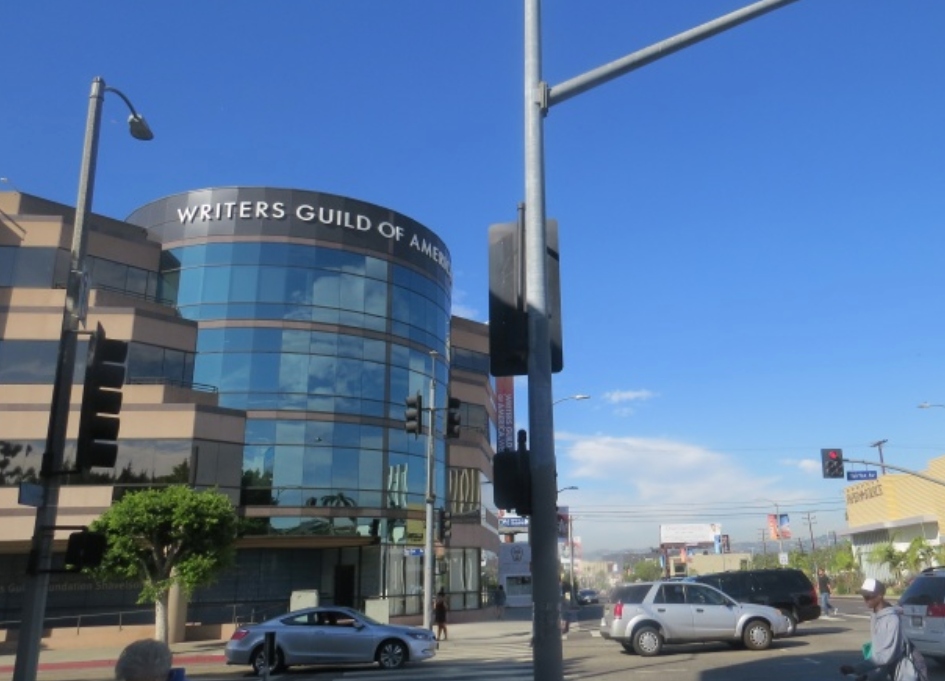
Summary: The Writers Guild of America has ratified a new four-year Minimum Basic Agreement with the Alliance of Motion Picture and Television Producers, effective May 2026 through May 2030. The deal introduces significant structural changes to the WGA health plan, including individual premiums and higher deductibles, in exchange for an estimated $321 million in new funding from the studios. It also increases the streaming success bonus and preserves staffing minimums, while AI provisions remain unchanged from the post-2023 strike status quo.
Why it matters: This contract sets the financial and operational template for the next production cycle, directly impacting project budgeting, staffing models, and the health care calculus for freelance writers.
Context: This is the first major guild agreement in the 2026 bargaining cycle, establishing a baseline for ongoing SAG-AFTRA and DGA negotiations.
"The Writers Guild of America (WGA) has officially ratified a new four-year Minimum Basic Agreement with the major studios, approving a deal that introduces significant changes to its health plan while securing." — REEL360
Commentary: The health plan restructuring shifts more financial risk onto individual writers, a significant concession that studio negotiators will likely reference in talks with other guilds. The $321 million funding injection stabilizes the plan but institutionalizes higher out-of-pocket costs, altering the freelance economics for mid-career and episodic writers. The preservation of staffing minimums and the increased streaming bonus signal a continued, if incremental, push for structural gains in the streaming era, while the AI status quo indicates both sides are deferring the most contentious training compensation fights.
Date: April 25, 2026 12:00 AM ET
URL: https://reel360.com/article/wga-ratifies-new-four-year-deal-with-studios/
AI Sentiment Score: Positive (50%)
AI Credibility Score: 10.0/10 — High
Scores and text generated by AI analysis of the source article indicated.
The New Four-Year Agreement Between Hollywood Writers and … (Italymeetshollywood)
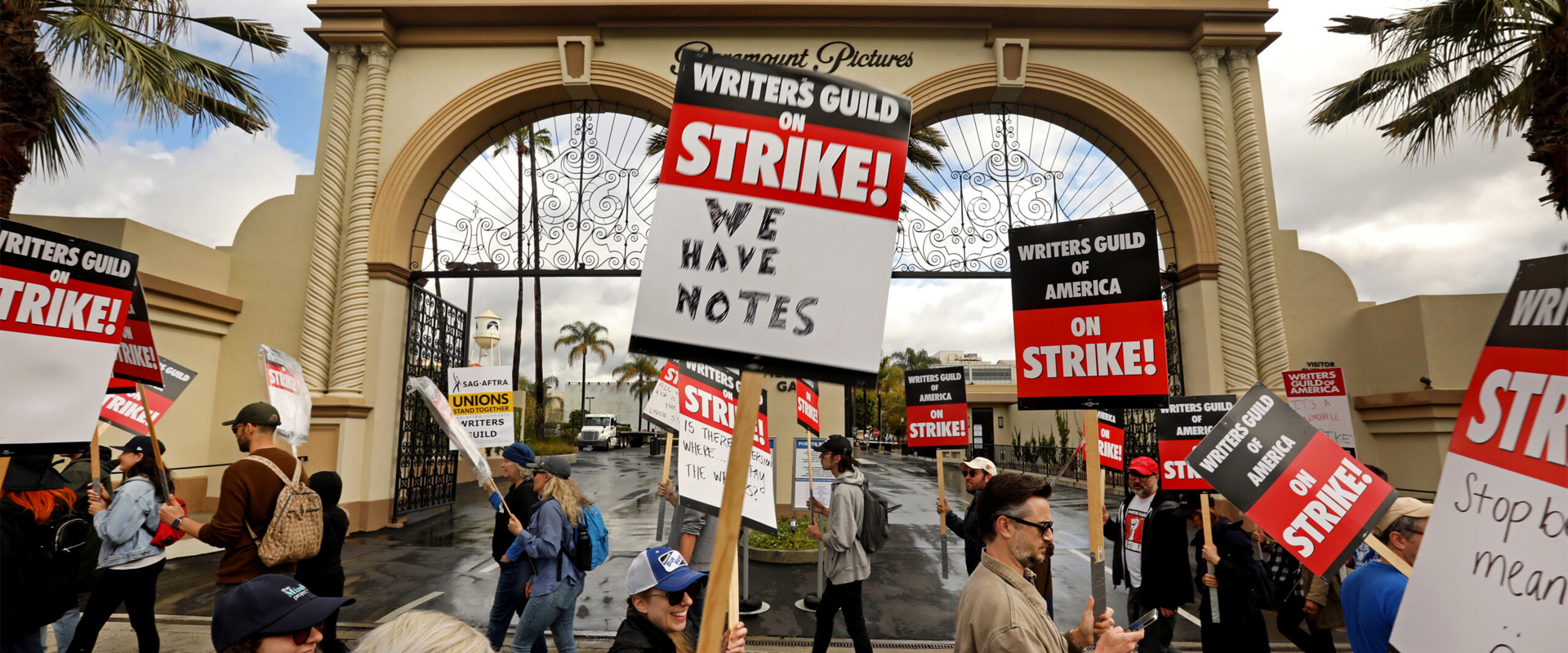
Summary: The WGA and AMPTP have ratified a four-year collective bargaining agreement, effective May 2026 through May 2030. The deal’s extended term was a strategic concession by the WGA to secure a $321 million infusion into its deficit-plagued health fund. It includes progressive minimum wage increases totaling ~10.5% and enhanced streaming residuals, including a higher ‘success bonus.’ The agreement notably does not restrict AI training on writers’ work, mandating only notification and discussion.
Why it matters: The contract’s structure and concessions set a precedent for future labor negotiations, directly impacting project financing, writer compensation models, and the operational stability of guild benefits.
Context: This follows the 2023 strikes and a period of production contraction that severely strained the WGA health fund, making its solvency a primary negotiating priority over shorter-term gains.
"Hollywood has reached a significant labor agreement. The Writers Guild of America (WGA), the writers’ union, and the Alliance of Motion Picture and Television Producers (AMPTP), representing studios and platforms, have concluded." — ITALYMEETSHOLLYWOOD
Commentary: The deal reveals a shift in guild leverage: securing long-term institutional survival (the health fund) traded for a longer contract horizon and limited AI guardrails. This prioritization signals to other unions that existential benefits may outweigh shorter deal cycles. For studios, the four-year horizon provides a predictable labor cost framework, but the lack of substantive AI restrictions leaves a critical tooling and rights issue unresolved for the next negotiation.
Date: April 22, 2026 12:00 AM ET
URL: https://italymeetshollywood.com/2026/04/the-new-four-year-agreement-between-hollywood-writers-and-studios/
AI Sentiment Score: Negative (75%)
AI Credibility Score: 10.0/10 — High
Scores and text generated by AI analysis of the source article indicated.
Screenwriters overwhelmingly approve a 4-year contract with … (Ground.News)
Summary: The Writers Guild of America has ratified a new four-year Minimum Basic Agreement with the Alliance of Motion Picture and Producers, with over 90% approval. The deal, running through May 2030, includes a $321 million infusion for the guild’s health plan and maintains the AI protections established in 2023. It also introduces a $75 monthly individual premium starting in 2027 and raises streaming success bonuses to 75% of base residuals.

Why it matters: This contract sets the financial and regulatory floor for writing labor for the next four years, directly impacting development budgets, production timelines, and the leverage of other guilds entering negotiations.
Context: This follows the 2023 strike cycle and its hard-won AI protections, with the current focus shifting to stabilizing the guild’s healthcare fund amid industry contraction.
"# Screenwriters overwhelmingly approve a 4-year contract with Hollywood studios ## The accord includes a record $321 million health-plan infusion and new minimum pay rules, while leaving AI protections largely intact. -." — GROUND.NEWS
Commentary: The overwhelming ratification and AMPTP’s conciliatory language suggest a deliberate industry pivot toward labor stability to rebuild the production pipeline. The $321M health plan bailout, funded by studios, is a direct subsidy for industry retention, while the preserved AI guardrails offer producers clarity on tooling limits. This deal pressures SAG-AFTRA and the DGA to secure comparable financial terms without reigniting the existential AI debates settled last cycle.
Date: April 25, 2026 12:00 AM ET
URL: https://ground.news/article/the-wga-amptp-deal-reflects-a-major-shift-in-hollywoods-labor-talks
AI Sentiment Score: Negative (50%)
AI Credibility Score: 10.0/10 — High
Scores and text generated by AI analysis of the source article indicated.
WGA Members Ratify Contract with Hollywood Studios – MyNewsLA.com (Mynewsla)
Summary: The Writers Guild of America has ratified a new four-year contract with Hollywood studios, with 90.4% of voting members approving the deal. The agreement secures significant new funding for the union’s health plan and includes wage and residual improvements. The contract will govern writer employment through May 1, 2030.

Why it matters: The ratification solidifies labor stability for the core creative pipeline for the next four years, locking in cost structures and health plan obligations for studios and streamers.
Context: This concludes the 2026 round of WGA negotiations, which focused heavily on shoring up the union’s health fund after the strains of the previous contract cycle and industry contraction.
"These increases and diversions are projected to result in a total of at least $321 million in additional contributions to the Health Fund over the term of the agreement, including $280 million in new contributions from the companies." — MYNEWSLA
Commentary: The $280 million in new company contributions represents a concrete, locked-in transfer of risk from the union’s benefit plan back to the studios, a major shift in financial liability. This establishes a higher baseline for future IATSE and DGA negotiations, where health funding is also a primary pressure point. For development executives, the certainty of labor costs through 2030 allows for longer-term financial modeling, but the redirected funds could pressure margins on mid-budget and unscripted projects where health contributions are a larger line-item percentage.
Date: April 24, 2026 12:00 AM ET
URL: https://mynewsla.com/hollywood/2026/04/24/writers-guild-members-ratify-contract-with-hollywood-studios/
AI Sentiment Score: Negative (55%)
AI Credibility Score: 10.0/10 — High
Scores and text generated by AI analysis of the source article indicated.
WGA Ratifies 2026 Minimum Basic Agreement with AMPTP (Wgaeast)
Summary: The Writers Guild of America has ratified its 2026 Minimum Basic Agreement with the AMPTP, securing a four-year contract through May 2030. The deal passed with over 90% approval, locking in a 10.5% minimum increase over the term and significant new health plan funding. Key gains include enhanced streaming residuals, a new minimum for page-one rewrites, and expanded protections against uncompensated work.
Why it matters: This contract sets the baseline cost structure and creative labor terms for all scripted development and production for the next four years, directly impacting studio P&Ls and writer compensation.
Context: This ratification follows the 2023 strike and establishes the first full-term MBA negotiated in the post-peak streaming investment era, testing the stability of the viewership-based bonus model.
"Friday April 24, 2026 # WGA Ratifies 2026 Minimum Basic Agreement with AMPTP LOS ANGELES and NEW YORK (April 24, 2026)—The members of Writers Guild of America East (WGAE) and Writers Guild." — WGAEAST
Commentary: The overwhelming ratification signals a return to stability, but the $280 million health plan injection and refined streaming metrics show the Guild successfully converted post-strike leverage into concrete, costly concessions from producers. The new page-one rewrite minimum and free work protections could force a formalization of development practices, potentially reducing packaging flexibility for studios and agencies. For buyers and financiers, the locked-in 10.5% baseline increase over four years provides cost certainty but reinforces that the era of suppressing writer pay to fund streaming growth is over.
Date: April 24, 2026 12:00 AM ET
URL: https://www.wgaeast.org/wga-ratifies-2026-minimum-basic-agreement-with-amptp/
AI Sentiment Score: Negative (50%)
AI Credibility Score: 10.0/10 — High
Scores and text generated by AI analysis of the source article indicated.
Screenwriters overwhelmingly approve a 4-year contract with … (Local10)
Summary: The Writers Guild of America has ratified a new four-year contract with studios and streamers with 90% approval, concluding negotiations in approximately three weeks. The deal secures a sustainable path for the guild’s Health Fund, provides minimum pay increases, and boosts residuals, particularly for comedy and variety writers. This rapid resolution contrasts sharply with the protracted 2023 strike, signaling a shift in negotiation dynamics as the industry now pivots to talks with actors and directors.
Why it matters: The contract’s swift ratification and specific terms set a new baseline for labor costs and health care obligations, directly impacting project budgeting, development slates, and the financial calculus for studios and streamers heading into negotiations with other guilds.
Context: This follows the 2023 WGA strike, which centered on streaming economics and AI, and occurred amid broader industry contraction and cost-cutting across major studios.
"“In the face of industry contraction and runaway health care cost inflation, writers were able to secure a contract that returns our Health Fund to a sustainable path and builds on gains from the 2023 strike,” WGA West President Michele Mulroney said in a statement." — LOCAL10
Commentary: The overwhelming approval suggests guild leadership successfully framed the deal as a defensive win against austerity, prioritizing health fund stability over more aggressive gains on AI or residuals. The speed of the process indicates studios were motivated to avoid another shutdown, but the focus on shoring up existing benefits rather than expanding them reflects a pragmatic, risk-averse posture from both sides in a contracting market. This establishes a template of managed concessions for the upcoming SAG-AFTRA and DGA negotiations, likely keeping overall labor cost inflation predictable for buyers.
Date: April 24, 2026 12:00 AM ET
URL: https://www.local10.com/entertainment/2026/04/24/screenwriters-overwhelmingly-approve-a-4-year-contract-with-hollywood-studios/
AI Sentiment Score: Negative (50%)
AI Credibility Score: 7.0/10 — Medium
Scores and text generated by AI analysis of the source article indicated.
Screenwriters overwhelmingly approve a 4-year contract … – WKMG (Clickorlando)
Summary: The Writers Guild of America has ratified a new four-year contract with the Alliance of Motion Picture and Television Producers, with 90% of voting members approving the deal. The agreement, reached after just three weeks of negotiations, includes minimum pay increases, enhanced residuals, and crucially, a path to stabilizing the union’s Health Fund. This swift resolution stands in stark contrast to the protracted 2023 strike.
Why it matters: The contract’s terms and its rapid, non-contentious ratification signal a shift in leverage and a new baseline for labor costs and health obligations across the industry pipeline.
Context: This follows the 2023 WGA and SAG-AFTRA strikes, which centered on streaming residuals and AI protections, and precedes upcoming negotiations with the Directors Guild and SAG-AFTRA, setting a pattern for those talks.
"“In the face of industry contraction and runaway health care cost inflation, writers were able to secure a contract that returns our Health Fund to a sustainable path and builds on gains from the 2023 strike,” WGA West President Michele Mulroney said in a statement." — CLICKORLANDO
Commentary: The overwhelming approval indicates guild leadership successfully framed the deal as a defensive win on existential issues like healthcare, rather than expansive new gains. The speed of the process suggests studios, facing a constrained production slate and Wall Street pressure, prioritized labor stability over a protracted fight. This establishes a higher floor for minimums and residuals that will ripple through budgeting for all development and production arms, while shifting the immediate pressure to the DGA and SAG-AFTRA negotiations, where the studios’ willingness to concede on core benefits may be tested.
Date: April 24, 2026 12:00 AM ET
URL: https://www.clickorlando.com/entertainment/2026/04/24/screenwriters-overwhelmingly-approve-a-4-year-contract-with-hollywood-studios/
AI Sentiment Score: Negative (50%)
AI Credibility Score: 10.0/10 — High
Scores and text generated by AI analysis of the source article indicated.
Michael De Luca Warns About the Danger of Hollywood Cutting Development Funds for Original Material: ‘If You Cut Too Deep Your Pipeline Dries Up’ (Variety)
Summary: Warner Bros. Pictures co-chair Michael De Luca used a Produced By conference appearance to deliver a pointed critique of studio risk aversion, framing it as an existential threat to the development pipeline. He argued that cutting investment in original material and new talent creates a vacuum filled by insurgent competitors like A24 and Neon, a cycle he witnessed in the 1980s and sees repeating now with YouTube-bred filmmakers. De Luca quantified the development process, stating the goal is a one-in-five or six greenlight ratio, and warned that sloppy management can worsen it to one-in-ten, making the line item a target for cuts despite its necessity. He implicitly linked this philosophy to recent Warner Bros. missteps, noting the studio’s prior ‘sequels-only’ mandate ‘cost the studio Chris Nolan.’

Why it matters: De Luca’s remarks are a direct warning to studio finance and strategy departments that near-term cost-cutting on development directly undermines long-term viability and cedes ground to more agile competitors.
Context: This follows a period of industry-wide contraction in development spending, a focus on proven IP, and the high-profile departure of key talent like Christopher Nolan from major studios.
"Warner Bros. Pictures chief Michael De Luca offered a master class in being a studio executive during his session Saturday at the Produced By conference hosted by the Producers Guild of America." — VARIETY
Commentary: De Luca is performing a public course-correction for Warner Bros., explicitly tying past financialization (the ‘sequels-only’ mandate) to talent defection and competitive erosion. His operational math—the one-in-five greenlight target versus a one-in-ten waste ratio—provides a concrete metric for development executives to defend their budgets. By championing YouTube auteurs, he’s not just praising new talent but signaling a necessary shift in development sourcing and audience calibration, moving away from traditional test screenings toward built-in, social-media-native audiences.
Date: Sat, 30 May 2026 23:04:58 +0000
URL: https://variety.com/2026/film/news/michael-de-luca-obsession-backrooms-warner-bros-new-line-1236763195/
AI Sentiment Score: Negative (71%)
AI Credibility Score: 10.0/10 — High
Scores and text generated by AI analysis of the source article indicated.
Barry Levinson Signs With United Talent Agency (Deadline)
Summary: Barry Levinson, the Oscar-winning writer-director behind films like ‘Rain Man’ and ‘Diner,’ has signed with United Talent Agency (UTA) for representation across all areas. He remains with his production banner Baltimore Pictures and his legal and personal management teams. The move signals UTA’s continued strategy of acquiring established, high-pedigree talent with active development slates.

Why it matters: For industry professionals, this highlights the ongoing competition among agencies for veteran creators with proven track records and packaging leverage, influencing project flow and financing.
Context: Major agencies frequently recruit legacy filmmakers to bolster their prestige rosters and secure packaging fees on their ongoing and future projects, a key revenue stream in a tightening market.
"United Talent Agency (UTA) has inked Oscar, Emmy, DGA, and WGA-winning writer and director Barry Levinson for representation in all areas." — DEADLINE
Commentary: UTA’s signing is a low-risk, high-signal acquisition aimed at securing the backend on Levinson’s active production pipeline, including features like ‘The Alto Knights.’ It reflects a commissioning logic where a filmmaker’s historical credibility and ongoing relationships (e.g., with De Niro) are valued assets for agencies seeking stable packaging revenue, even more than betting on unproven talent. This reinforces the market’s current risk tolerance: favoring known quantities with operational banners over speculative development.
Date: Mon, 01 Jun 2026 20:01:13 +0000
URL: https://deadline.com/2026/06/uta-barry-levinson-1236937785/
AI Sentiment Score: Negative (50%)
AI Credibility Score: 10.0/10 — High
Scores and text generated by AI analysis of the source article indicated.
Film Financing Intelligence: How Data Is Replacing Guesswork In … (Vitrina.Ai)
Summary: Film financing intelligence platforms are systematically aggregating and structuring data on the five primary sources of production capital—pre-sales, tax incentives, co-production funds, equity, and broadcaster deals. They track financier mandates, deal structures, and co-investment relationships, aiming to replace the months-long, network-dependent search for funding partners with data-driven matching in hours. This shift is driven by the increasing complexity of financing stacks, exemplified by European co-productions averaging 4.2 distinct sources per project.
Why it matters: For producers, financiers, and studio executives, this commoditization of deal-flow intelligence reduces reliance on opaque networks, potentially redistributing packaging leverage and altering risk assessment models.
Context: The independent film financing ecosystem has long been characterized by information asymmetry, where access to capital is gatekept by personal relationships and fragmented market knowledge.
"According to the European Audiovisual Observatory, European co-productions draw from an average of 4.2 distinct financing sources per project — a figure that illustrates how complex modern financing stacks have become." — VITRINA.AI
Commentary: The professionalization of financing data creates a new operational layer, shifting competitive advantage from who you know to who can best parse and act on structured market signals. This could pressure traditional sales agents and packagers to demonstrate value beyond access, while enabling a new cohort of data-literate producers to assemble more competitive, optimized stacks. The long-term implication is a more efficient, but potentially more homogenized, market where projects are increasingly engineered to fit quantifiable financier mandates.
Date: April 28, 2026 12:00 AM ET
URL: https://vitrina.ai/blog/film-financing-intelligence-data-production-funding/
AI Sentiment Score: Positive (42%)
AI Credibility Score: 10.0/10 — High
Scores and text generated by AI analysis of the source article indicated.
Roundup: Industry Analysis & Financing, April 28, 2026 (Freakpulse)
Summary: This week’s analysis reveals a tightening of economic and structural guardrails across the development and financing pipeline. The WGA minimums formalize a two-tier writing economy, while nonfiction shifts toward audience-as-asset models. Independent financing demands verifiable collateral, and a UK policy pivot mandates structured licensing for AI training data, adding new overhead.

Why it matters: These shifts redefine deal leverage, risk assessment, and operational costs for producers, writers, financiers, and post-production vendors.
Context: The industry is moving from speculative, gatekeeper-driven models toward asset-based, audience-focused, and legally structured frameworks in response to financial discipline and technological disruption.
"The filmmakers who will survive, even thrive, in whatever comes next are the ones willing to build a sex toy, build a spreadsheet, build a relationship with equine therapists in every state, and stop waiting for someone to tell them their work is real." — FREAKPULSE
Commentary: The Nonfiction Hot List operationalizes a pivot from finished-film scarcity to audience-as-collateral, directly challenging festival and broadcaster gatekeeping. Combined with the WGA’s bifurcated pay scale and India’s slate-fund co-producer requirement, this signals a broader industry move toward de-risking through pre-validation. The UK’s AI licensing rules will slow tool adoption for smaller vendors while creating a new licensable asset class for archives, further stratifying market access based on legal and financial scale.
Date: April 28, 2026 12:00 AM ET
URL: https://freakpulse.com/2026/04/28/roundup-industry-analysis-financing-april-28-2026-2026-w18-a0ff6310/
AI Sentiment Score: Negative (75%)
AI Credibility Score: 9.4/10 — High
Scores and text generated by AI analysis of the source article indicated.
Development & Production Report · Week 18 · April 30, 2026 (Filmdistribution.Substack)
Summary: The week’s developments center on two structural shifts: the WGA’s ratification of its new MBA removes writers’ strike risk until 2030 and clears the path for SAG-AFTRA negotiations, while Warner Bros. Discovery shareholders approved the Paramount-Skydance acquisition but rejected executive exit pay packages. The Cannes 79 Official Selection is now set, framing a market environment of ‘discipline rather than expansion.’ Meanwhile, UK production volume continues to outperform, with a slate representing £600-800M in aggregate spend, driven by tax reforms and a cluster of major shoots.

Why it matters: For development executives and financiers, these shifts define the near-term operating environment: labor stability, M&A scrutiny, and a disciplined capital landscape heading into the key Cannes market.
Context: The WGA deal sets a precedent for upcoming guild negotiations, while shareholder actions on executive compensation signal increased scrutiny of deal terms beyond pure antitrust. The UK’s production boom is a direct result of deliberate policy incentives.
"The market environment heading into Cannes is being defined as ‘discipline rather than expansion’ — capital remains available but tightly conditional." — FILMDISTRIBUTION.SUBSTACK
Commentary: The ‘discipline’ framing suggests financiers are moving beyond the volume-driven streaming wars into a phase of conditional, franchise- or data-validated investment, as evidenced by the Alcon-Parrot Analytics deal. The UK’s capacity constraints and concentrated spend indicate a production pipeline that is robust but may soon face inflationary pressure on below-the-line costs and crew availability. The shareholder vote on WBD pay packages, while not blocking the deal, introduces a new reputational variable into future M&A, potentially affecting executive retention and negotiation leverage.
Date: April 30, 2026 12:00 AM ET
URL: https://filmdistribution.substack.com/p/development-and-production-report-f64
AI Sentiment Score: Negative (57%)
AI Credibility Score: 10.0/10 — High
Scores and text generated by AI analysis of the source article indicated.
Making It Work: Production Pressure, Test Audiences & Financing Reality | Off The Lot Podcast (Youtube)
Summary: A podcast episode featuring independent filmmakers reveals the practical mechanics of securing film financing and the role of test screenings. The producers detail their repeated, unsuccessful applications for Telefilm Canada’s ‘Remnant’ program funding, despite having a fully financed project. They secured their budget through private investors, who now constitute the film’s sole financial backers. The discussion underscores the gap between public funding mechanisms and the realities of independent production.
Why it matters: For producers and financiers, this highlights the diminishing relevance of certain public funding streams and the critical, hands-on nature of investor relationship management in independent film.
Context: Telefilm Canada’s Remnant program is designed to support productions that have secured most of their financing, but its selection criteria and risk tolerance often diverge from market realities.
"The episode wraps with a deeper discussion on film financing, exploring investor relationships, what makes a project commercially viable, and why building the right partnerships is just as critical as the film." — YOUTUBE
Commentary: The repeated rejections signal a misalignment between Telefilm’s mandate and the operational needs of viable, investor-backed projects, effectively ceding the field to private capital. This shifts leverage to individual investors and necessitates a producer skill set focused on partnership cultivation over grant-writing. The test screening scheduling, mentioned alongside financing, further illustrates the integrated, pressure-driven timeline that defines modern indie production, where market validation and investor confidence are inextricably linked.
Date: April 20, 2026 12:00 AM ET
URL: https://www.youtube.com/watch?v=2S8NU7ex2ng
AI Sentiment Score: Negative (50%)
AI Credibility Score: 10.0/10 — High
Scores and text generated by AI analysis of the source article indicated.
FilmLA Reports Early Signs of Production Growth Across … (Mynewsla)
Summary: FilmLA’s Q1 2026 report shows a 10.7% quarter-over-quarter increase in on-location shoot days, reaching 5,121. The growth is driven by a 45.2% surge in feature film production and a 40.5% rise in TV drama shoots, heavily supported by the state’s tax credit program, which accounted for 21.8% of feature shoot days. However, overall television production remains down 28.4% year-over-year, and the TV reality category continues a steep, multi-year decline.
Why it matters: The data signals a tentative recovery in high-value scripted production in Los Angeles, directly tied to the efficacy of California’s tax incentives, while highlighting persistent structural declines in unscripted and broader television work.
Context: This follows years of production flight to other jurisdictions and industry-wide contraction, making the performance of California’s expanded tax credit program a critical benchmark for local crew employment and studio investment decisions.
"FilmLA found that incentivized projects accounted for nearly 7% of all shoot days taking place in the Greater Los Angeles area, including 21.8% of all feature production and 17.1% of all television production happening on location." — MYNEWSLA
Commentary: The report confirms the tax credit is now the primary lever for anchoring major studio features and returning network TV dramas to LA, effectively subsidizing union job retention. The collapse in reality TV, down 71.1% from its five-year average, underscores a permanent shift in that segment’s cost structure and location strategy, unrelated to incentives. For below-the-line labor and vendors, the bifurcated result means stability is increasingly dependent on securing work on incentivized scripted projects, while commercial and ‘other’ category growth offers a more volatile, lower-budget counterweight.
Date: April 28, 2026 12:00 AM ET
URL: https://mynewsla.com/business/2026/04/28/filmla-reports-early-signs-of-production-growth-across-region/
AI Sentiment Score: Negative (60%)
AI Credibility Score: 10.0/10 — High
Scores and text generated by AI analysis of the source article indicated.
UK to probe Paramount-Warner Bros deal in coming weeks, competition watchdog says | Reuters (Reuters)
Summary: Britain’s antitrust watchdog is expected to launch an investigation into Paramount Skydance’s planned $110 billion acquisition of Warner Bros Discovery in "the coming weeks," a spokesperson said on Monday. Regulatory scrutiny on mega-mergers signals potential deal friction and valuation risk for major studio consolidation plays.
Why it matters: Regulatory scrutiny on mega-mergers signals potential deal friction and valuation risk for major studio consolidation plays.
Context: Antitrust review of Paramount/Skydance’s proposed WBD acquisition suggests operational hurdles ahead of finalization.
"Britain’s antitrust watchdog is expected to launch an investigation into Paramount Skydance’s planned $110 billion acquisition of Warner Bros Discovery in "the coming weeks," a spokesperson said on Monday." — REUTERS
Commentary: The signal is still worth tracking, but the current extraction path did not yield enough body text for a fuller analytical read. The immediate implication is operational rather than speculative: watch how this changes budgets, workflows, or risk assumptions over the next cycle.
Date: April 13, 2026
URL: https://reuters.com/legal/litigation/uk-probe-paramount-warner-bros-deal-coming-weeks-competition-watchdog-says-2026-04-13
AI Sentiment Score: Negative (66%)
AI Credibility Score: 10.0/10 — High
Scores and text generated by AI analysis of the source article indicated.
Prominent Production Company Acquires Worldwide Streaming and … (Evergreenboysstate)
Summary: A major production company has secured global streaming and distribution rights for an animated feature franchise, including existing and future installments, series, and derivative content. The deal’s structure includes performance incentives and milestone-based payments, signaling a shared-risk approach to franchise development. Market analysts view the move as a catalyst for further consolidation within the animation sector as studios seek to bulk up their content libraries.
Why it matters: This acquisition signals a shift in financing and packaging logic for high-value IP, moving toward shared-risk models and incentivizing long-term franchise management over simple asset purchases.
Context: The animation sector is experiencing intense competition for established IP with built-in audiences, driving up acquisition costs and pushing buyers toward more complex, performance-linked deal structures.
"Industry analysts predict that this significant acquisition will catalyze additional consolidation activity within the animation industry as competing studios pursue similar properties to strengthen their content portfolios." — EVERGREENBOYSSTATE
Commentary: The milestone-based payment structure reveals a buyer hedging against overpayment for speculative franchise growth, a marked departure from the blank-check bidding of the peak streaming era. This could pressure sellers to accept more contingent compensation, tying backend participation directly to demonstrable audience engagement and commercial performance. For producers and talent, it means financing confidence is now explicitly linked to detailed, multi-phase rollout plans rather than brand equity alone.
Date: April 29, 2026 12:00 AM ET
URL: https://evergreenboysstate.org/prominent-production-company-acquires-worldwide-streaming-and-distribution-rights-for-animated-feature-property/
AI Sentiment Score: Positive (60%)
AI Credibility Score: 7.0/10 — Medium
Scores and text generated by AI analysis of the source article indicated.
Japan’s K2 Pictures Unveils $33M Fund & Slate Additions Including Takashi Miike’s Kabuki Documentary (Deadline)
Summary: Japanese production and finance house K2 Pictures has closed its first $33 million film fund, backed by institutional investors like Mitsubishi UFJ Bank and the Development Bank of Japan, and secured an additional $67 million in debt financing. The company is positioning this as a structural alternative to Japan’s traditional production committee system, explicitly designed to facilitate international co-productions. Its initial slate, financed through the K2P Film Fund I, includes ten projects ranging from Takashi Miike’s Kabuki documentary to international co-productions with France, Iceland, Brazil, the U.S., and Mexico.

Why it matters: This signals a potential shift in Japanese film financing, creating a new capital pipeline and co-production model that could alter packaging leverage and international rights flows.
Context: The Japanese film industry has long been dominated by the production committee (seisaku iinkai) system, which pools domestic corporate investment but often excludes or complicates foreign equity participation.
"Founded by former Toei executive Muneyuki Kii, the company is pioneering an ambitious new financing model for the Japanese film industry – a film fund backed by institutional investors – providing an alternative to the production committee system, which has worked well for many projects, but restricts international collaboration as non-Japanese entities can’t participate." — DEADLINE
Commentary: K2’s model, if scalable, could recalibrate risk tolerance for mid-budget Japanese films with international appeal, directly impacting commissioning logic for global streamers and sales agents. The slate’s emphasis on co-productions (Japan/France/Iceland, Japan/Brazil/US) demonstrates the fund’s operational mandate to bypass traditional committee constraints. For international financiers and distributors, this creates a new, structured entry point into Japanese content previously gated by domestic corporate alliances.
Date: Sun, 17 May 2026 13:45:00 +0000
URL: https://deadline.com/2026/05/japan-k2-pictures-takashi-miike-shunji-iwai-hiroya-oku-1236907901/
AI Sentiment Score: Negative (50%)
AI Credibility Score: 10.0/10 — High
Scores and text generated by AI analysis of the source article indicated.
Sony’s Swear, Warner’s Wish – The Industry | Substack (Theindustry.Co)
Summary: Warner Bros. Discovery shareholders overwhelmingly approve the Paramount acquisition, pending regulatory scrutiny of a $24bn Middle Eastern investment. Concurrently, Amazon MGM Studios closes a $30M deal for a star-driven rom-com, Focus Features boards a packaged horror project from Curry Barker, and Netflix, Hulu, and Roadside Attractions secure rights to various adaptations and genre films. These moves illustrate a market simultaneously consolidating at the top while dispersing production and acquisition activity across a fragmented buyer landscape.

Why it matters: This signals the risk tolerance and strategic priorities of major studios and streamers, revealing where capital is being deployed and how packaging leverage is shifting in a constrained financing environment.
Context: Major studio consolidation faces heightened regulatory and geopolitical headwinds, while mid-tier and streaming buyers aggressively fill slates with packaged, genre-specific, or IP-driven projects.
"The film is releasing today in theaters in the US. … 99% of Warner Bros. Discovery shareholders voted to greenlight its acquisition by Paramount. Of course, Paramount Skydance Warner Bros. Discovery cannot." — THEINDUSTRY.CO
Commentary: The near-unanimous shareholder vote for the WBD-Paramount deal underscores investor confidence in scale as a survival strategy, but the explicit mention of regulatory and geopolitical friction around the funding source is the real story—it crystallizes the new non-commercial hurdles for mega-mergers. Meanwhile, the flurry of mid-sized deals (Amazon’s $30M rom-com, Focus’s horror package) shows a functioning, if cautious, market for pre-packaged, bankable talent and genre plays, operating in the shadow of the consolidation drama. The adaptation and rights acquisitions (Netflix, Hulu, Roadside) further indicate a continued premium on recognizable IP and proven creative teams as a de-risking mechanism across all budget tiers.
Date: April 24, 2026 12:00 AM ET
URL: https://theindustry.co/p/sonys-swear-warners-wish
AI Sentiment Score: Neutral (33%)
AI Credibility Score: 10.0/10 — High
Scores and text generated by AI analysis of the source article indicated.
Post ID: 4ad34f68