World & Travel
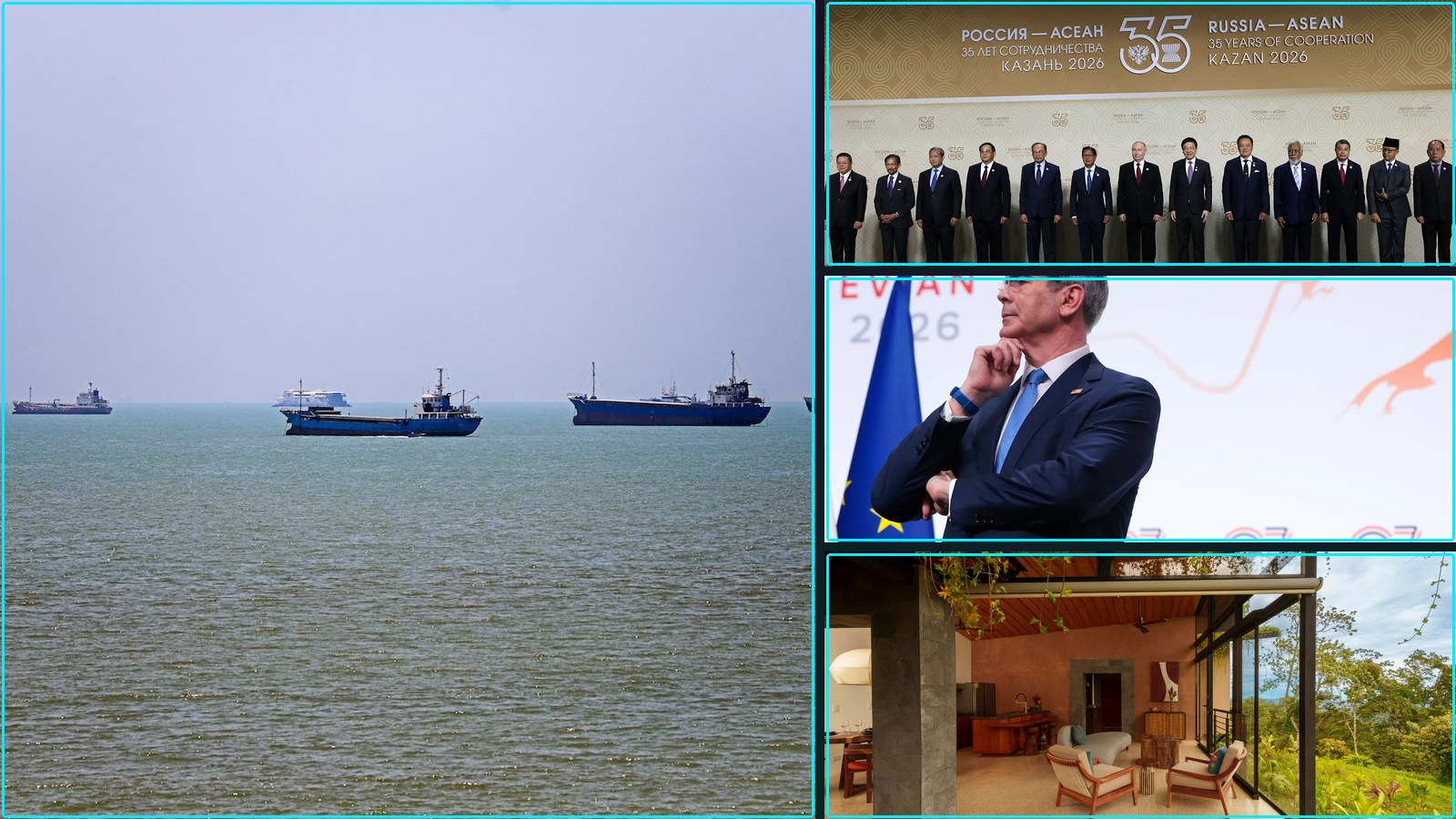
U.S. Strikes Iran Over Attack on Hormuz Ship (Foreignpolicy)
Summary: U.S. forces conducted retaliatory strikes against Iranian missile, drone, and radar sites following an Iranian drone attack on the Singapore-flagged container ship Ever Lovely in the Strait of Hormuz. Washington cited a violation of the ceasefire agreement, while Iran asserts its right to manage traffic in the strategic waterway. The core dispute centers on the vague terms of the Memorandum of Understanding governing passage, with the U.S. pushing for an alternative route to circumvent Iranian control, a proposal Tehran has rejected. Concurrently, the International Maritime Organization has paused evacuation efforts for 115 stranded vessels, affecting 2,500 seafarers.

Why it matters: The escalation directly threatens the free flow of nearly a third of the world’s seaborne oil and challenges the stability of the fragile post-war ceasefire, with immediate consequences for global shipping, energy markets, and regional security architecture.
Context: This clash occurs within the 60-day window of a vague MOU intended to de-escalate a prior conflict, highlighting the unresolved status of Hormuz as a chokepoint and a persistent lever for Iranian geopolitical influence.
"U.S. Strikes Iran Over Attack on Hormuz Ship Washington said Tehran violated the cease-fire. Welcome back to World Brief, where we’re looking at renewed clashes over the Strait of Hormuz, Venezuela’s rising." — FOREIGNPOLICY
Commentary: The U.S. kinetic response signals a shift from diplomatic to military enforcement of the ceasefire’s principles, testing the MOU’s durability. Iran’s concurrent threat to suspend safe passage for ships outside its designated routes creates an immediate operational dilemma for commercial carriers and their insurers. The IMO’s pause on evacuations underscores the real-world paralysis: maritime traffic is hostage not just to attacks, but to the breakdown of security suggests. This moves the conflict from the battlefield back to the negotiating table under a ticking clock, with global trade flows as the stakes.
Date: June 26, 2026 05:35 PM ET
URL: https://foreignpolicy.com/2026/06/26/us-strikes-iran-cease-fire-violation-hormuz-ever-lovely-mou-trump/
AI Sentiment Score: Negative (83%)
AI Credibility Score: 10.0/10 — High
Scores and text generated by AI analysis of the source article indicated.
Weather tracker: Heatwave expected to bring Germany and Poland to 40C (Theguardian)
Summary: A severe heatwave is forecast to push temperatures to 40C (104F) in Germany and Poland this weekend, following extreme heat in France. The Austrian Grand Prix has declared a heat hazard, with race-day temperatures nearly 10C above the venue’s seasonal norm. Concurrently, intense heat across Europe has fueled severe thunderstorms, including a rare, destructive tornado in central Russia’s Sverdlovsk region that injured 16 people and damaged roughly 100 structures.

Why it matters: This intensifying pattern of concurrent heat extremes and severe convective weather directly tests the operational resilience of major events, critical infrastructure, and emergency services across Europe.
Context: This heatwave follows a pattern of increasingly frequent and intense temperature anomalies in central and northern Europe, with climate attribution studies directly linking such events to anthropogenic climate change.
"<p>Austrian Grand Prix declares heat hazard as dramatic rise in temperatures forecast in central and northern Europe</p><p>Temperatures are forecast to rise dramatically in parts of central and northern Europe this weekend as." — THEGUARDIAN
Commentary: The declaration of a ‘heat hazard’ for a Formula 1 race is a procedural milestone, signaling that event risk matrices are being recalibrated in real-time. More consequentially, the co-occurrence of record heat and a powerful, rare tornado in Russia illustrates a breakdown in stable atmospheric regimes, moving the impact beyond public health into acute physical security and property damage. This forces a simultaneous stress test on cooling infrastructure and disaster response capacity, a dual burden for which few regional systems are designed.
Date: June 26, 2026 04:22 AM ET
URL: https://www.theguardian.com/environment/2026/jun/26/weather-tracker-heatwave-germany-poland-40c-temperatures
AI Sentiment Score: Negative (72%)
AI Credibility Score: 10.0/10 — High
Scores and text generated by AI analysis of the source article indicated.
The Intercept Sues to Uncover Secretive Government Anti-Protester Database (Theintercept)
Summary: The Intercept has filed a lawsuit against the Department of Homeland Security to compel the release of documents detailing a secretive database allegedly used to surveil and retaliate against protesters. The complaint cites specific allegations, including the revocation of trusted traveler statuses like TSA PreCheck and Global Entry from individuals observed monitoring immigration enforcement. The legal action, filed in the Southern District of New York, seeks to uncover the scope of DHS’s monitoring of First Amendment activity and its potential weaponization of travel privileges.

Why it matters: The alleged fusion of immigration enforcement, surveillance, and travel control mechanisms creates a chilling effect on civic participation and establishes a precedent for using administrative tools to punish dissent.
Context: This lawsuit follows a pattern of reported actions by DHS under the Trump administration to expand internal monitoring and leverage its authority over border and travel systems against domestic critics.
"The Intercept is challenging the U.S. Department of Homeland Security’s refusal to release public documents relating to an unlawful database intended to stifle protest and punish people who exercise their First Amendment." — THEINTERCEPT
Commentary: The operational shift here is the potential repurposing of DHS’s traveler-vetting infrastructure—designed for external threats—into a domestic political compliance tool. If substantiated, this moves beyond mere surveillance into active, punitive consequence, directly linking protest activity to tangible restrictions on mobility. It signals a bureaucratization of retaliation, where revocation of trusted traveler status serves as a quiet, impactful sanction outside judicial review.
Date: June 24, 2026 03:37 PM ET
URL: https://theintercept.com/2026/06/24/intercept-lawsuit-ice-protesters-surveillance-travel/
AI Sentiment Score: Negative (75%)
AI Credibility Score: 10.0/10 — High
Scores and text generated by AI analysis of the source article indicated.
Russia Makes Inroads in Southeast Asia (Foreignpolicy)
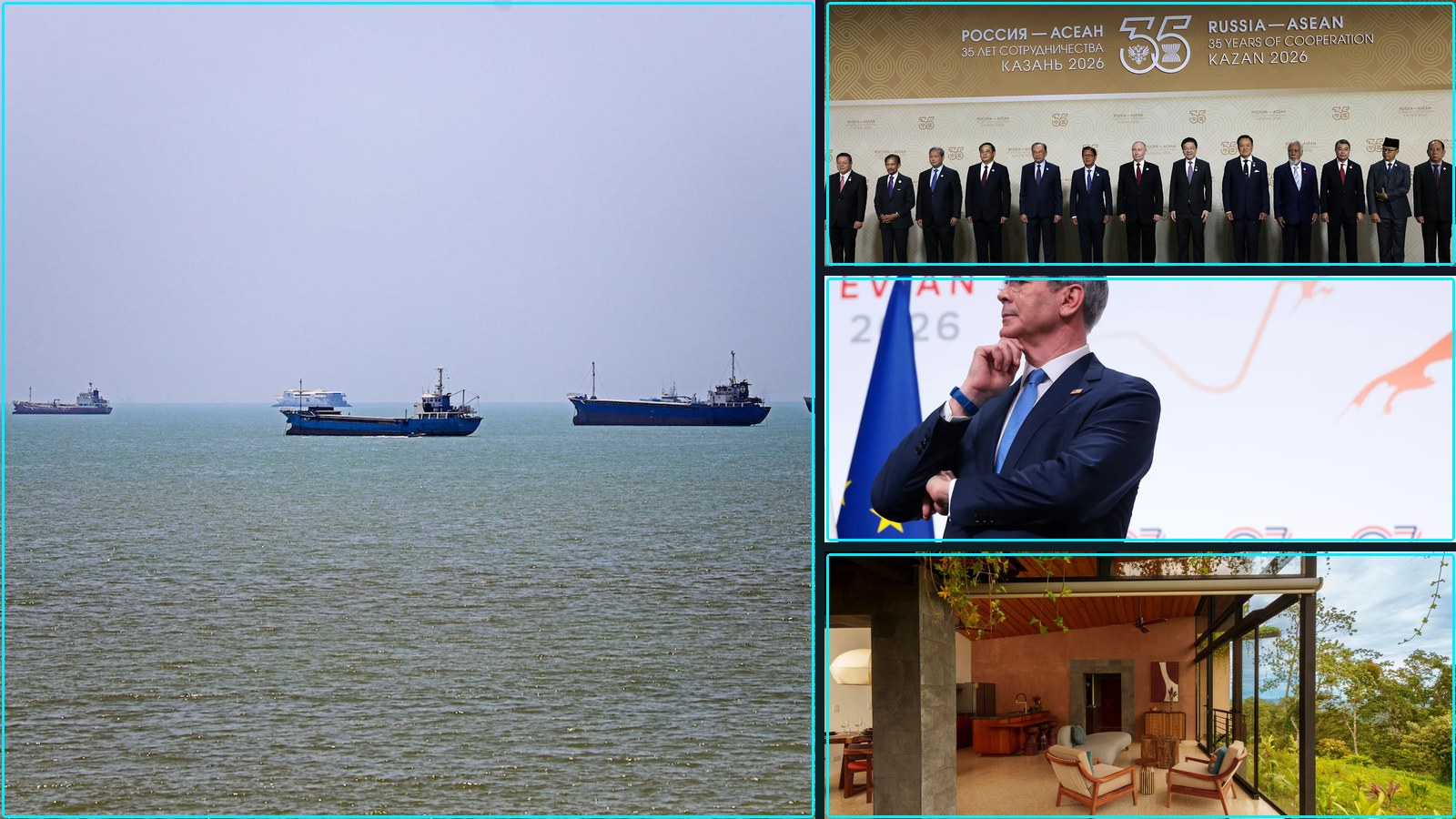
Summary: Russia is leveraging the post-Iran war energy shock to deepen diplomatic and economic ties across Southeast Asia, with energy cooperation as the central offer. At the recent ASEAN-Russia summit in Kazan, leaders from the Philippines, Malaysia, Vietnam, Laos, and even traditional U.S. ally Singapore engaged directly with President Putin, discussing oil and gas deals, nuclear power projects, and visa-free travel. This marks a notable softening of regional posture toward Moscow since the 2022 invasion of Ukraine, driven by pragmatic energy needs. Concurrently, the Philippines raises alarms over potential Chinese moves on Scarborough Shoal, highlighting the region’s complex balancing act between major powers.

Why it matters: This realignment signals a shift in Southeast Asia’s strategic calculus, where immediate energy security and economic pragmatism are beginning to outweigh normative pressures from the West, potentially reshaping supply chains and regional security architecture.
Context: Since its invasion of Ukraine, Russia has systematically courted non-aligned and developing nations, using its energy exports and civilian nuclear technology as diplomatic currency, a strategy amplified by global market disruptions.
"Since its invasion of Ukraine, Russia has deepened its diplomatic engagement with Southeast Asia, with energy—oil and gas or nuclear—a key part of its offer." — FOREIGNPOLICY
Commentary: The summit outcomes illustrate a regional pivot toward transactional, resource-based statecraft, where ASEAN’s ‘centrality’ is increasingly defined by its ability to broker deals with all major powers. This erodes the coherence of a Western-led sanctions regime and creates new, long-term dependencies on Russian energy infrastructure and technology. For the U.S. and its allies, the challenge is no longer merely condemning Russian aggression but competing with a tangible offer that addresses acute developmental needs. The parallel tension over Scarborough Shoal underscores how these bilateral maneuvers occur within a multipolar contest, forcing regional states into a continuous, high-stakes balancing act.
Date: June 24, 2026 01:00 AM ET
URL: https://foreignpolicy.com/2026/06/24/russia-asean-kazan-summit-energy-southeast-asia/
AI Sentiment Score: Negative (50%)
AI Credibility Score: 10.0/10 — High
Scores and text generated by AI analysis of the source article indicated.
Treasury Chief Bessent Defends Trump’s Iran Deal (Foreignpolicy)
Summary: U.S. Treasury Secretary Scott Bessent publicly defended the Trump administration’s post-war memorandum of understanding with Iran, which provides immediate sanctions relief and access to oil revenue in exchange for a pledge to negotiate a final deal. The agreement, criticized for its front-loaded concessions, is framed by the administration as a strategic necessity to end hostilities and secure shipping through the Strait of Hormuz. Critics, including sanctions expert Edward Fishman, argue the sequencing reveals a coercive dynamic where the U.S. is effectively paying for baseline maritime access it previously assured. The deal also unfolds against a backdrop of declining dollar dominance, which Bessent simultaneously advocated for strengthening.

Why it matters: The terms and public defense of this deal signal a shift in U.S. coercive leverage, with immediate implications for global energy security, sanctions policy efficacy, and the strategic balance in a critical maritime chokepoint.
Context: This follows a period of conflict and a U.S.-led blockade, resulting in a tentative agreement that inverts the verification-for-relief structure of the 2015 JCPOA. The administration’s need to sell the deal domestically coincides with midterm political pressures and a longer-term erosion of financial tools.
"Treasury Chief Bessent Defends Trump’s Iran Deal Vice President J.D. Vance isn’t the only one being trotted out to sell an unpopular deal. U.S. Treasury Secretary Scott Bessent defended the Trump administration’s." — FOREIGNPOLICY
Commentary: The Treasury’s defense underscores a reactive, transactional foreign policy where immediate crisis management—securing a shipping lane—trumps long-term nonproliferation architecture. The operational consequence is a precedent where sanctions relief becomes a recurring toll for maintaining fundamental global commerce, weakening a core instrument of U.S. statecraft. This accelerates the very de-dollarization Bessent laments, as rivals see the leverage cost of dollar-based systems rise. For travel and logistics, the deal stabilizes a key route but institutionalizes Iranian control, making future transit costs and insurance premiums contingent on Tehran’s political calculus.
Date: June 24, 2026 02:24 PM ET
URL: https://foreignpolicy.com/2026/06/24/treasury-secretary-bessent-defends-trump-iran-deal-sanctions-relief/
AI Sentiment Score: Negative (66%)
AI Credibility Score: 10.0/10 — High
Scores and text generated by AI analysis of the source article indicated.
Why Kim Jong Un never talks about his mother – or her controversial bloodline (Bbc.Co.Uk)
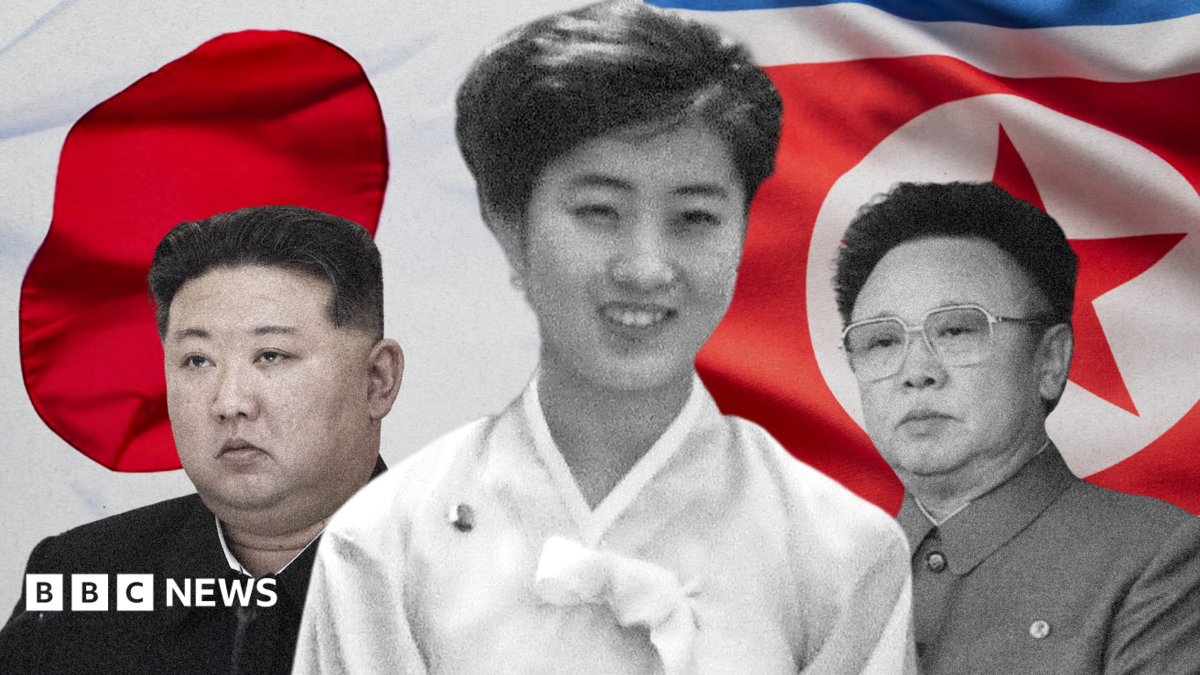
Summary: North Korean leader Kim Jong Un’s legitimacy is anchored in the state-mythologized ‘Mount Paektu’ bloodline, a hereditary narrative of pure Korean origin. His mother, Ko Yong Hui, was a Zainichi Korean born in Osaka, Japan, placing her family in the ‘wavering class’ (jjaepo) within North Korea’s social hierarchy—a status marked by surveillance and limited opportunity. Kim’s rise, as the second son of a mistress from this stigmatized background, was secured only after the disqualification of other potential heirs. His subsequent public elevation of his wife, Ri Sol Ju, who possesses impeccable songbun, and his daughter, is analyzed as a compensatory act for this perceived lineage deficiency.
Why it matters: The fragility of a hereditary dictatorship’s foundational myth has direct implications for regime stability, regional security, and the information warfare landscape.
Context: The Kim dynasty has meticulously constructed a sacralized bloodline narrative to justify its rule, making any contradiction to that purity a systemic vulnerability.
"Why Kim Jong Un never talks about his mother – or her controversial bloodline – Published Among the many mysteries shrouding North Korean leader Kim Jong Un, the secrecy around his mother." — BBC.CO.UK
Commentary: The regime’s intense internal secrecy around Ko Yong Hui functions as a control mechanism, but it also creates a permanent point of leverage for external actors and internal dissent. Kim’s compensatory public family staging is a rare admission, through performative over-correction, of the narrative’s inherent weakness. This underscores that the regime’s greatest perceived threat is not a foreign army but the erosion of its own foundational myth.
Date: June 27, 2026 07:10 PM ET
URL: https://www.bbc.co.uk/news/articles/cpvp3xn489no
AI Sentiment Score: Negative (83%)
AI Credibility Score: 10.0/10 — High
Scores and text generated by AI analysis of the source article indicated.
The Best Resorts in Costa Rica for 2026 (Cntraveler)
Summary: Condé Nast Traveler’s 2025 Readers’ Choice Awards, based on over 757,000 votes, identifies top resorts in Costa Rica. The survey highlights a market segmentation: Arenal and Monteverde for jungle and volcano experiences, the Nicoya Peninsula for bohemian surf culture, and the Papagayo Peninsula for concentrated luxury development. The Osa Peninsula and Uvita remain positioned as remote, wilder alternatives.

Why it matters: The data provides a real-time market map of Costa Rica’s evolving hospitality landscape, signaling where capital, tourist flows, and development pressure are concentrating.
Context: The Readers’ Choice Awards function as a high-volume, sentiment-driven market signal, often correlating with property valuations, development interest, and destination marketing narratives.
"For surf and sun, there are a few options: well-trodden and well-loved Nicoya Peninsula (Santa Teresa, Nosara) has a bohemian vibe, while the Papagayo Peninsula is the go-to for high-end luxury beach resorts, of which new outposts seem to be opening every year." — CNTRAVELER
Commentary: The explicit framing of Papagayo as a ‘go-to’ for luxury, with ‘new outposts… opening every year,’ codifies its status as a primary node for institutional capital and high-margin tourism, likely accelerating its divergence from the ‘bohemian’ Nicoya. This bifurcation suggests a future where Costa Rica’s coastlines serve increasingly segmented, and potentially non-interchangeable, clienteles, with implications for local economies and real estate.
Date: June 24, 2026 03:23 PM ET
URL: https://www.cntraveler.com/gallery/the-best-resorts-costa-rica
AI Sentiment Score: Positive (40%)
AI Credibility Score: 10.0/10 — High
Scores and text generated by AI analysis of the source article indicated.
Watch: BBC reports from La Guaira, one of Venezuela’s worst-hit areas (Bbc.Co.Uk)
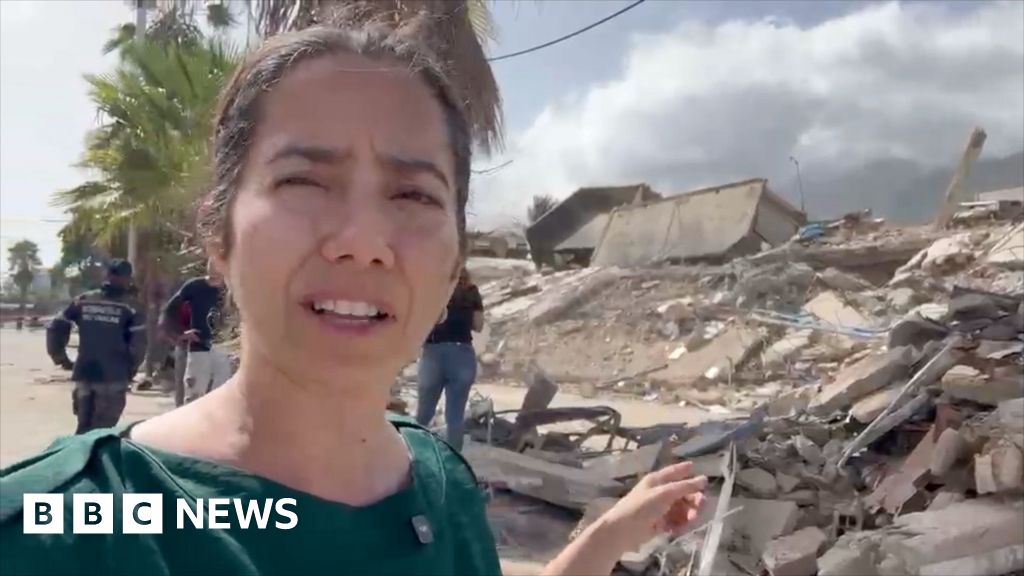
Summary: A BBC report from La Guaira, Venezuela, details the human toll following twin earthquakes. The piece centers on a mother whose two adult daughters are trapped in a collapsed shopping center where they worked, illustrating the localized devastation. International rescue teams with sniffer dogs have arrived, but fears persist that the death toll will rise as recovery efforts continue.
Why it matters: It highlights the operational and humanitarian challenges of disaster response in a state with pre-existing governance and infrastructure fragility, with implications for international aid coordination and regional stability.
Context: Venezuela’s capacity for disaster management is severely strained by years of economic crisis and institutional decay, making external response critical and complicating logistics.
"Watch: BBC reports from La Guaira, one of Venezuela’s worst-hit areas BBC reporter Vanessa Silva visited the state of La Guaira in Venezuela, one of the areas worst affected by the twin." — BBC.CO.UK
Commentary: The report underscores how disaster impact is granular, collapsing systemic failures onto individual lives—here, two young service workers in a non-essential retail space. The arrival of international teams signals both the scale of the crisis and the limitations of local capacity, setting a precedent for future complex emergencies in politically fraught environments.
Date: June 26, 2026 05:44 PM ET
URL: https://www.bbc.co.uk/news/videos/cwy0lw84p3go
AI Sentiment Score: Negative (90%)
AI Credibility Score: 10.0/10 — High
Scores and text generated by AI analysis of the source article indicated.
Post ID: 0401a79c