VFX Craft and Industry Events: From ‘Stranger Things’ to SIGGRAPH
Raising the baa: The Aussies who helped bring The Sheep Detectives to life (Smh.Au)
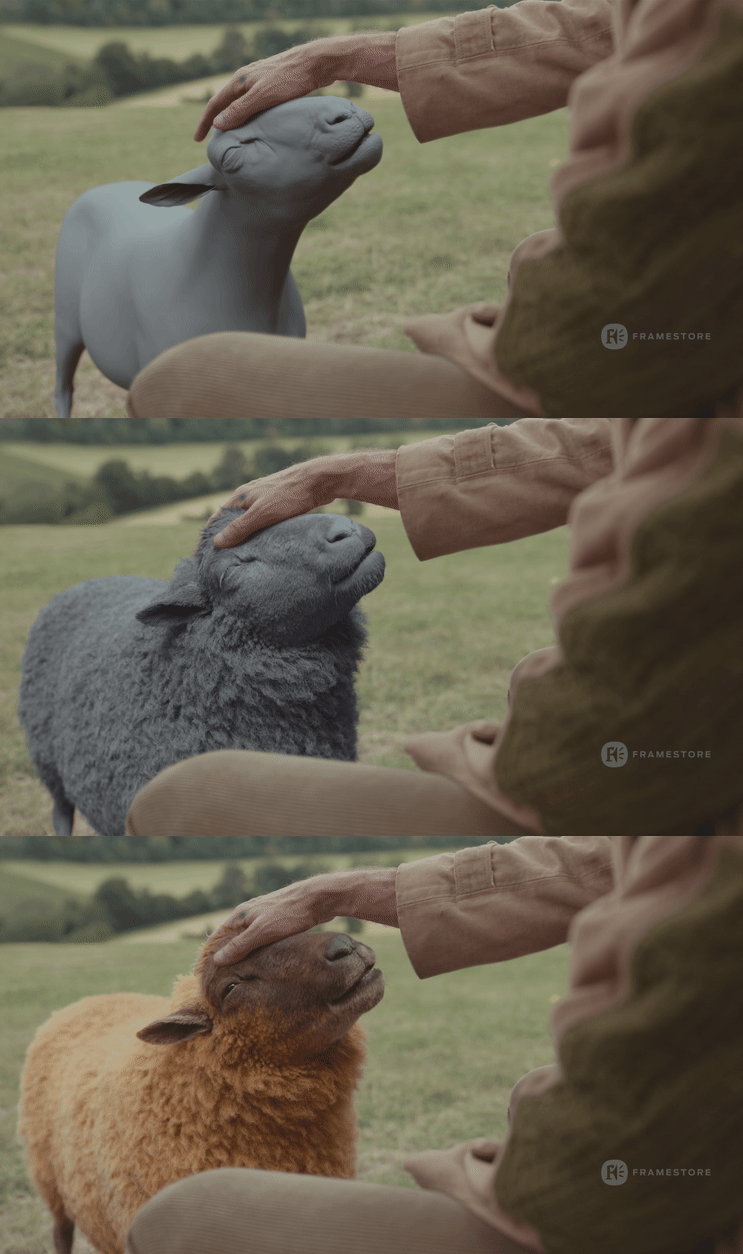
Summary: Framestore’s Melbourne office led VFX for The Sheep Detectives, creating all sheep digitally without a single animal on set. The 135-person team across 12 departments used photogrammetry, muscle simulation, and hand-crafted wool clumps to achieve lifelike results. The project required balancing sheep anatomy with human lip-sync performance, with eye movement prioritized over mouth accuracy. The film’s success demonstrates the viability of fully digital creature work for character-driven narratives, not just spectacle.
Why it matters: This project suggests that high-fidelity digital creatures can carry emotional weight in a comedy-drama, potentially shifting how studios budget for animal performances and expanding the market for creature VFX beyond blockbuster tentpoles.
Context: Framestore’s multi-office pipeline (London, Montreal, Mumbai, Melbourne) handled the year-long project, with Melbourne taking the lead—a notable distribution of creative authority away from traditional VFX hubs.
"The thing that differentiates this from a big tech extravaganza is that connection to the characters on screen." — SMH.AU
Commentary: The pipeline here is instructive: photogrammetry for base geometry, manual refinement for hair and muscle, then a dedicated facial animation team blending sheep anatomy with human performance. For studios, this signals that mid-budget character-driven VFX is now feasible without the overhead of live animals or mo-cap suits. The real cost driver isn’t rendering but the iterative craft of eye and lip sync—a labor-intensive bottleneck that will keep boutique teams like Framestore’s Melbourne office competitive against automated solutions.
Date: June 21, 2026 04:00 PM ET
URL: https://www.smh.com.au/culture/movies/raising-the-baa-the-aussies-who-helped-bring-the-sheep-detectives-to-life-20260618-p60872.html
AI Sentiment Score: Negative (60%)
AI Credibility Score: 7.0/10 — Medium
Scores and text generated by AI analysis of the source article indicated.
Nuke Cloud Render Farm: Comp Rendering at Scale (2026) (Superrendersfarm)
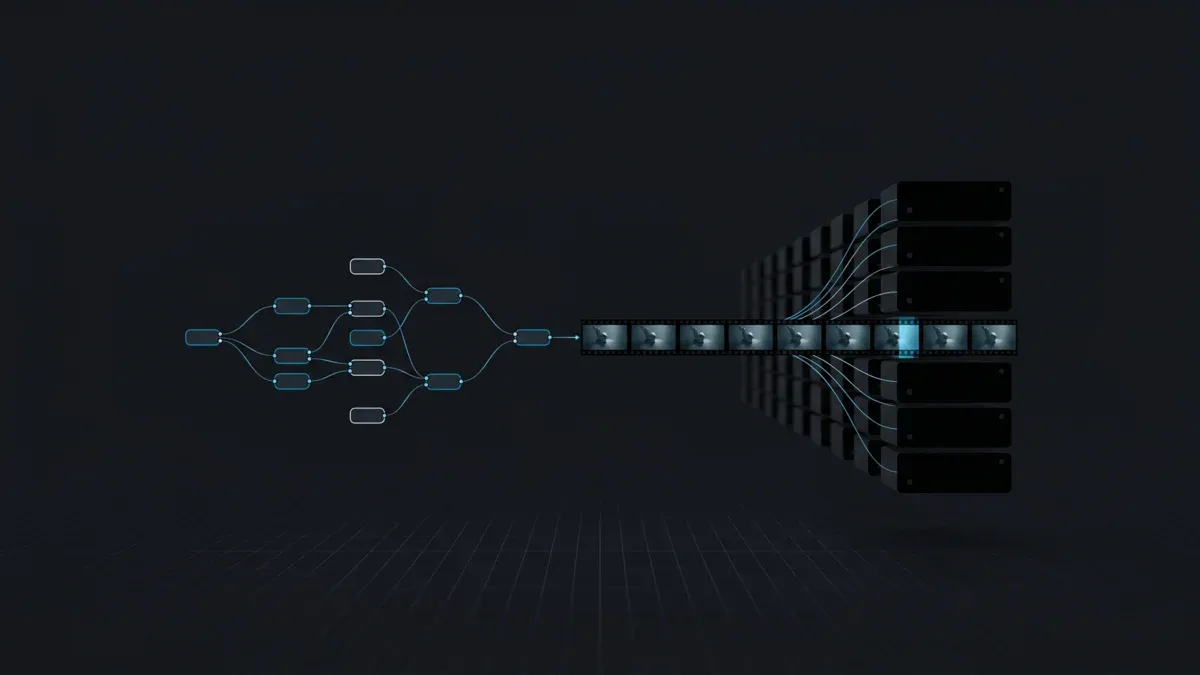
Summary: Super Renders Farm’s 2026 guide details the operational mechanics of rendering Nuke compositing sequences on a cloud render farm, emphasizing that Nuke distributes work by frame range rather than spatial tiles, making it embarrassingly parallel. The guide clarifies critical licensing distinctions: Nuke Indie cannot render on external farms, while Commercial, NukeX, and Nuke Studio editions support headless render licenses. It highlights that most Nuke comps are CPU-bound, with GPU acceleration limited to specific nodes like Kronos and Denoise, and that dependency issues—particularly OCIO config drift and missing gizmos—cause the majority of farm render failures. The piece serves as a practical pre-submission checklist for studios scaling comp rendering, noting that managed farms handle licensing and environment setup, while per-GHz-hour billing and a $25 test credit lower the barrier for validation.
Why it matters: For VFX supervisors and pipeline TDs, this guide codifies the operational boundaries of cloud-based Nuke rendering, directly impacting throughput planning, licensing budgets, and the decision to invest in GPU vs. CPU capacity for compositing workflows.
Context: As studios increasingly offload comp rendering to cloud farms to free artist workstations, the distinction between Nuke editions and the frame-range distribution model becomes a critical pipeline constraint, especially for shows with tight turnaround on 4K+ deep compositing sequences.
"A 2D comp works differently. The value of any pixel at frame N depends only on that frame’s inputs running through the node tree. Each frame is fully self-contained, which makes a Nuke comp embarrassingly parallel by frame: you can render frame 1 on one machine and frame 200 on another with no coordination between them." — SUPERRENDERSFARM
Commentary: The guide’s emphasis on OCIO config drift as a silent color-mismatch risk is a crucial operational insight for pipeline engineers, as it underscores that farm rendering requires disciplined color management deployment, not just compute scaling. The explicit prohibition of Nuke Indie on external farms is a hard licensing boundary that solo artists and small studios often overlook, potentially stalling their cloud migration. The CPU-centric hardware advice challenges the GPU-first trend in 3D rendering, reminding compositing supervisors to right-size infrastructure to the actual node mix of their comps. For managed farms, the value proposition is clear: they absorb the licensing and environment complexity that DIY cloud setups would otherwise impose on the studio’s own pipeline team.
Date: June 15, 2026 10:12 PM ET
URL: https://superrendersfarm.com/article/nuke-cloud-render-farm-2026
AI Sentiment Score: Negative (83%)
AI Credibility Score: 10.0/10 — High
Scores and text generated by AI analysis of the source article indicated.
Stranger Things VFX Supervisor Betsy Paterson on Amplifying the Imagination (Moviemaker)
Summary: Stranger Things Season 5 VFX supervisor Betsy Paterson details the three-year production cycle behind the show’s most ambitious visual effects, including a de-aged Will Byers, an expanded Upside Down, and the MAC-Z battle sequence. The season required doubling visual complexity from Season 4, with Weta FX and Industrial Light & Magic splitting creature work. Paterson’s team reviewed 200-500 shots per day during post-production, with the MAC-Z sequence assembled from eight pieces of footage into a continuous shot. The show’s intense fan scrutiny forced immediate fixes for continuity errors visible for only two frames.

Why it matters: For VFX professionals, this confirms that top-tier episodic work now demands feature-film R&D cycles, vendor splits between Weta and ILM, and shot volumes that strain traditional review pipelines.
Context: Stranger Things has historically raised the ceiling for episodic VFX complexity each season, with Season 4’s scale already pushing vendor capacity and post schedules.
"When fans obsess over the spectacle of Stranger Things, they’re focusing on monsters bursting through walls, a parallel dimension bleeding into the town of Hawkins, or a seemingly impossible “one-shot” battle sequence." — MOVIEMAKER
Commentary: The 200-500 shot daily review cadence signals a throughput ceiling that forces tradeoffs between quality and schedule, even with top vendors. The de-aging R&D starting before cameras rolled is becoming standard for legacy IP, but the year-long post cycle suggests episodic VFX is now competing with tentpole features for talent and compute resources. The fan-driven continuity fixes highlight a new QA pressure: social media scrutiny now functions as an unpaid QC layer, compressing the window for final delivery.
Date: June 16, 2026 03:49 PM ET
URL: https://moviemaker.com/stranger-things-vfx-betsy-paterson
AI Sentiment Score: Negative (83%)
AI Credibility Score: 7.0/10 — Medium
Scores and text generated by AI analysis of the source article indicated.
VFX Supervisors Explain Why Their Jobs Start Long Before Post-Production — Watch (Indiewire)
Summary: VFX supervisors from major series including ‘Stranger Things’ and ‘Spider-Noir’ explain that their role begins long before post-production, often during pre-production, to coordinate complex sequences across departments and solve budget and timeline constraints. The panel, moderated by IndieWire’s Jim Hemphill, highlighted that VFX teams act as the connective tissue between departments, ensuring that practical and digital elements align from the start. This early involvement is critical for managing the interdependencies of modern high-end television production.

Why it matters: For VFX professionals and production executives, this confirms that the VFX supervisor’s role has shifted from a post-production vendor to a pre-production strategist, affecting staffing models, bidding timelines, and cross-departmental workflows.
Context: Historically, VFX was treated as a post-production fix, but as series like ‘The Mandalorian’ and ‘The Last of Us’ have shown, integrating VFX early reduces cost overruns and improves shot quality. This panel reinforces that trend across a range of genres and budgets.
"By providing your information, you agree to our Terms of Use and our Privacy Policy. We use vendors that may also process your information to help provide our services. This site is." — INDIEWIRE
Commentary: The key operational takeaway is that VFX teams are now de facto production coordinators for complex shots, which changes how studios budget for pre-production labor and how vendors bid on shows. This also raises the ceiling on what showrunners can attempt visually, but it puts pressure on VFX supervisors to develop strong cross-departmental communication skills beyond pure technical expertise. For the industry, this signals a permanent shift toward earlier, more integrated VFX planning, which could reduce last-minute vendor churn but also concentrate power among supervisors who can manage both creative and logistical demands.
Date: June 16, 2026 05:15 PM ET
URL: https://indiewire.com/features/craft/craft-roundtables-vfx-panel-watch-1235200690
AI Sentiment Score: Negative (60%)
AI Credibility Score: 10.0/10 — High
Scores and text generated by AI analysis of the source article indicated.
SIGGRAPH 2026 Computer Animation Festival Celebrates Global Storytelling, Alongside a Blockbuster Production Sessions Lineup (Prnewswire)
Summary: SIGGRAPH 2026 has expanded its Computer Animation Festival to include films longer than 10 minutes, drawing a broader range of submissions. The Best in Show winner, ‘Apart,’ blends four animation techniques across 18,000 frames from a team of over 250 creatives. The Production Sessions lineup features Wētā FX’s deep dive into ‘Avatar: Fire and Ash,’ detailing 3,100+ shots and a new simulation framework called Kora. Other sessions cover NASA’s Artemis II visualization, Pixar’s ‘Hoppers’ pipeline, and ILM’s work on ‘The Mandalorian and Grogu.’

Why it matters: For VFX and animation professionals, the expanded festival eligibility signals a shift toward longer-form storytelling in the festival circuit, while the Production Sessions reveal concrete pipeline innovations—like Wētā’s Kora framework and Pixar’s cross-departmental stylization—that directly impact how complex shots are built and staffed.
Context: SIGGRAPH’s Computer Animation Festival is an Academy Award-qualifying event, traditionally focused on short films under 10 minutes. The 2026 expansion reflects industry trends toward longer animated narratives and hybrid techniques, as seen in the multi-technique approach of ‘Apart.’
"The Academy Award-winning team will detail how it blended extensive native stereo photography with fully digital, performance-captured characters and handcrafted every element of the world, from creatures and clans to the film’s titular fire, created in Kora, a new addition to Wētā FX’s global simulation framework, Loki." — PRNEWSWIRE
Commentary: Wētā’s Kora framework, built atop Loki, is a direct response to the growing demand for bespoke simulation tools that handle fire and other complex phenomena at scale—a signal that vendors may need to invest in modular, composable simulation pipelines. Pixar’s session on ‘Hoppers’ suggests that the tension between physical simulation and stylized direction is being resolved through tighter cross-departmental integration, which could reduce iteration cycles. The Google DeepMind session on AI-assisted expressionistic animation, with artists in control as co-designers, indicates that AI tools are being positioned as pipeline accelerators rather than replacements, a framing that may ease adoption concerns among traditional artists. For studios, the takeaway is clear: the next competitive edge lies in proprietary simulation frameworks and hybrid workflows that blend real-time and offline rendering without sacrificing artistic intent.
Date: June 19, 2026 01:03 PM ET
URL: https://prnewswire.com/news-releases/siggraph-2026-computer-animation-festival-celebrates-global-storytelling-alongside-a-blockbuster-production-sessions-lineup-302805557.html
AI Sentiment Score: Negative (75%)
AI Credibility Score: 10.0/10 — High
Scores and text generated by AI analysis of the source article indicated.
SIGGRAPH 2026 Computer Animation Festival Celebrates Global Storytelling, Alongside A Blockbuster Production Sessions Lineup – Animation Scoop (Animationscoop)
Summary: SIGGRAPH 2026’s Computer Animation Festival and Production Sessions program, running July 19-23 in Los Angeles, showcases a global slate of animated storytelling and behind-the-scenes looks at major studio pipelines. The festival expanded eligibility to films over 10 minutes, drawing a broader range of submissions. Key Production Sessions include Wētā FX’s deep dive into ‘Avatar: Fire and Ash’ (3,100+ shots, 2,500 facial motion shots for 30 characters), Pixar’s cross-departmental pipeline for ‘Hoppers’, and ILM’s virtual production workflow for ‘The Mandalorian and Grogu’. The Best in Show winner, ‘Apart’, blends four animation techniques across 18,000 frames by a team of 250+ creatives, while the Best Student Project, ‘Beyond Words’, used a proprietary ‘Hunter’ pipeline with in-house motion capture for 130+ shots.

Why it matters: For VFX and animation professionals, the Production Sessions reveal how leading studios are solving pipeline integration challenges—blending real-time tech, proprietary simulation frameworks, and artist-driven AI—which directly impacts staffing models, tooling investments, and the economics of complex shots.
Context: SIGGRAPH’s Production Sessions have historically been a bellwether for pipeline innovations that later become industry standards, from Wētā’s Loki simulation framework to Pixar’s cross-departmental simulation workflows.
"The Academy Award-winning team will detail how it blended extensive native stereo photography with fully digital, performance-captured characters and handcrafted every element of the world, from creatures and clans to the film’s titular fire, created in Kora, a new addition to Wētā FX’s global simulation framework, Loki." — ANIMATIONSCOOP
Commentary: The expansion to longer films signals a strategic shift for SIGGRAPH’s festival, potentially pulling in more narrative-driven independent work that competes with studio shorts for awards eligibility. Wētā’s Kora addition to Loki suggests a modular approach to simulation that could reduce per-shot costs for fire and fluid effects, a key pressure point in blockbuster VFX. Pixar’s ‘Hoppers’ session on balancing physical simulation with stylized direction is a direct response to the industry’s ongoing tension between photorealism and artistic control. The Google DeepMind session on AI-assisted expressionistic animation, with artists as co-designers, offers a rare glimpse into how major AI labs are positioning their tools for creative workflows rather than replacement.
Date: June 21, 2026 05:15 AM ET
URL: https://animationscoop.com/siggraph-2026-computer-animation-festival-celebrates-global-storytelling-alongside-a-blockbuster-production-sessions-lineup
AI Sentiment Score: Negative (75%)
AI Credibility Score: 7.0/10 — Medium
Scores and text generated by AI analysis of the source article indicated.
Studio That’s Developing ‘Skibidi Toilet’ Movie and TV Projects With Michael Bay Has Raised $25 Million in Funding (Variety)
Summary: Invisible Narratives, the studio developing film and TV projects based on the YouTube phenomenon ‘Skibidi Toilet’ with Michael Bay as creative adviser, has secured $25 million in funding from BC Partners Credit and Verance Capital. The company plans to use the capital to acquire majority ownership of the franchise and scale other digital creator IP into global, multiplatform properties. BC Partners envisions investing over $300 million into the creator economy through this platform. The studio has also appointed Mark Shedletsky as president to lead business operations and M&A strategy.

Why it matters: This signals a formal pipeline for converting viral, low-budget digital content into studio-backed franchises, potentially shifting how VFX and post-production vendors bid on projects—away from traditional IP and toward creator-owned, digitally-native properties with unpredictable shot complexity and tight turnaround expectations.
Context: Invisible Narratives, founded by former Paramount and DreamWorks head Adam Goodman, has been developing ‘Skibidi Toilet’ for two years, amassing 47 million subscribers and 20 billion views, plus licensed Roblox experiences. The company’s ‘tradigital’ model aims to bridge creator agility with Hollywood infrastructure.
"The company that has movie and TV projects in the works based on viral YouTube sensation Skibidi Toilet has just banked a roll of cash — and it’s eyeing additional capital to." — VARIETY
Commentary: For VFX houses and post-production studios, this deal formalizes a new acquisition funnel: creator-owned IP with massive built-in audiences but no traditional development slate. The risk is that these projects demand high-volume, low-margin work to match the rapid release cadence of digital content, while the upside is access to a new class of franchise that bypasses studio greenlight committees. Vendors should watch whether Invisible Narratives prioritizes theatrical-quality VFX or maintains the scrappy, meme-driven aesthetic that defined the source material.
Date: June 16, 2026 08:00 PM ET
URL: https://variety.com/2026/digital/news/studio-skibidi-toilet-movie-michael-bay-invisible-narratives-funding-1236782736/
AI Sentiment Score: Negative (60%)
AI Credibility Score: 10.0/10 — High
Scores and text generated by AI analysis of the source article indicated.
Annecy’s MIFA Bets on Cross-IP, AI and Global Growth Amid Animation Financing Squeeze (Variety)
Summary: MIFA is expanding its Cross IP Area and adding an AI-focused pre-market workshop to address a financing crisis in animation, even as the Annecy festival outgrows its host town. The market is seeing growth from Asian delegations, including first-time participants from Singapore and larger groups from Thailand and Malaysia, while the long-awaited Cité Internationale du Cinéma d’Animation hub aims to make Annecy a year-round animation center. Organizers emphasize that physical markets remain essential for trend identification and collective strategy, despite the rise of online dealmaking.

Why it matters: For VFX and animation studios, the shift toward cross-IP pipelines and AI integration signals new revenue streams and workflow changes, while the financing squeeze may accelerate consolidation or force smaller houses to seek co-production partners.
Context: The global animation sector faces a financing crisis as streaming platforms tighten budgets and traditional broadcasters struggle, pushing markets like MIFA to evolve beyond simple buying and selling.
"The Annecy festival will continue to grow even as the wider animation sector contracts — a tension set to define this year’s Marché International du Film d’Animation (MIFA), which runs June 23-26." — VARIETY
Commentary: The emphasis on cross-IP and AI at MIFA suggests that studios should prepare for pipeline convergence between animation, games, and publishing, which could alter staffing models and tooling requirements. The growing Asian delegations indicate a shift in production geography, potentially offering cost advantages but also requiring new co-production frameworks. The Cité hub’s year-round model may help stabilize local talent pools and reduce the boom-bust cycle of festival-driven work.
Date: June 16, 2026 08:00 PM ET
URL: https://variety.com/2026/film/focus/annecys-mifa-2026-1236782136
AI Sentiment Score: Negative (50%)
AI Credibility Score: 10.0/10 — High
Scores and text generated by AI analysis of the source article indicated.
How Duncan Jones Made ‘Rogue Trooper’ Look Like a Studio Epic on an Indie Budget (Variety)
Summary: Duncan Jones’s ‘Rogue Trooper’ is a CGI animated feature made on an indie budget that looks like a $60M+ studio epic, achieved through a bespoke pipeline that eschews full motion capture and, notably, any AI-generated performances. The production used a black box studio for facial and voice capture, hand-animated body movements, and initially built the film in Unreal Engine before migrating to Maya for final rendering. The film’s indie budget was partly enabled by the SAG-AFTRA strike, which freed up top-tier British talent for voice work under Equity contracts. After four years in production, the film premieres at Annecy without a distributor, relying on CAA to find a buyer.

Why it matters: This production model offers a replicable template for making high-end CGI features outside the studio system, challenging assumptions about minimum viable budgets and the necessity of full mo-cap or AI-driven animation.
Context: The film’s pipeline—facial capture plus hand-animated bodies, with a mid-production engine swap from Unreal to Maya—represents a pragmatic hybrid that prioritizes quality over speed, directly addressing the cost constraints that typically limit indie animation.
“There’s AI — the film has no AI,” says director-writer Duncan Jones emphatically about his latest feature, “Rogue Trooper.” The subject comes up as producer Stuart Fennegan talks about how they got…
Commentary: The decision to drop full-body mo-cap and AI tools is a direct cost play that also sidesteps the data-processing overhead that inflates budgets on studio projects. The mid-production pivot from Unreal Engine to Maya signals that real-time engines still aren’t production-ready for photorealistic feature work, a caution for studios betting on virtual production pipelines. The reliance on a strike-induced talent pool is a one-off, but the core lesson—that indie animation can achieve studio quality by trading speed for cost—has lasting implications for how producers structure financing and vendor relationships.
Date: June 20, 2026 08:00 PM ET
URL: https://variety.com/2026/film/festivals/duncan-jones-rogue-trooper-1236785355
AI Sentiment Score: Negative (75%)
AI Credibility Score: 10.0/10 — High
Scores and text generated by AI analysis of the source article indicated.
Post ID: 1676f0dc