

Mysterious burials and human remains
1,300-Year-Old Textile Fragments Found in Viking Woman’s Grave (Archaeology)
Summary: Textile fragments have been discovered in a Viking woman’s eighth-century tomb at the Skonager site in Western Jutland, attached to the front and back of two scoop brooches. Researchers from the Vejle Conservation Center found the rare cloth bits, which survived because metallic salts released by the brooches inhibited microbes that would otherwise have destroyed the fibers. Repairs to one brooch suggest it may have been a family heirloom. Analysis by textile expert Lise Ræder Knudsen could reveal weaving techniques, patterns, color, and spinning quality of the woman’s outer and inner garments. Separately, University of Southern Denmark researchers will analyze her teeth for age, health, diet, migration patterns, and childhood stress.
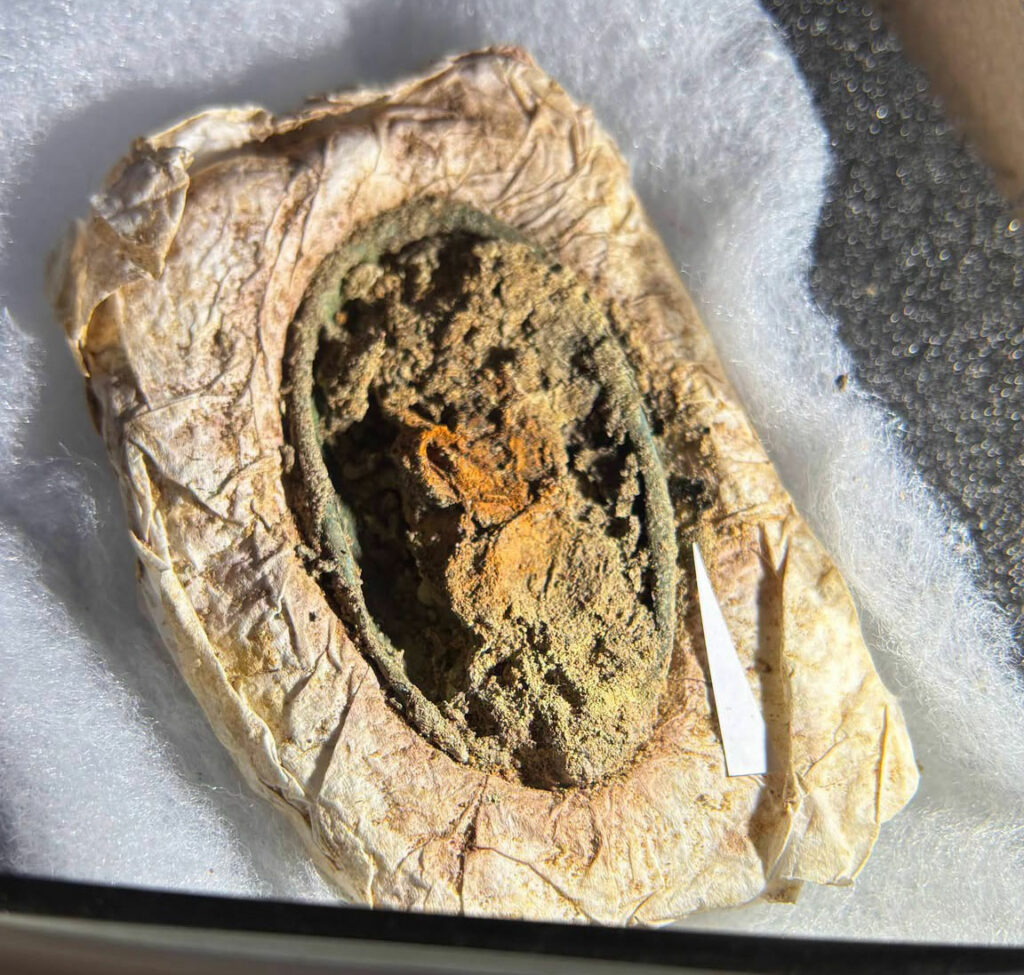
Why it matters: The analysis of these surviving scraps could reveal the weaving techniques, patterns, color, and the quality of the spinning in what the woman wore as an outer garment, as well as what she wore as an inner layer next to her skin.
"Analysis of these surviving scraps of fabric, conducted by ancient textile expert Lise Ræder Knudsen, could reveal the weaving techniques, patterns, color, and the quality of the spinning in what the woman wore as an outer garment, as well as what she wore as an inner layer next to her skin." — ARCHAEOLOGY
Date: August 27, 2026 02:00 PM ET
URL: https://archaeology.org/news/2026/08/27/1300-year-old-textile-fragments-found-in-viking-womans-grave/
Generated Analysis Tone: Negative (66%)
Source Registry Score: 10.0/10 — High
Generated text and tone describe the analysis; the source registry score is not a factual truth rating.
A Human Skeleton Was Found Inside a Mysterious Stone Structure in Scotland. Archaeologists Still Don’t Know Why It Was Buried There (Smithsonianmag)
Summary: Archaeologists with Highland Archaeology Services discovered a stone-lined, oval pit with a human skeleton near Dornoch in the Scottish Highlands during quarry expansion work. The structure, tentatively dated to the Iron Age, includes a slabbed floor, steep steps, and artifacts such as a broken steatite bowl and shale bangle fragment. Experts have not identified a clear parallel, leaving the structure’s purpose and the burial’s meaning unresolved. The skeleton, likely an adult woman, may have been deposited during a ritual closing of the structure or simply placed there after decommissioning.

Why it matters: Iron Age burials are ‘fairly rare finds in general’ in northern Scotland, and the unusual structure has left researchers searching for an explanation, making this a significant addition to the region’s archaeological record.
Context: The Dornoch burial was found about a mile from the prehistoric settlement at Camore Wood, where evidence of both Bronze Age and Iron Age occupation has been found, though any connection is unclear.
"We have consulted a few different experts to ask their opinion on what it might be, but it is a bit of a mystery,” Lachlan McKeggie, co-director of Highland Archaeology Services, tells the Northern Times. “No one has seen anything like it before." — SMITHSONIANMAG
Date: August 25, 2026 01:51 PM ET
URL: https://www.smithsonianmag.com/smart-news/human-skeleton-found-inside-mysterious-stone-structure-in-scotland-archaeologists-still-dont-know-why-it-was-buried-there-180989391/
Generated Analysis Tone: Positive (40%)
Source Registry Score: 10.0/10 — High
Generated text and tone describe the analysis; the source registry score is not a factual truth rating.
Post ID: b3113118