

Ancient World
‘These were harder than any other blades, cut sharper and cost more’: How ancient Sri Lankans created steel of legends by harnessing monsoons (Livescience)
Summary: Archaeologist Gill Juleff has reverse-engineered the lost technique for forging Wootz steel, the legendary high-carbon steel produced in ancient Sri Lanka and India. By reconstructing flat, wind-facing furnaces atop hills, she discovered that monsoon winds created a Bernoulli effect—drawing air over the furnace rather than through it—that produced high-carbon steel. The technology vanished around 1100 CE after a Pandya dynasty invasion disrupted trade networks, not because the metallurgy failed. Juleff’s work reframes the history of steel as a global story, challenging the Western-centric narrative that credits Bessemer with the material’s modern potential.
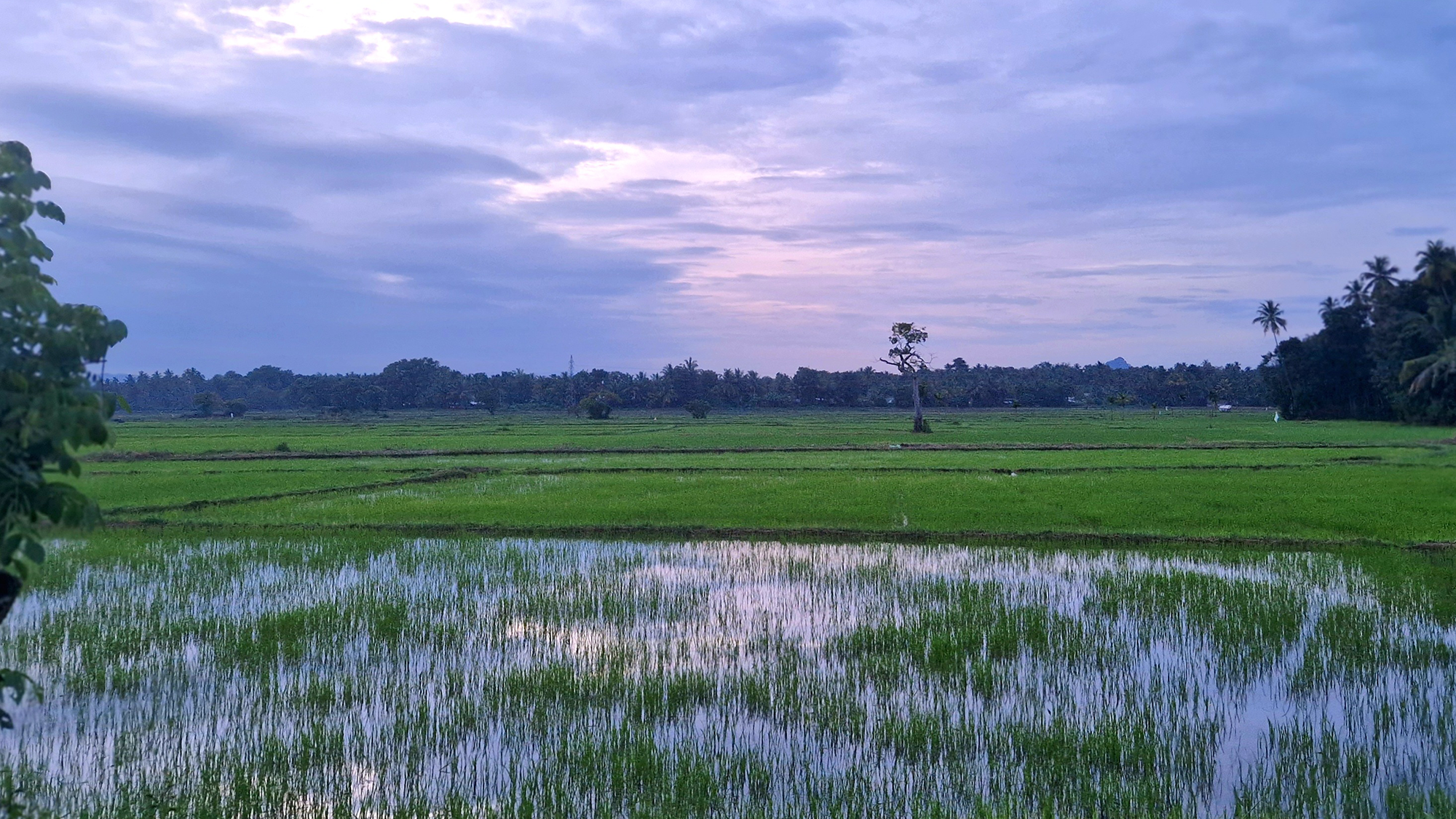
Why it matters: This discovery overturns a core assumption in metallurgical history: that high-carbon steel production was a 19th-century European breakthrough. It demonstrates that ancient Sri Lankans achieved comparable results with a climate-driven design, forcing a re-evaluation of how we attribute technological innovation and its diffusion.
Context: Wootz steel was a luxury export along the Silk Road, used for Damascus blades, but its production method was lost around 1100 CE. Juleff’s experiments, published in her research and now popularized in Kit Chapman’s book, provide the first empirical proof of how monsoon winds could drive a furnace without bellows.
"The wind was blowing up the hill — it wasn’t blowing into the tubes at all, it was blowing over the top of the furnace. It’s like an aeroplane wing: by blowing over the furnace, you’re creating this incredible pocket of low pressure." — LIVESCIENCE
Commentary: Juleff’s work is a corrective to the colonial narrative that steelmaking was a Western invention, showing that sophisticated metallurgy emerged independently in South Asia. The fact that the technique was geographically anchored to Sri Lanka’s monsoon climate explains why it didn’t spread—trade networks collapsed, not the technology. This also raises a broader point: we may be missing other climate-specific innovations that were lost because their environmental conditions were too localized to replicate. For modern materials science, the Bernoulli-effect furnace is a reminder that ancient engineering could achieve results we still struggle to reproduce.
Date: August 08, 2026 08:00 AM ET
URL: https://www.livescience.com/chemistry/these-were-harder-than-any-other-blades-cut-sharper-and-cost-more-how-ancient-sri-lankans-created-steel-of-legends-by-harnessing-monsoons
AI Sentiment Score: Positive (50%)
AI Credibility Score: 10.0/10 — High
Scores and text generated by AI analysis of the source article indicated.
In 74 BC, Liu He ruled China for only 27 days; nearly 2,000 years later, his tomb revealed almost 2 million coins and about 120kg of gold (Timesofindia.Indiatimes)
Summary: The 2011 discovery of Liu He’s tomb—the Marquis of Haihun—has transformed a 27-day emperor dismissed by Han historians into a major archaeological subject. Excavations revealed nearly 2 million bronze coins, 120kg of gold, a Confucius mirror, and thousands of bamboo texts, offering an unprecedented window into Western Han elite life. The site, now a museum, continues to yield data via infrared and hyperspectral imaging, challenging the official narrative of Liu He as a reckless failure.
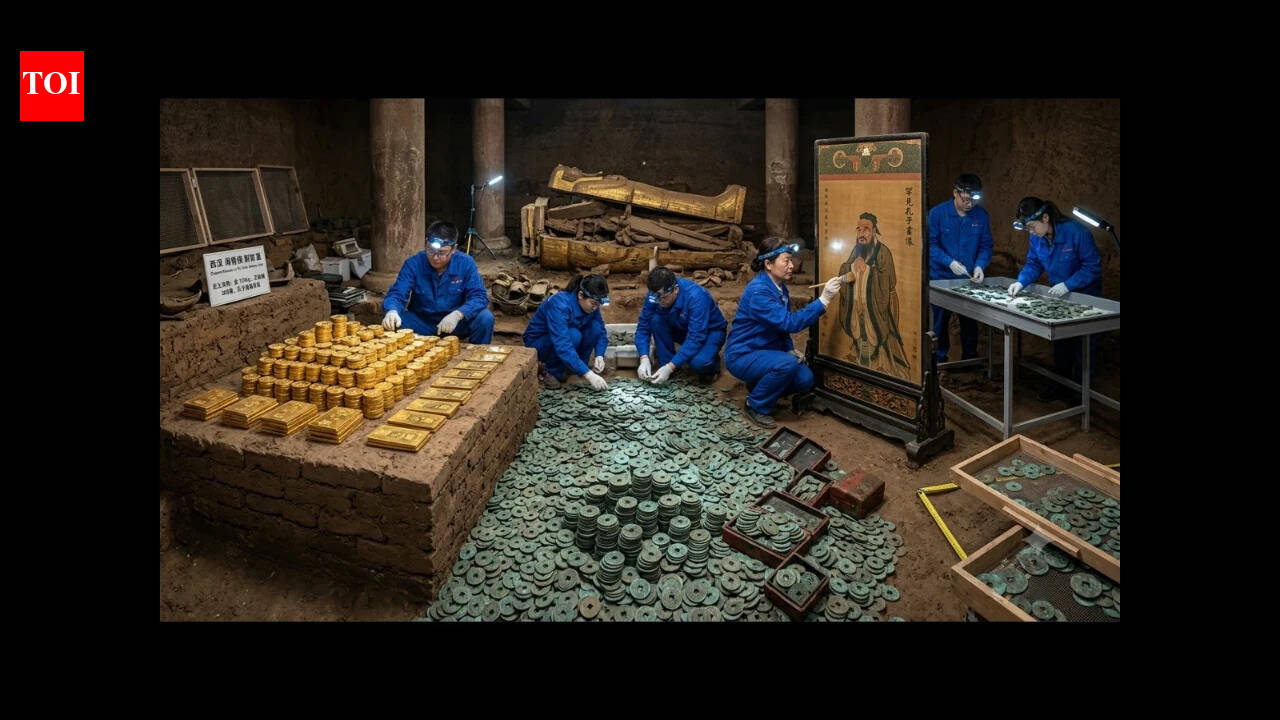
Why it matters: This tomb provides the first intact material record of a Western Han aristocratic burial complex, allowing researchers to test written histories against physical evidence—a rare calibration of textual bias and archaeological reality.
Context: Han dynasty histories were written by court officials who had a stake in legitimizing Liu He’s deposition; the tomb’s contents—especially the Confucian texts and mirror—suggest a more scholarly figure than the chronicles admit, complicating the standard narrative of political legitimacy.
"The gold collection was equally striking. While early reports inflated the total, the excavation teams later confirmed about 115 to 120 kilograms of gold spread across roughly 480 objects. These included hoof-shaped ingots, gold plaques and gold cakes, and the collection remains the largest and most varied gold hoard ever found in a Han tomb." — TIMESOFINDIA.INDIATIMES
Commentary: The scale of the hoard—10 tons of coins and 120kg of gold—suggests Liu He’s household retained enormous economic power even after demotion, hinting that his removal was more political than punitive. The presence of a Confucius mirror and personal library implies a ruler engaged with ritual and scholarship, not just excess, which could force a re-evaluation of the coup’s justification. As imaging techniques continue to extract text from the bamboo slips, expect further revisions to Han intellectual history, particularly around the Analects’ early transmission.
Date: August 05, 2026 08:00 PM ET
URL: https://timesofindia.indiatimes.com/world/rest-of-world/in-74-bc-liu-he-ruled-china-for-only-27-days-nearly-2000-years-later-his-tomb-revealed-almost-2-million-coins-and-about-120kg-of-gold/articleshow/132988736.cms
AI Sentiment Score: Negative (60%)
AI Credibility Score: 10.0/10 — High
Scores and text generated by AI analysis of the source article indicated.
Brains don’t always rot: Scientists may finally know how human brains have evaded decay for thousands of years (Livescience)
Summary: Researchers at Oxford have identified a chemical pathway that explains why human brains occasionally survive for millennia in waterlogged, oxygen-poor environments. By burying mice in controlled conditions and tracking over 1.26 million protein decay trajectories, they found that low oxygen diverts free-radical chemistry from destructive cascades to crosslinking reactions that toughen brain proteins into insoluble aggregates. The finding reframes brain preservation as a predictable outcome of decay itself, not a freak accident, and opens a potential bridge to understanding protein aggregation in neurodegenerative diseases like Alzheimer’s.
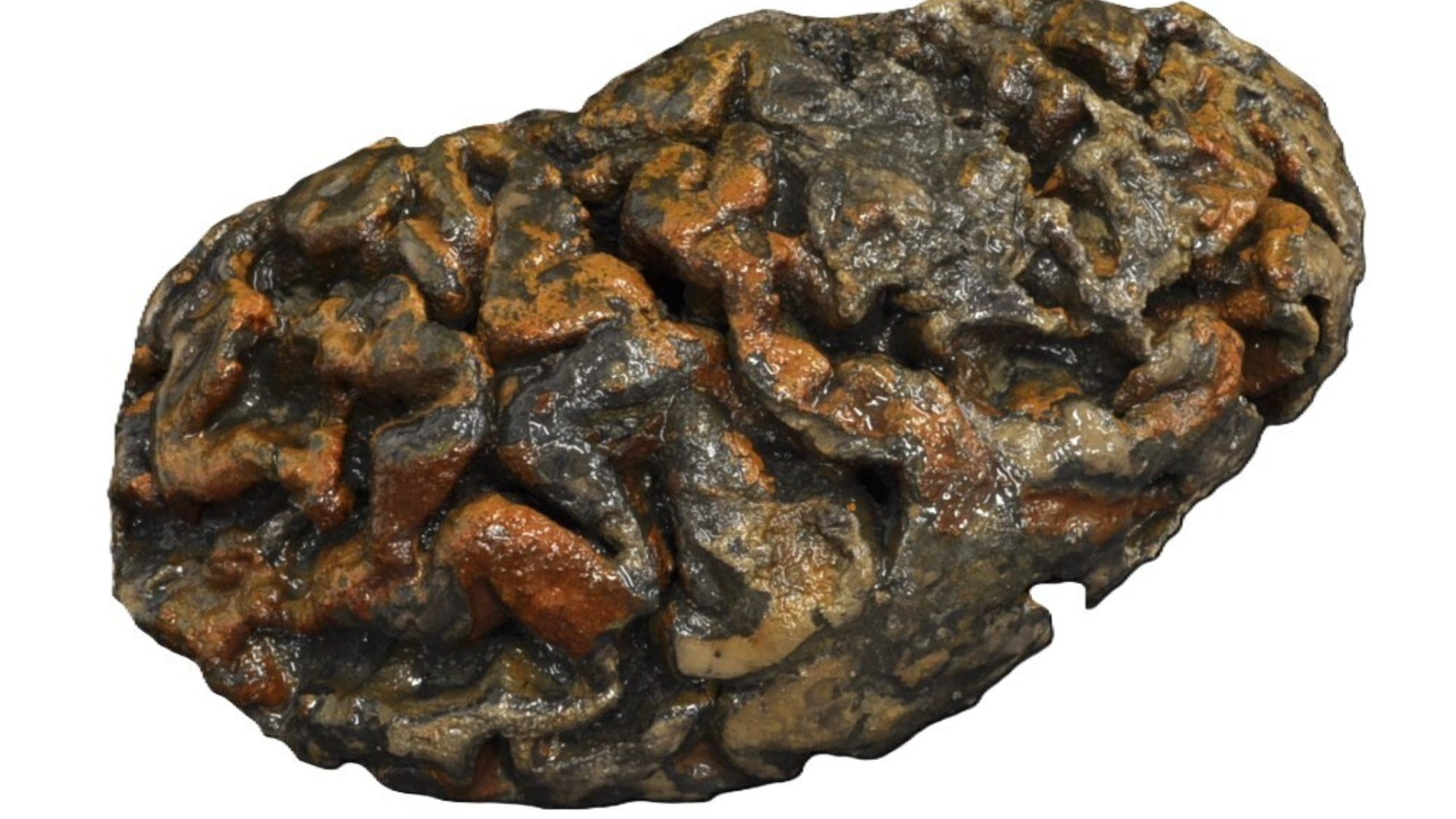
Why it matters: This resolves a long-standing paradox in archaeology—why brains persist when other soft tissues vanish—and provides a mechanistic basis for interpreting ancient biomolecules. It also suggests that preserved brains could serve as natural models for the protein crosslinking seen in Alzheimer’s, linking deep-time taphonomy to modern medical research.
Context: More than 4,400 preserved brains have been found in the archaeological record, with about a third occurring in waterlogged, hypoxic settings where no other soft tissue survives. Prior explanations—mummification, freezing, saponification—could not account for this selective preservation.
"Brains don’t always rot: Scientists may finally know how human brains have evaded decay for thousands of years Thousands of skeletal human remains have been discovered with their brain tissue unexpectedly intact." — LIVESCIENCE
Commentary: The study’s significance extends beyond archaeology: it identifies a specific molecular mechanism—free-radical crosslinking under hypoxia—that could inform how protein aggregates form in Alzheimer’s and other neurodegenerative diseases. The team’s rigorous time-series mass spectrometry approach sets a new standard for taphonomic research, but the leap from mouse carcasses to human pathology requires careful validation. Still, the idea that decay can produce preservation is a counterintuitive insight that may reshape how we think about both the archaeological record and the molecular basis of disease.
Date: August 04, 2026 01:00 PM ET
URL: https://www.livescience.com/chemistry/brains-dont-always-rot-scientists-may-finally-know-how-human-brains-have-evaded-decay-for-thousands-of-years
AI Sentiment Score: Negative (75%)
AI Credibility Score: 10.0/10 — High
Scores and text generated by AI analysis of the source article indicated.
Buried Giants of Brittany: Ground-Penetrating Scans Uncover Hidden Stone “Bodies” Within 6,000-Year-Old Earthen Mounds (Ancient-Origins.Net)
Summary: Non-invasive electrical resistivity surveys at the Coëby Neolithic cemetery in Brittany have detected buried stone anomalies within two long earthen barrows, TRED30 and TRED31, suggesting that the human-shaped standing stones previously found in TRED36 are not an isolated feature. The findings, published in Archaeological Prospection, indicate these monuments are part of a broader Middle Neolithic tradition of monumentalizing the dead, with hidden stone features likely serving ritual or ancestral roles. The scans also revealed modern damage, including a forest road cutting through one mound and erosion of TRED30, underscoring the fragility of these sites.

Why it matters: This discovery shifts understanding of Neolithic barrows from simple burial mounds to complex ritual monuments with hidden anthropomorphic stones, potentially redefining the cultural and symbolic landscape of prehistoric Europe.
Context: The Coëby cemetery, discovered in 1986, includes 95 documented sites in Trédion, and the new geophysical survey provides a non-invasive method to explore unexcavated barrows, building on the 1990s excavation of TRED36.
"At both monuments, the survey detected long zones of high resistance — an indication of buried stone — running along the center of each mound, exactly where buried stone features would be expected. an object meant to be protected." — ANCIENT-ORIGINS.NET
Commentary: The use of geophysics here is a methodological win, but the real signal is the pattern: these barrows are not just graves but repositories of anthropomorphic stones, suggesting a shared symbolic language across Neolithic France. The damage from a forest road and erosion is a quiet reminder that these sites are still vulnerable, even as we learn more about them. The next step—3D tomography—could reveal whether these stones were placed in deliberate arrangements, which would deepen our understanding of Neolithic cosmology.
Date: August 06, 2026 03:30 AM ET
URL: https://www.ancient-origins.net/news-history-archaeology/buried-giants-brittany-ground-penetrating-scans-uncover-hidden-stone
AI Sentiment Score: Negative (66%)
AI Credibility Score: 10.0/10 — High
Scores and text generated by AI analysis of the source article indicated.
Scientists Found Nearly 400 Hidden Structures Under the Amazon, and the Real Number Could Be 30,000 (Dailygalaxy)
Summary: Lidar scans of 1,740 square miles in northern Brazil have revealed nearly 400 previously unknown geoglyphs built by the Aquiry civilization, which peaked between 100 and 300 C.E. with an estimated population of 1.25 to 3 million across 70,600 square miles. The researchers project the total number of geoglyphs in the Amazon could reach 30,000, far exceeding earlier estimates, and the civilization’s rapid collapse around 850–950 C.E. aligns with broader pre-Columbian declines. This finding upends the long-held view of the Amazon as pristine wilderness, showing instead a densely populated, engineered landscape.

Why it matters: For specialists, this recalibrates the scale and complexity of pre-Columbian Amazonian societies, forcing a re-evaluation of population estimates, land-use models, and the region’s role in global history.
Context: The discovery builds on a decade of lidar-based archaeology that has already overturned the ‘pristine wilderness’ narrative, but this is the first study to extrapolate such high population densities from a large, systematic survey, and it places the Amazon in the same league as other ancient civilizations.
"We do not know why the geoglyphs were suddenly abandoned between A.D. 850 and 950,” adding that “the available evidence points to a relatively rapid collapse." — DAILYGALAXY
Commentary: The scale of the projection—30,000 geoglyphs—suggests the Amazon was not a marginal periphery but a core region of early urbanism, and the rapid collapse pattern invites comparison with the Maya and Tiwanaku, hinting at shared climate or social drivers. The lack of metal tools and draft animals makes the engineering feat even more significant, and the fact that these sites are outside river corridors challenges conventional models of settlement. The next step is to ground-truth the lidar data with excavation, which could confirm the population estimates and reveal the social organization behind the geoglyphs.
Date: August 08, 2026 08:15 AM ET
URL: https://dailygalaxy.com/2026/08/hidden-structures-discovered-under-amazon
AI Sentiment Score: Negative (66%)
AI Credibility Score: 10.0/10 — High
Scores and text generated by AI analysis of the source article indicated.
Post ID: 7da486f8