Artemis Signals
NASA’s Artemis III Moon Rocket Hardware Arrives, Artemis II Capsule Returns to Kennedy (Nasa.Gov)
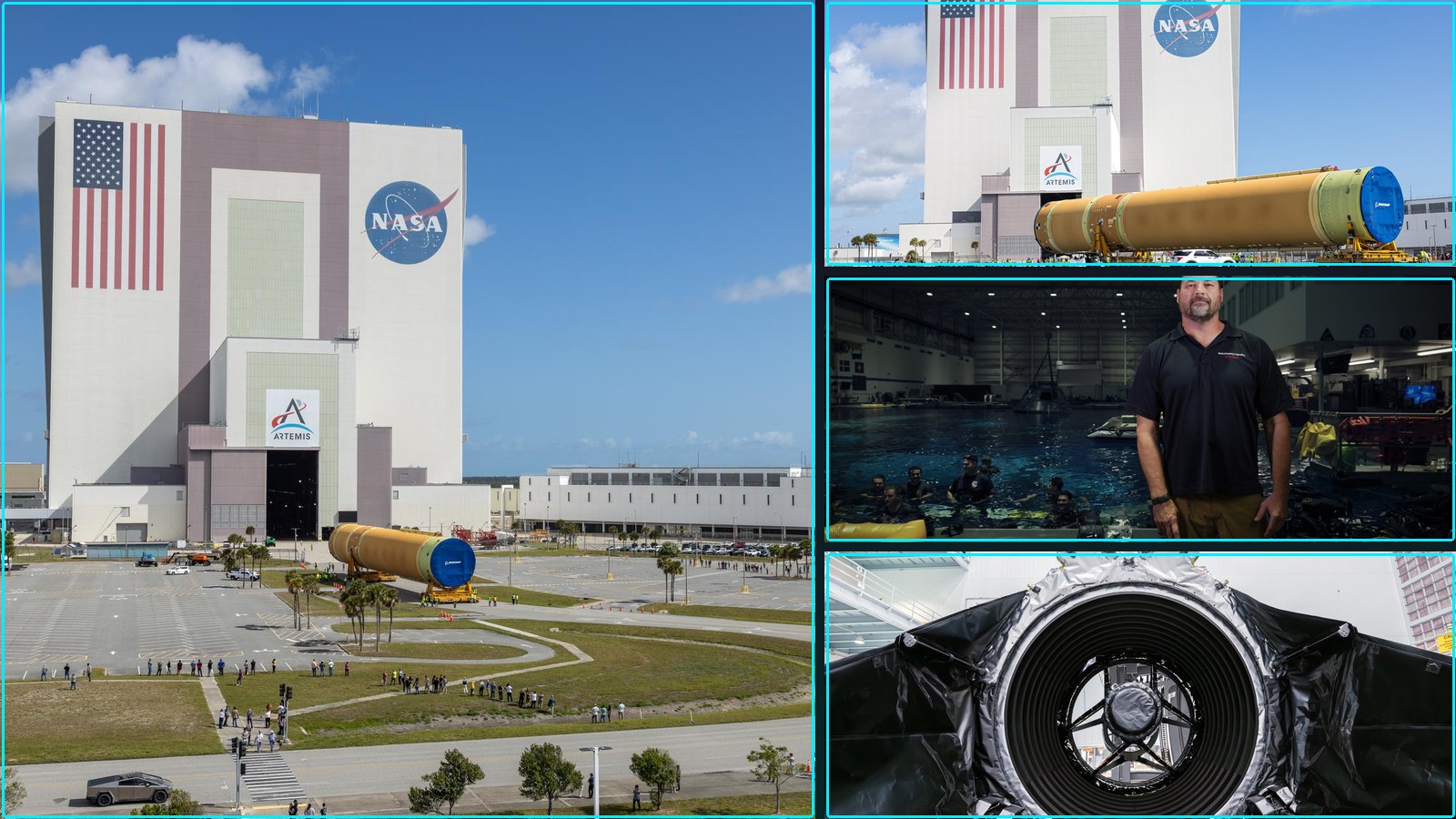
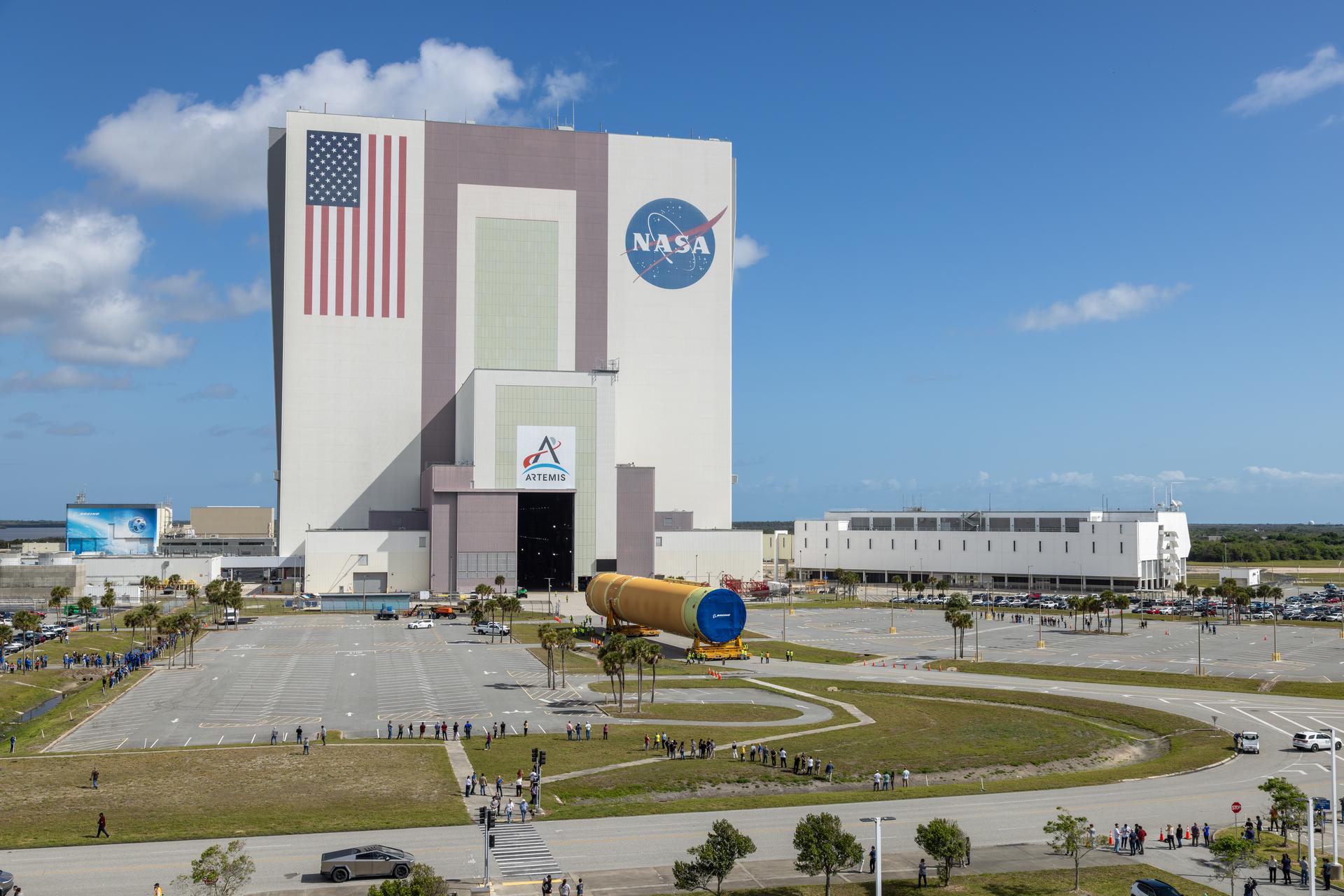
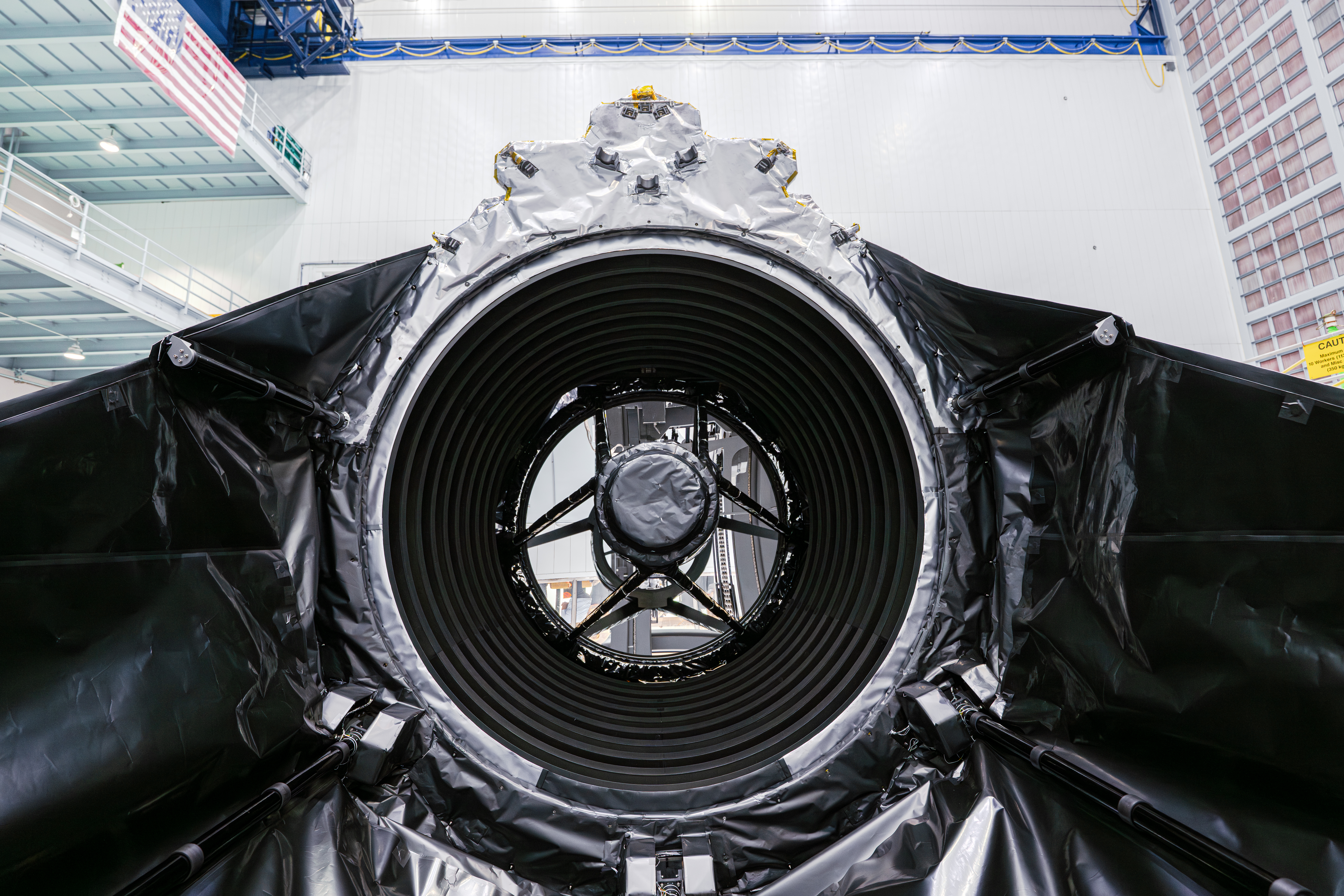
Summary: NASA’s Artemis III Moon Rocket Hardware Arrives, Artemis II Capsule Returns to Kennedy On the heels of a successful Artemis II test flight, teams at NASA’s Kennedy Space Center in Florida are pressing forward for the next Artemis mission. Technicians maneuvered NASA’s massive core stage of the SLS (Space Launch System) rocket inside the agency’s Vehicle Assembly Building (VAB) at NASA Kennedy on April 28 in preparation for Artemis III, as the Artemis II crew module arrived back at Kennedy for post-flight analysis. The Artemis III core stage will be placed horizontally in the transfer aisle of the VAB before being lifted into High Bay 2, where it will be connected to the engine section and its boat-tail, which were integrated in August 2025.
Why it matters: This matters for Space Exploration because it gives a concrete current signal to track: NASA’s Artemis III Moon Rocket Hardware Arrives, Artemis II Capsule Returns to Kennedy On the heels of a successful Artemis II test flight, teams at NASA’s Kennedy Space Center in Florida are pressing forward for the next Artemis mission.
Context: NASA’s Artemis III Moon Rocket Hardware Arrives, Artemis II Capsule Returns to Kennedy On the heels of a successful Artemis II test flight, teams at NASA’s Kennedy Space Center in Florida are pressing forward for the next Artemis mission. Technicians maneuvered NASA’s massive core stage of the SLS (Space Launch System) rocket inside the agency’s Vehicle Assembly Building (VAB) at NASA Kennedy on April 28 in preparation for Artemis III, as the Artemis II crew module arrived back at Kennedy for post-flight analysis. The Artemis III core stage will be placed horizontally in the transfer aisle of the VAB before being lifted into High Bay 2, where it will be connected to the engine section and its boat-tail, which were integrated in August 2025.
"NASA’s Artemis III Moon Rocket Hardware Arrives, Artemis II Capsule Returns to Kennedy On the heels of a successful Artemis II test flight, teams at NASA’s Kennedy Space Center in Florida are." — NASA.GOV
Commentary: The immediate implication is operational rather than speculative: watch how this changes budgets, workflows, or risk assumptions over the next cycle.
Date: Tue, 28 Apr 2026 20:52:59 +0000
URL: https://www.nasa.gov/blogs/missions/2026/04/28/nasas-artemis-iii-moon-rocket-hardware-arrives-artemis-ii-capsule-returns-to-kennedy/
AI Sentiment Score: Negative (71%)
AI Credibility Score: 10.0/10 — High
Scores and text generated by AI analysis of the source article indicated.
Artemis III deep into processing and planning for key HLS test (Nasaspaceflight)
Summary: NASA is deep into planning for Artemis III, a pivotal crewed mission in low Earth orbit scheduled for next year that will serve as a critical dress rehearsal for the agency’s return to the Moon. The flight will mark the first time NASA integrates multiple human-rated vehicles from commercial partners in a single campaign, testing rendezvous, docking, and operations between the Orion spacecraft and uncrewed pathfinder versions of Blue Origin’s Blue Moon Mark 2 and SpaceX’s Starship Human Landing System (HLS). Announced in February as an additional mission inserted into the Artemis sequence ahead of the first crewed lunar landing on Artemis IV, Artemis III shifts the focus from immediate surface operations to proving the complex choreography required for sustained lunar exploration.

Why it matters: This matters for Space Exploration because it gives a concrete current signal to track: NASA is deep into planning for Artemis III, a pivotal crewed mission in low Earth orbit scheduled for next year that will serve as a critical dress rehearsal for the agency’s return to the Moon.
Context: NASA is deep into planning for Artemis III, a pivotal crewed mission in low Earth orbit scheduled for next year that will serve as a critical dress rehearsal for the agency’s return to the Moon. The flight will mark the first time NASA integrates multiple human-rated vehicles from commercial partners in a single campaign, testing rendezvous, docking, and operations between the Orion spacecraft and uncrewed pathfinder versions of Blue Origin’s Blue Moon Mark 2 and SpaceX’s Starship Human Landing System (HLS). Announced in February as an additional mission inserted into the Artemis sequence ahead of the first crewed lunar landing on Artemis IV, Artemis III shifts the focus from immediate surface operations to proving the complex choreography required for sustained lunar exploration.
"NASA is deep into planning for Artemis III, a pivotal crewed mission in low Earth orbit scheduled for next year that will serve as a critical dress rehearsal for the agency’s return." — NASASPACEFLIGHT
Commentary: The immediate implication is operational rather than speculative: watch how this changes budgets, workflows, or risk assumptions over the next cycle.
Date: Sun, 17 May 2026 17:29:54 +0000
URL: https://www.nasaspaceflight.com/2026/05/artemis-iii-processing-planning-hls/
AI Sentiment Score: Neutral (50%)
AI Credibility Score: 10.0/10 — High
Scores and text generated by AI analysis of the source article indicated.
Artemis II returns from Moon & Artemis roadmap and ground prep – Space News (Apr 17, 2026) (Youtube)
Summary: Artemis II returns from Moon – NASA’s Artemis II capped April 2026 with a safe Orion splashdown after a landmark crewed lunar flyby, pushing humans farther from Earth than since Apollo. The mission validated key deep-space systems needed for the next era of lunar exploration. Artemis roadmap and ground prep – With Artemis II complete, NASA’s Artemis campaign pivoted to Artemis III and beyond, including integrated operations with commercial lunar landers and annual surface missions.

Why it matters: This matters for Space Exploration because it gives a concrete current signal to track: Artemis II returns from Moon – NASA’s Artemis II capped April 2026 with a safe Orion splashdown after a landmark crewed lunar flyby, pushing humans farther from Earth than since Apollo.
Context: Artemis II returns from Moon – NASA’s Artemis II capped April 2026 with a safe Orion splashdown after a landmark crewed lunar flyby, pushing humans farther from Earth than since Apollo. The mission validated key deep-space systems needed for the next era of lunar exploration. Artemis roadmap and ground prep – With Artemis II complete, NASA’s Artemis campaign pivoted to Artemis III and beyond, including integrated operations with commercial lunar landers and annual surface missions.
"Artemis II returns from Moon – NASA’s Artemis II capped April 2026 with a safe Orion splashdown after a landmark crewed lunar flyby, pushing humans farther from Earth than since Apollo. The." — YOUTUBE
Commentary: The immediate implication is operational rather than speculative: watch how this changes budgets, workflows, or risk assumptions over the next cycle.
Date: April 26, 2026 12:00 AM ET
URL: https://www.youtube.com/watch?v=Pa-5BnqkN_A
AI Sentiment Score: Neutral (50%)
AI Credibility Score: 10.0/10 — High
Scores and text generated by AI analysis of the source article indicated.
Artemis II crewed lunar flyby & Starlink expansion and orbital debris – Space News (Apr 26, 2026) (Youtube)
Summary: Today’s topics: Artemis II crewed lunar flyby – NASA’s Artemis II successfully carried four astronauts on a 10-day lunar flyby and returned Orion safely to Earth, marking the first crewed deep-space flight since Apollo. The mission validated key SLS and Orion systems ahead of Artemis III’s planned lunar landing attempt. Starlink expansion and orbital debris – SpaceX sustained a rapid launch cadence, surpassing 1,000 Starlink satellites launched in 2026 while highlighting growing concerns about orbital congestion.
Why it matters: This matters for Space Exploration because it gives a concrete current signal to track: Today’s topics: Artemis II crewed lunar flyby – NASA’s Artemis II successfully carried four astronauts on a 10-day lunar flyby and returned Orion safely to Earth, marking the first crewed deep-space flight since Apollo.
Context: Today’s topics: Artemis II crewed lunar flyby – NASA’s Artemis II successfully carried four astronauts on a 10-day lunar flyby and returned Orion safely to Earth, marking the first crewed deep-space flight since Apollo. The mission validated key SLS and Orion systems ahead of Artemis III’s planned lunar landing attempt. Starlink expansion and orbital debris – SpaceX sustained a rapid launch cadence, surpassing 1,000 Starlink satellites launched in 2026 while highlighting growing concerns about orbital congestion.
"Today’s topics: Artemis II crewed lunar flyby – NASA’s Artemis II successfully carried four astronauts on a 10-day lunar flyby and returned Orion safely to Earth, marking the first crewed deep-space flight." — YOUTUBE
Commentary: The immediate implication is operational rather than speculative: watch how this changes budgets, workflows, or risk assumptions over the next cycle.
Date: April 26, 2026 12:00 AM ET
URL: https://www.youtube.com/watch?v=WAJ7lRGqVy8
AI Sentiment Score: Negative (50%)
AI Credibility Score: 10.0/10 — High
Scores and text generated by AI analysis of the source article indicated.
Artemis II returns from Moon & SpaceX Starlink launch at Vandenberg – Space News (Apr 18, 2026) (Youtube)
Summary: Artemis II returns from Moon – NASA’s Artemis II mission has safely returned after a 10-day lunar flyby, setting a new distance record for human spaceflight and validating Orion operations beyond Earth orbit. The mission’s data and piloting demos lay critical groundwork for upcoming Artemis missions and sustained lunar exploration. SpaceX Starlink launch at Vandenberg – SpaceX is targeting an April 18 Starlink deployment from Vandenberg Space Force Base, continuing its rapid cadence of Falcon 9 launches.
Why it matters: This matters for Space Exploration because it gives a concrete current signal to track: Artemis II returns from Moon – NASA’s Artemis II mission has safely returned after a 10-day lunar flyby, setting a new distance record for human spaceflight and validating Orion operations beyond Earth orbit.
Context: Artemis II returns from Moon – NASA’s Artemis II mission has safely returned after a 10-day lunar flyby, setting a new distance record for human spaceflight and validating Orion operations beyond Earth orbit. The mission’s data and piloting demos lay critical groundwork for upcoming Artemis missions and sustained lunar exploration. SpaceX Starlink launch at Vandenberg – SpaceX is targeting an April 18 Starlink deployment from Vandenberg Space Force Base, continuing its rapid cadence of Falcon 9 launches.
"Artemis II returns from Moon – NASA’s Artemis II mission has safely returned after a 10-day lunar flyby, setting a new distance record for human spaceflight and validating Orion operations beyond Earth." — YOUTUBE
Commentary: The immediate implication is operational rather than speculative: watch how this changes budgets, workflows, or risk assumptions over the next cycle.
Date: April 26, 2026 12:00 AM ET
URL: https://www.youtube.com/watch?v=_SLWYHOY5O0
AI Sentiment Score: Positive (50%)
AI Credibility Score: 10.0/10 — High
Scores and text generated by AI analysis of the source article indicated.
Artemis II Mission Recap 2026: Humans Return to the Moon’s Far Side (Collegesimplified.In)
Summary: The Artemis II Mission Recap 2026 marks a historic turning point in human space exploration. For the first time in over 50 years, since the conclusion of the Apollo era in 1972, four humans have ventured beyond Low Earth Orbit (LEO) to witness the lunar far side. On April 10, 2026, the Orion spacecraft, named Integrity, splashed down safely in the Pacific Ocean, successfully concluding a 10-day journey that pushed the boundaries of technology and human endurance.

Why it matters: This matters for Space Exploration because it gives a concrete current signal to track: The Artemis II Mission Recap 2026 marks a historic turning point in human space exploration.
Context: The Artemis II Mission Recap 2026 marks a historic turning point in human space exploration. For the first time in over 50 years, since the conclusion of the Apollo era in 1972, four humans have ventured beyond Low Earth Orbit (LEO) to witness the lunar far side. On April 10, 2026, the Orion spacecraft, named Integrity, splashed down safely in the Pacific Ocean, successfully concluding a 10-day journey that pushed the boundaries of technology and human endurance.
"The Artemis II Mission Recap 2026 marks a historic turning point in human space exploration. For the first time in over 50 years, since the conclusion of the Apollo era in 1972,." — COLLEGESIMPLIFIED.IN
Commentary: The immediate implication is operational rather than speculative: watch how this changes budgets, workflows, or risk assumptions over the next cycle.
Date: April 20, 2026 12:00 AM ET
URL: https://www.collegesimplified.in/post/artemis-ii-lunar-flyby-mission-recap-2026
AI Sentiment Score: Negative (50%)
AI Credibility Score: 7.0/10 — Medium
Scores and text generated by AI analysis of the source article indicated.
Artemis spacesuit development risks further delays – ISS Tracker (Isstracker.Pl)
Summary: New spacesuits for Artemis lunar missions and the International Space Station may not be ready until after the end of the decade, a report by NASA’s inspector general warns. In an April 20 report, NASA’s Office of Inspector General (OIG) concluded that the agency erred when it used a commercial services approach to develop new ISS and lunar spacesuits through its Exploration Extravehicular Activity Services, or xEVAS, program. …

Why it matters: This matters for Space Exploration because it gives a concrete current signal to track: New spacesuits for Artemis lunar missions and the International Space Station may not be ready until after the end of the decade, a report by NASA’s inspector general warns.
Context: New spacesuits for Artemis lunar missions and the International Space Station may not be ready until after the end of the decade, a report by NASA’s inspector general warns. In an April 20 report, NASA’s Office of Inspector General (OIG) concluded that the agency erred when it used a commercial services approach to develop new ISS and lunar spacesuits through its Exploration Extravehicular Activity Services, or xEVAS, program. …
"New spacesuits for Artemis lunar missions and the International Space Station may not be ready until after the end of the decade, a report by NASA’s inspector general warns. In an April." — ISSTRACKER.PL
Commentary: The immediate implication is operational rather than speculative: watch how this changes budgets, workflows, or risk assumptions over the next cycle.
Date: April 22, 2026 12:00 AM ET
URL: https://isstracker.pl/en/news/ryzyko-dalszych-opoznien-w-rozwoju-skafandra-artemis,6TKhs5
AI Sentiment Score: Negative (75%)
AI Credibility Score: 7.0/10 — Medium
Scores and text generated by AI analysis of the source article indicated.
Artemis II Mission Milestones: An Image and Video Recap – NASA (Nasa.Gov)
Summary: On April 1, 2026, Artemis II launched on a nearly 10-day voyage around the Moon, marking the first crewed flight of NASA’s Orion spacecraft. NASA astronauts Reid Wiseman, Victor Glover, and Christina Koch, along with CSA (Canadian Space Agency) astronaut Jeremy Hansen, splashed down on April 10 in the Pacific Ocean off the coast of San Diego. At their farthest point, the crew traveled 252,756 miles from Earth, setting a record for the greatest distance humans have traveled in space and observing the lunar surface like never before.

Why it matters: This matters for Space Exploration because it gives a concrete current signal to track: On April 1, 2026, Artemis II launched on a nearly 10-day voyage around the Moon, marking the first crewed flight of NASA’s Orion spacecraft.
Context: On April 1, 2026, Artemis II launched on a nearly 10-day voyage around the Moon, marking the first crewed flight of NASA’s Orion spacecraft. NASA astronauts Reid Wiseman, Victor Glover, and Christina Koch, along with CSA (Canadian Space Agency) astronaut Jeremy Hansen, splashed down on April 10 in the Pacific Ocean off the coast of San Diego. At their farthest point, the crew traveled 252,756 miles from Earth, setting a record for the greatest distance humans have traveled in space and observing the lunar surface like never before.
"On April 1, 2026, Artemis II launched on a nearly 10-day voyage around the Moon, marking the first crewed flight of NASA’s Orion spacecraft. NASA astronauts Reid Wiseman, Victor Glover, and Christina." — NASA.GOV
Commentary: The immediate implication is operational rather than speculative: watch how this changes budgets, workflows, or risk assumptions over the next cycle.
Date: April 21, 2026 12:00 AM ET
URL: https://www.nasa.gov/general/artemis-ii-mission-milestones-an-image-and-video-recap/
AI Sentiment Score: Neutral (33%)
AI Credibility Score: 10.0/10 — High
Scores and text generated by AI analysis of the source article indicated.
I Am Artemis: Tim Goddard (Nasa.Gov)
Summary: Listen to this audio excerpt from Tim Goddard, NASA open water lead: 0:00 / 0:00 At the end of their mission around the Moon, NASA’s Artemis II astronauts were recovered from their Orion spacecraft by a team of U.S. Navy divers and NASA personnel. This included Tim Goddard, NASA open water lead, who helped guide the complex open water recovery of both Orion and the crew members, once they safely splashed down in the Pacific Ocean off the coast of San Diego.

Why it matters: This matters for Space Exploration because it gives a concrete current signal to track: Listen to this audio excerpt from Tim Goddard, NASA open water lead: 0:00 / 0:00 At the end of their mission around the Moon, NASA’s Artemis II astronauts were recovered from their Orion spacecraft by a team of U.S.
Context: Listen to this audio excerpt from Tim Goddard, NASA open water lead: 0:00 / 0:00 At the end of their mission around the Moon, NASA’s Artemis II astronauts were recovered from their Orion spacecraft by a team of U.S. Navy divers and NASA personnel. This included Tim Goddard, NASA open water lead, who helped guide the complex open water recovery of both Orion and the crew members, once they safely splashed down in the Pacific Ocean off the coast of San Diego.
"Listen to this audio excerpt from Tim Goddard, NASA open water lead: 0:00 / 0:00 At the end of their mission around the Moon, NASA’s Artemis II astronauts were recovered from their." — NASA.GOV
Commentary: The immediate implication is operational rather than speculative: watch how this changes budgets, workflows, or risk assumptions over the next cycle.
Date: Wed, 20 May 2026 14:57:33 +0000
URL: https://www.nasa.gov/missions/artemis/i-am-artemis/i-am-artemis-tim-goddard/
AI Sentiment Score: Negative (75%)
AI Credibility Score: 10.0/10 — High
Scores and text generated by AI analysis of the source article indicated.
Artemis II Flight Day Highlights (Nasa.Gov)
Summary: NASA’s SLS (Space Launch System) rocket lifted off from Launch Pad 39B at the agency’s Kennedy Space Center in Florida at 6:35 p.m. EDT on April 1, 2026, sending NASA astronauts Reid Wiseman, Victor Glover, and Christina Koch and CSA (Canadian Space Agency) astronaut Jeremy Hansen aboard …
Why it matters: Successful SLS launch confirms operational readiness for crewed deep-space transit architecture.
Context: Crew composition (US/CSA) and specific mission profile signal next steps in Artemis cadence.
"NASA’s SLS (Space Launch System) rocket lifted off from Launch Pad 39B at the agency’s Kennedy Space Center in Florida at 6:35 p.m. EDT on April 1, 2026, sending NASA astronauts Reid." — NASA.GOV
Commentary: The signal is still worth tracking, but the current extraction path did not yield enough body text for a fuller analytical read. The immediate implication is operational rather than speculative: watch how this changes budgets, workflows, or risk assumptions over the next cycle.
Date: April 15, 2026
URL: https://nasa.gov/gallery/artemis-ii-flight-day-highlights
AI Sentiment Score: Negative (50%)
AI Credibility Score: 10.0/10 — High
Scores and text generated by AI analysis of the source article indicated.
Artemis Rewritten: NASA’s New Moon Plan, Its Risks, and Whether … (Aerospace.Csis)
Summary: In early 2026, NASA made a consequential change to the Artemis program: Artemis III was no longer planned as a crewed lunar landing mission. Instead, Artemis III had been changed to a low Earth Orbit (LEO) demonstration flight that would test integrated operations between the Orion spacecraft and one or both commercial lunar landers being developed by SpaceX and Blue Origin. Under the new architecture, the first crewed lunar landing shifts to Artemis IV, now targeted for 2028.^1^ NASA also added an extra mission to increase launch cadence, standardized the early Space Launch System (SLS) configuration, and publicly embraced a more aggressive long-term goal of building a permanent lunar base under its new “Ignition” initiative.

Why it matters: This matters for Space Exploration because it gives a concrete current signal to track: In early 2026, NASA made a consequential change to the Artemis program: Artemis III was no longer planned as a crewed lunar landing mission.
Context: In early 2026, NASA made a consequential change to the Artemis program: Artemis III was no longer planned as a crewed lunar landing mission. Instead, Artemis III had been changed to a low Earth Orbit (LEO) demonstration flight that would test integrated operations between the Orion spacecraft and one or both commercial lunar landers being developed by SpaceX and Blue Origin. Under the new architecture, the first crewed lunar landing shifts to Artemis IV, now targeted for 2028.^1^ NASA also added an extra mission to increase launch cadence, standardized the early Space Launch System (SLS) configuration, and publicly embraced a more aggressive long-term goal of building a permanent lunar base under its new “Ignition” initiative.
"In early 2026, NASA made a consequential change to the Artemis program: Artemis III was no longer planned as a crewed lunar landing mission. Instead, Artemis III had been changed to a." — AEROSPACE.CSIS
Commentary: The immediate implication is operational rather than speculative: watch how this changes budgets, workflows, or risk assumptions over the next cycle.
Date: April 20, 2026 12:00 AM ET
URL: https://aerospace.csis.org/artemis-rewritten-nasas-new-moon-plan-its-risks-and-whether-the-u-s-can-still-beat-china/
AI Sentiment Score: Negative (60%)
AI Credibility Score: 7.0/10 — Medium
Scores and text generated by AI analysis of the source article indicated.
Artemis III moon rocket rolls out of factory onto barge – Boeing (Boeing)
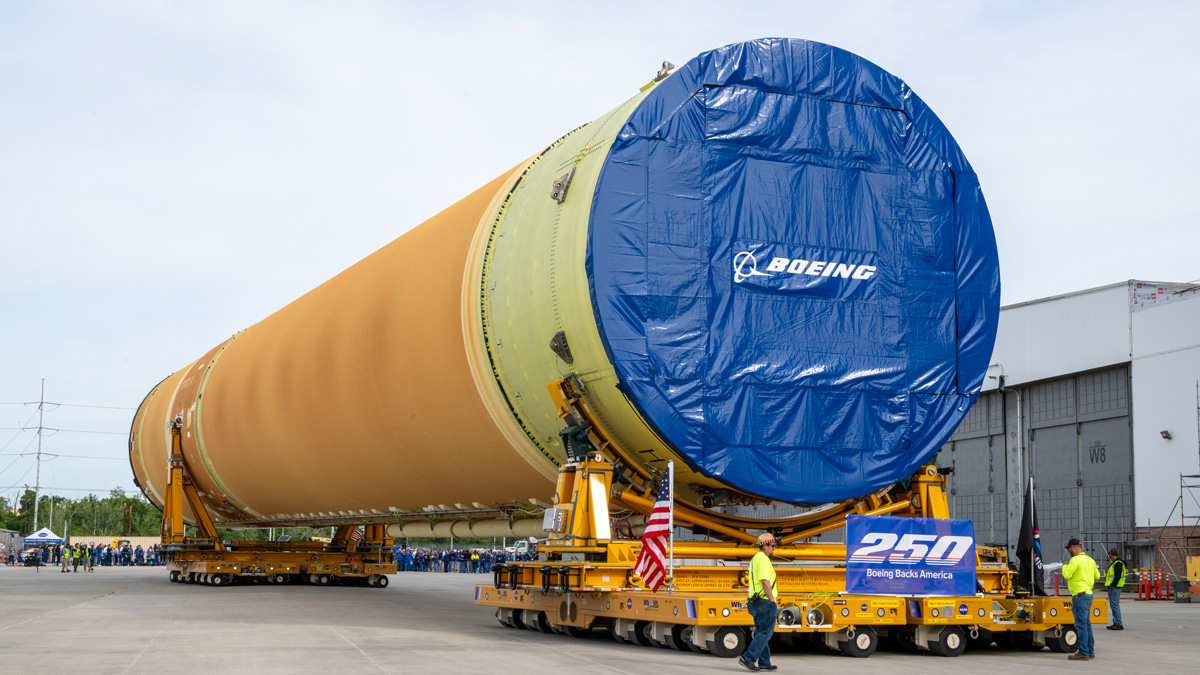
Summary: Boeing successfully rolled out what’s called the “top four-fifths” of the core stage for the Artemis III moon rocket from the Michoud Assembly Facility in New Orleans. – The top four-fifths of the core stage consists of the forward skirt, intertank, liquid oxygen tank and liquid hydrogen tank, all joined together but missing the engine section. Why it matters: This is the first time the Boeing program for NASA’s Space Launch System (SLS) has shipped a core stage without its engine section, a change aimed at accelerating production for future Artemis missions.
Why it matters: This matters for Space Exploration because it gives a concrete current signal to track: Boeing successfully rolled out what’s called the “top four-fifths” of the core stage for the Artemis III moon rocket from the Michoud Assembly Facility in New Orleans.
Context: Boeing successfully rolled out what’s called the “top four-fifths” of the core stage for the Artemis III moon rocket from the Michoud Assembly Facility in New Orleans. – The top four-fifths of the core stage consists of the forward skirt, intertank, liquid oxygen tank and liquid hydrogen tank, all joined together but missing the engine section. Why it matters: This is the first time the Boeing program for NASA’s Space Launch System (SLS) has shipped a core stage without its engine section, a change aimed at accelerating production for future Artemis missions.
"Boeing successfully rolled out what’s called the “top four-fifths” of the core stage for the Artemis III moon rocket from the Michoud Assembly Facility in New Orleans. – The top four-fifths of." — BOEING
Commentary: The immediate implication is operational rather than speculative: watch how this changes budgets, workflows, or risk assumptions over the next cycle.
Date: April 20, 2026 12:00 AM ET
URL: https://www.boeing.com/features/2026/04/artemis-iii-moon-rocket-rolls-out-of-factory-onto-barge
AI Sentiment Score: Negative (50%)
AI Credibility Score: 7.0/10 — Medium
Scores and text generated by AI analysis of the source article indicated.
Post ID: 13c528d1