

Ancient World
‘It was very very good’: Ötzi the Iceman’s body is covered in ancient yeast — and scientists just used it to make a sourdough (Livescience)
Summary: Researchers have cultivated four strains of cold-adapted yeast from Ötzi the Iceman’s skin and internal remains, dating to his death 5,300 years ago. The yeasts, likely derived from Alpine glaciers, have continued to proliferate in his refrigeration storage. Preliminary tests showed the yeasts can successfully leaven sourdough bread, with potential applications in fermentation industries. The study also reveals that Ötzi’s microbiome is a dynamic system, with glacier-derived strains now dominant over modern conservation-introduced microbes.

Why it matters: This discovery challenges the view of mummies as static relics, showing that ancient microbial ecosystems can remain viable and even active, with practical implications for food science and preservation.
Context: Ötzi’s gut and skin microbiomes have been studied before, but this is the first evidence of viable, cold-adapted yeasts that have persisted and shifted in dominance since his discovery in 1991.
"These yeasts have accompanied Ötzi on his long journey through the millennia," study co-author Frank Maixner, director of the Eurac Research Institute for Mummy Studies, said in a statement. The Iceman is "not a static relic, but a dynamic biological system." — LIVESCIENCE
Commentary: The finding that Glaciozyma yeast has become dominant over modern contaminants since 2010 suggests that ancient extremophiles can outcompete introduced species under cold storage, raising questions about long-term preservation protocols. The successful sourdough test is a novelty, but the real signal is that Copper Age microbial communities are not merely historical artifacts—they are living, evolving systems that may offer industrial cold-adapted strains. This also underscores how little we understand about the microbial ecology of curated archaeological remains.
Date: Wed, 03 Jun 2026 00:00:00 +0000
URL: https://www.livescience.com/archaeology/it-was-very-very-good-otzi-the-icemans-body-is-covered-in-ancient-yeast-and-scientists-just-used-it-to-make-a-sourdough
AI Sentiment Score: Negative (66%)
AI Credibility Score: 10.0/10 — High
Scores and text generated by AI analysis of the source article indicated.
17,000-year-old stripes of red in a Welsh cave are the oldest rock art in the UK, study finds (Livescience)
Summary: A series of red horizontal lines discovered in Bacon Hole, a Welsh cave, have been confirmed as the oldest known rock art in the British Isles, dating to at least 17,000 years ago. Initially dismissed as natural staining after their 1912 discovery, the panel was rediscovered in 2022 and analyzed using uranium-thorium dating and compositional analysis. The equidistant lines, made with hematite, indicate deliberate human creation during the Upper Paleolithic. The cave’s deep, dark location suggests the art held ritual or symbolic significance for hunter-gatherer communities.
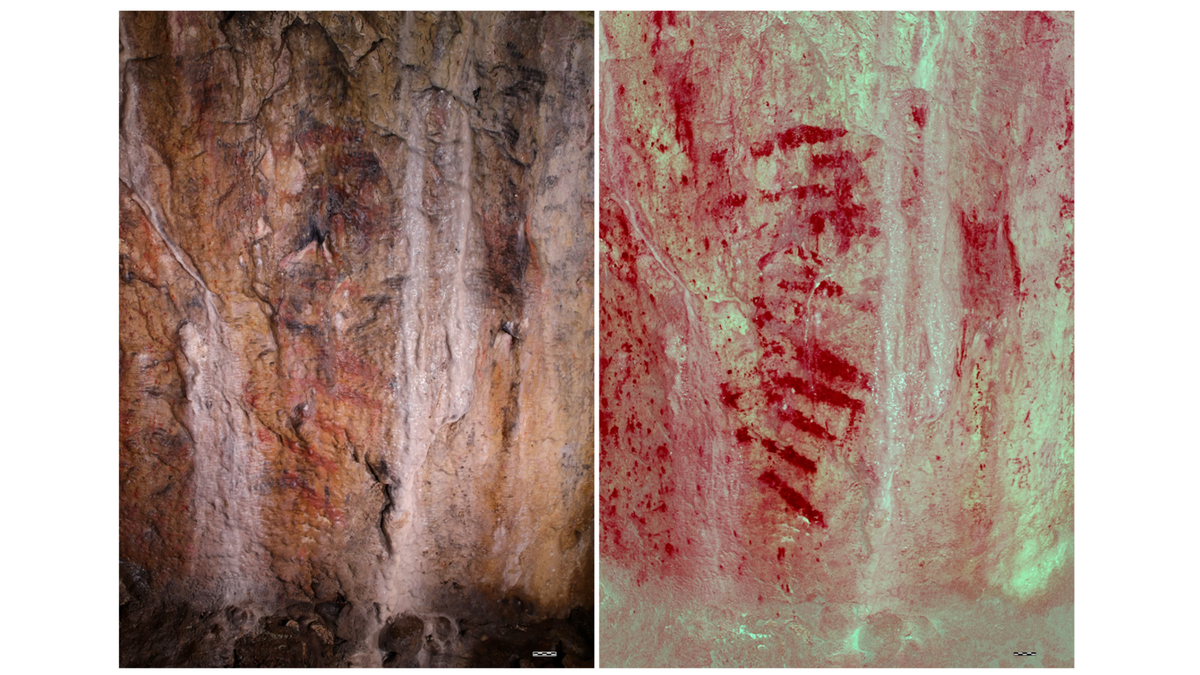
Why it matters: This finding pushes back the timeline for symbolic human expression in Britain by thousands of years and provides rare direct evidence of Paleolithic ritual behavior in the region, challenging earlier assumptions about the cultural capabilities of its ancient inhabitants.
Context: The panel was originally found in 1912 and hailed as the first Upper Paleolithic rock art in Britain, but skepticism by 1928 led to its dismissal and the loss of its exact location. Its rediscovery and modern dating resolve a century-old archaeological debate.
"The presence of rock art in the deeper, darker parts of Bacon Hole suggests that at least some areas of the cave may have held symbolic or ritual significance." — LIVESCIENCE
Commentary: The confirmation of intentional, structured marking in a deliberately chosen dark chamber aligns with broader European patterns of Paleolithic cave art as ritual space, not mere decoration. The site’s repeated use over millennia—evidenced by artifacts from Roman, Saxon, and medieval periods—suggests a persistent cultural memory that transcended any single practical function. This challenges the notion that such deep-time symbolic behavior was rare in northern Europe, implying a richer cognitive and social landscape than previously modeled.
Date: Tue, 02 Jun 2026 11:00:00 +0000
URL: https://www.livescience.com/archaeology/17-000-year-old-stripes-of-red-in-a-welsh-cave-are-the-oldest-rock-art-in-the-uk-study-finds
AI Sentiment Score: Negative (80%)
AI Credibility Score: 10.0/10 — High
Scores and text generated by AI analysis of the source article indicated.
Gessel gold hoard: A 3,300-year-old stash of gleaming treasures that’s one of the largest Bronze Age hoards from Europe (Livescience)
Summary: The Gessel gold hoard, discovered in 2011 in northern Germany, is one of the largest Bronze Age gold hoards in Europe, containing 117 objects weighing over 3.7 pounds. Dated to circa 1300 B.C., the hoard includes 82 spiral rings likely used as currency, plus three personal accessories, including the only solid-gold brooch from Central Europe. The hoard was buried in a linen bag secured with bronze pins, but its purpose remains unknown. A new research project announced in spring 2026 will analyze the gold’s origin, with initial analysis suggesting a possible Central Asian source.

Why it matters: This hoard challenges assumptions about Bronze Age trade networks and economic systems in northern Europe, as the gold’s potential Central Asian origin would indicate long-distance exchange routes previously underestimated.
Context: The hoard is the first scientifically excavated prehistoric gold hoard in Germany, and its lack of associated settlement or grave suggests it was a deliberate deposit of wealth or a metalsmith’s collection.
"Gessel gold hoard: A 3,300-year-old stash of gleaming treasures that’s one of the largest Bronze Age hoards from Europe The Gessel gold hoard is among the largest treasures ever discovered in prehistoric." — LIVESCIENCE
Commentary: The 2026 provenance study is the key development here: if the gold traces to Central Asia, it rewires our understanding of Bronze Age connectivity, pushing organized trade routes far earlier and farther than the amber-and-tin narratives typically allow. The hoard’s composition—standardized spiral rings as proto-currency—also suggests a more sophisticated economic logic than simple votive or funerary deposits, hinting at early forms of commodity money in temperate Europe.
Date: Mon, 01 Jun 2026 10:00:00 +0000
URL: https://www.livescience.com/archaeology/gessel-gold-hoard-a-3-300-year-old-stash-of-gleaming-treasures-thats-one-of-the-largest-bronze-age-hoards-from-europe
AI Sentiment Score: Negative (75%)
AI Credibility Score: 10.0/10 — High
Scores and text generated by AI analysis of the source article indicated.
Science news this week: Ötzi the Iceman used to make sourdough, Italian teenagers discover Roman villa under school, Google plans to release 64 million mosquitos, and RIP to NASA’s Maven probe (Livescience)
Summary: This week’s science news includes the discovery that Ötzi the Iceman’s body harbored ancient yeasts, which scientists used to make sourdough; Italian teenagers uncovered a 1,800-year-old Roman villa under their school gym; Google applied to release 64 million bacteria-infected mosquitoes in California and Florida; and NASA’s MAVEN probe was declared dead after 11 years on Mars. These stories span from prehistoric biology to modern tech interventions and space exploration, each with distinct implications for research and policy.

Why it matters: For ancient world specialists, the Ötzi yeast and Roman villa finds offer new data on prehistoric microbial survival and urban archaeology, while the mosquito release and MAVEN loss signal shifts in biotech regulation and planetary science priorities.
Context: Ötzi’s mummy has been studied for decades, but this is the first use of his microbiome for food science; the Roman villa discovery by students highlights the role of amateur archaeology in Italy; Google’s mosquito plan follows similar Wolbachia-based trials by other entities.
"First discovered in Italy’s Ötztal Alps in September 1991, Ötzi was a prehistoric man who died, likely by murder, some 5,300 years ago before being mummified naturally inside glacier ice. But bad news for Ötzi was good news for four strains of cold-adapted glacier yeasts, which infiltrated his body shortly after his death and may still be active today." — LIVESCIENCE
Commentary: The Ötzi sourdough experiment is a novel intersection of paleomicrobiology and gastronomy, but its real value lies in demonstrating that ancient microbial strains can remain viable for millennia, opening questions about pathogen revival and fermentation history. The Roman villa find under a school gym underscores how Italy’s archaeological density means even routine construction can yield major discoveries, though it also raises challenges for preservation and educational disruption. Google’s mosquito release, if approved, would mark a rare private-sector entry into public health vector control, but the EPA’s pending decision will test regulatory frameworks for biotech interventions at scale.
Date: June 06, 2026 07:00 AM ET
URL: https://www.livescience.com/space/science-news-this-week-otzi-the-iceman-used-to-make-sourdough-italian-teenagers-discover-roman-villa-under-school-google-plans-to-release-64-million-mosquitos-and-rip-to-nasas-maven-probe
AI Sentiment Score: Negative (83%)
AI Credibility Score: 10.0/10 — High
Scores and text generated by AI analysis of the source article indicated.
NASA confirms meteor exploded over northeastern US with force of 230 tons of TNT (Livescience)
Summary: NASA confirmed that a 5-foot-wide meteor exploded over the northeastern U.S. on May 30, releasing energy equivalent to 230 tons of TNT. The fireball was detected at an altitude of roughly 31 miles, generating a sonic boom heard across multiple states and parts of Canada. No damage or injuries were reported. The meteor was too small to have been tracked prior to entry.

Why it matters: For readers in the region, this event underscores the frequency of small meteor impacts and the difficulty of detecting them before they reach the atmosphere, even as larger ‘city-killer’ asteroids are increasingly cataloged.
Context: This is the third notable fireball in a week, following events in the Philippines and Ohio, highlighting a period of elevated meteor activity.
"NASA confirms meteor exploded over northeastern US with force of 230 tons of TNT NASA shared an initial analysis of a 5-foot-wide fireball meteor that exploded in the sky over the northeastern." — LIVESCIENCE
Commentary: The event is a reminder that our detection gap for objects under 140 meters remains wide, and that public perception of risk is shaped by rare, dramatic airbursts rather than the more probable but undetected smaller impacts. The sonic boom and building shaking reported by civilians also illustrate the challenge of distinguishing natural meteor events from other explosive phenomena in populated areas.
Date: Mon, 01 Jun 2026 22:09:56 +0000
URL: https://www.livescience.com/space/meteoroids/nasa-confirms-meteor-exploded-over-northeastern-us-with-force-of-230-tons-of-tnt
AI Sentiment Score: Negative (60%)
AI Credibility Score: 10.0/10 — High
Scores and text generated by AI analysis of the source article indicated.
Post ID: 1cabf90f