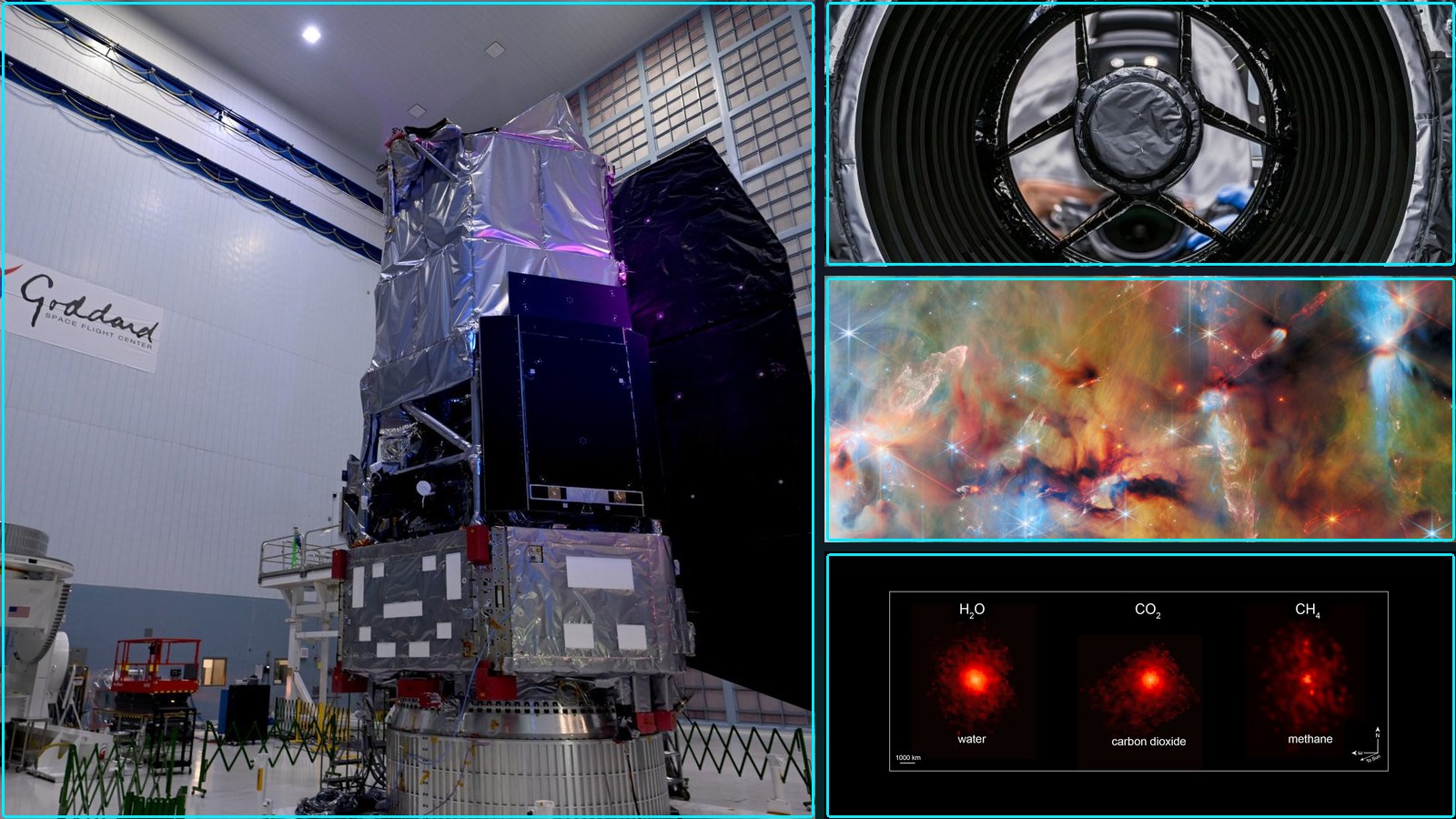
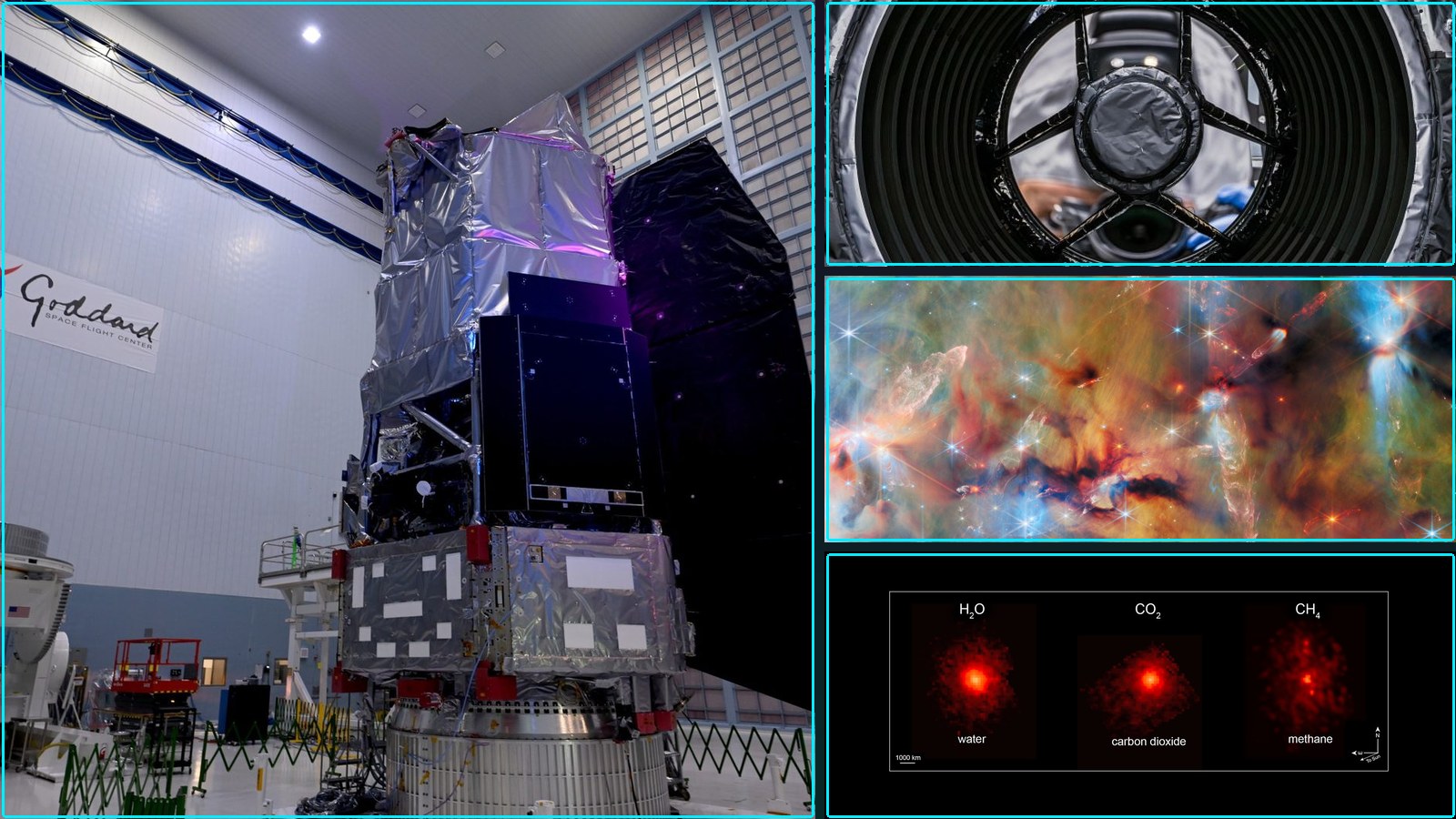
NASA’s Roman Space Telescope and JWST Discoveries
NASA Invites Media to See Roman Space Telescope Arrive at Kennedy (Nasa.Gov)
Summary: NASA has opened media accreditation for the arrival of the Nancy Grace Roman Space Telescope at Kennedy Space Center, where it will be processed for launch. The observatory, completed and tested at Goddard, will arrive via the Pegasus barge. It is scheduled to launch as soon as early September on a SpaceX Falcon Heavy rocket from Launch Complex 39A. Roman will conduct wide-field surveys to study dark energy, exoplanets, and other cosmic phenomena.
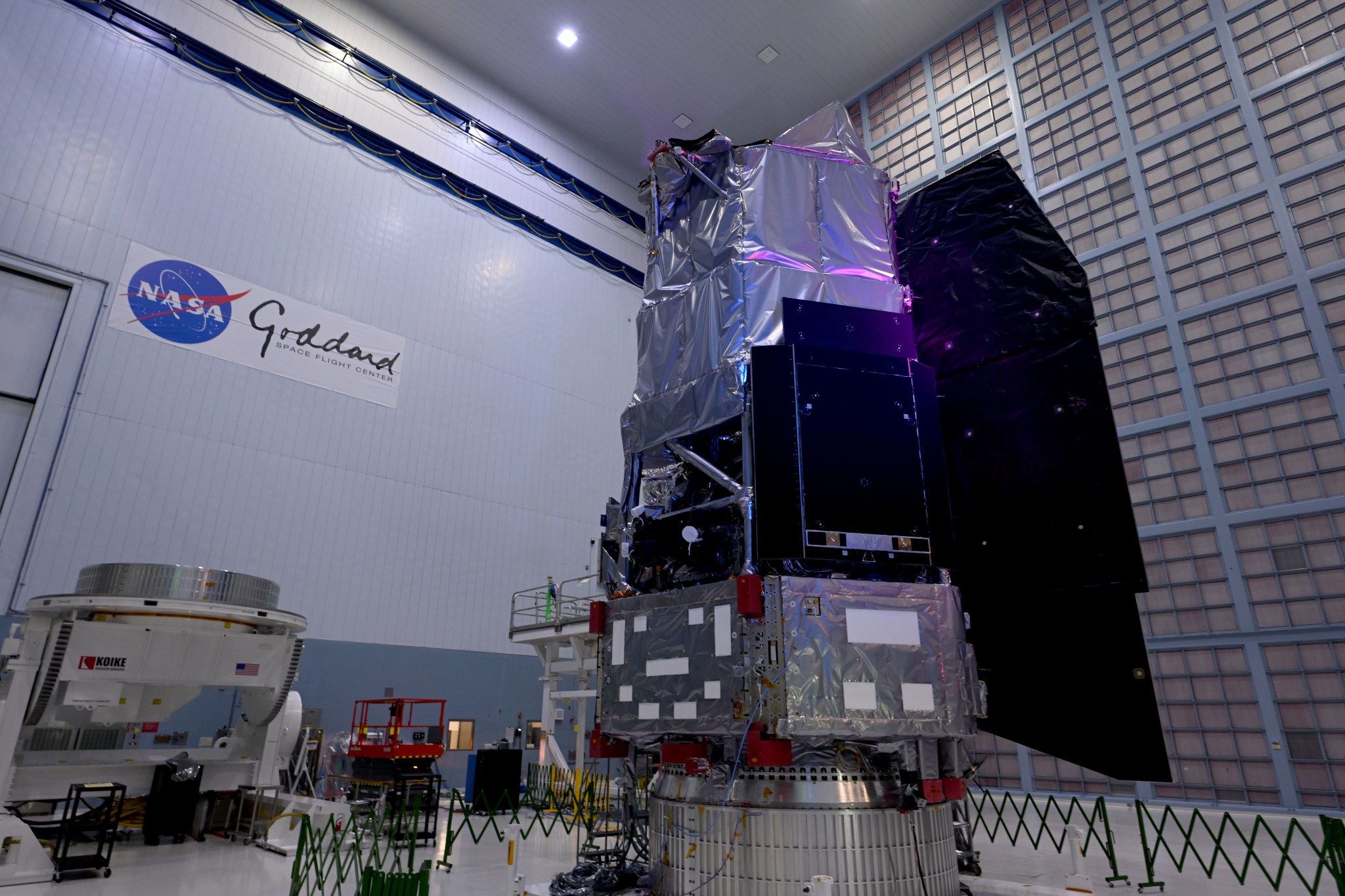
Why it matters: This marks the transition of Roman from construction to launch operations, a critical milestone for NASA’s next flagship astrophysics mission after JWST.
Context: Roman is NASA’s next large space observatory, designed for wide-field infrared surveys. It follows the model of the Hubble-class observatory but with a 100-times-larger field of view, and its launch on Falcon Heavy represents a shift toward commercial launch services for major science missions.
"The observatory will usher in a new era of cosmic surveys, unveiling troves of celestial objects, and shedding light on some of the universe’s most profound mysteries, including phenomena we can’t see." — NASA.GOV
Commentary: The arrival at Kennedy signals the end of a long development phase and the beginning of the final, high-stakes integration and launch campaign. The September launch window is ambitious but plausible given the mission’s maturity. The Falcon Heavy selection, while cost-effective, introduces schedule risk tied to that vehicle’s availability and performance history. For the astrophysics community, Roman’s wide-field capability is the key differentiator from JWST, promising a complementary survey-driven science return.
Date: Mon, 01 Jun 2026 21:22:52 +0000
URL: https://www.nasa.gov/news-release/nasa-invites-media-to-see-roman-space-telescope-arrive-at-kennedy/
AI Sentiment Score: Negative (64%)
AI Credibility Score: 10.0/10 — High
Scores and text generated by AI analysis of the source article indicated.
Roman Telescope’s massive infrared mirror is ready to fly (Universetoday)
Summary: NASA has completed final inspection of the Roman Space Telescope’s 2.4-meter primary mirror, coated with a 400-nanometer silver layer for near-infrared observations. The telescope is now set to ship to Kennedy Space Center for a September 2026 launch to the Sun-Earth L2 point. Roman will study dark matter, dark energy, exoplanets via direct imaging and microlensing, and galaxy evolution. Its $4 billion cost is less than half that of JWST, and the milestone confirms the hardware is flight-ready after years of development since 2014.
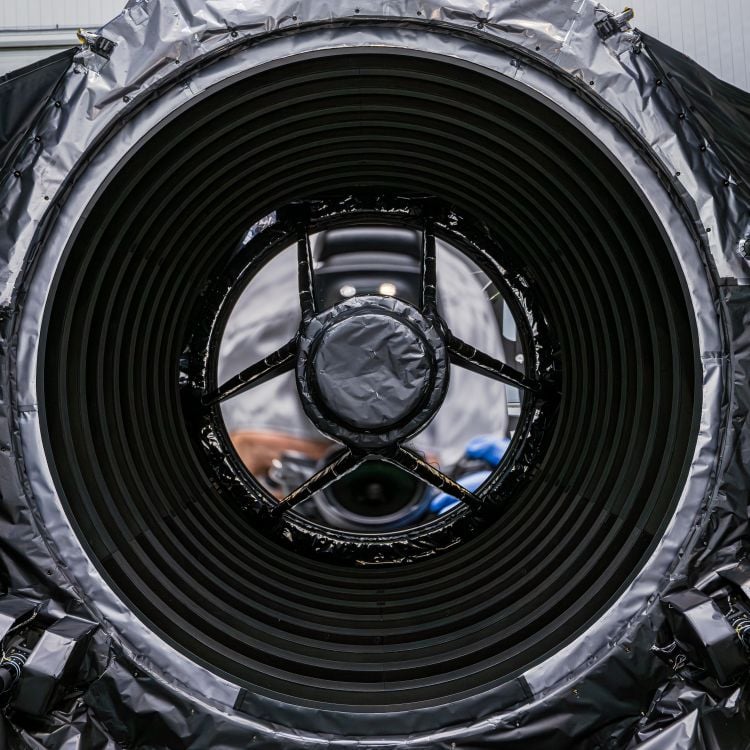
Why it matters: Roman’s mirror completion marks the transition from development to launch preparation, confirming that a major survey telescope with unique wide-field infrared capability will soon join JWST at L2, enabling complementary exoplanet and cosmology science.
Context: Roman was originally the Wide-Field Infrared Survey Telescope (WFIRST) and has faced budget and schedule challenges. Its 2.4-meter mirror is the same size as Hubble’s but optimized for infrared, and it will operate at L2 alongside JWST.
[Summary note] NASA has completed final inspection of the Roman Space Telescope’s 2.4-meter primary mirror, coated with a 400-nanometer silver layer for near-infrared observations.
Commentary: The mirror inspection milestone is a concrete engineering signal that Roman is on track for its 2026 launch window, despite past delays. Its wide-field infrared capability will fill a critical gap between Hubble’s optical and JWST’s deep but narrow-field infrared surveys, making it a workhorse for exoplanet demographics and dark energy mapping. For the exoplanet community, Roman’s coronagraph and microlensing surveys will directly address occurrence rates and atmospheric characterization of planets beyond the reach of current instruments.
Date: Mon, 01 Jun 2026 04:05:00 +0000
URL: https://www.universetoday.com/articles/roman-telescopes-massive-infrared-mirror-is-ready-to-fly
AI Sentiment Score: Negative (71%)
AI Credibility Score: 10.0/10 — High
Scores and text generated by AI analysis of the source article indicated.
JWST Finds Methane Atmosphere on Temperate Exoplanet (Universetoday)
Summary: JWST has detected methane in the atmosphere of TOI-199b, a temperate gas giant 335 light-years away, making it the first such exoplanet confirmed to contain methane. The planet orbits its G-type star every 104.9 days, with a surface temperature of about 79°C, and the detection was made via transmission spectroscopy during a transit. The finding validates long-standing models predicting methane in cooler gas giants and opens a new observational window for comparative exoplanet atmosphere studies.
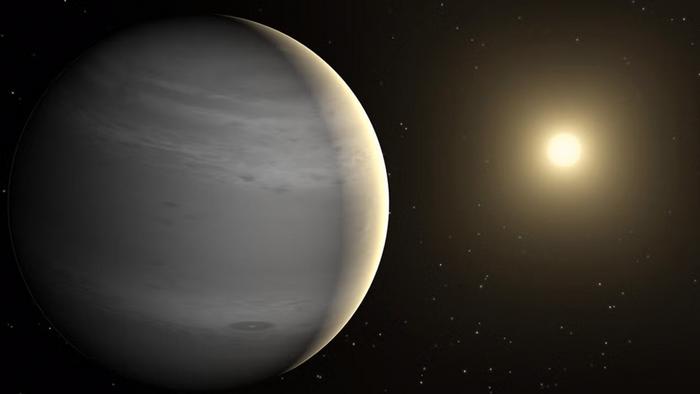
Why it matters: This detection provides the first direct evidence of methane in a temperate gas giant, enabling model validation and comparative studies that could refine our understanding of planetary atmosphere formation and evolution.
Context: Previous methane detections on exoplanets like WASP-80b and K2-18b were on much hotter or cooler worlds; TOI-199b occupies a previously uncharacterized temperature regime near the inner edge of its star’s habitable zone.
[Summary note] JWST has detected methane in the atmosphere of TOI-199b, a temperate gas giant 335 light-years away, making it the first such exoplanet confirmed to contain methane.
Commentary: The detection is a milestone for JWST’s transmission spectroscopy capability, but the real prize is comparative: temperate gas giants are rare, so each new data point carries outsized weight for atmospheric models. The mention of carbon dioxide and ammonia as candidates suggests follow-up observations could yield a fuller chemical inventory, though the 105-day orbit limits observing windows. This is a funded, operational instrument delivering on its promise—no speculative breakthrough, just solid science that tightens the constraints on planetary formation theory.
Date: Mon, 01 Jun 2026 01:08:32 +0000
URL: https://www.universetoday.com/articles/jwst-finds-methane-atmosphere-on-temperate-exoplanet
AI Sentiment Score: Negative (50%)
AI Credibility Score: 10.0/10 — High
Scores and text generated by AI analysis of the source article indicated.
Webb unveils young stars across every stage of formation (Esa.Int)
Summary: For this NASA/ESA/CSA James Webb Space Telescope Picture of the Month we return to the constellation Orion (the Hunter), a location familiar to Webb. This area of the sky is replete with star-forming clouds that make up a complex hundreds of light-years across. We find ourselves in the giant molecular cloud Orion A, of which the familiar Orion Nebula (also known as M42) is just a part; Webb has taken both close-up and wide-angle looks at M42 before.

Why it matters: This matters for Space Exploration because it gives a concrete current signal to track: For this NASA/ESA/CSA James Webb Space Telescope Picture of the Month we return to the constellation Orion (the Hunter), a location familiar to Webb.
Context: For this NASA/ESA/CSA James Webb Space Telescope Picture of the Month we return to the constellation Orion (the Hunter), a location familiar to Webb. This area of the sky is replete with star-forming clouds that make up a complex hundreds of light-years across. We find ourselves in the giant molecular cloud Orion A, of which the familiar Orion Nebula (also known as M42) is just a part; Webb has taken both close-up and wide-angle looks at M42 before.
"For this NASA/ESA/CSA James Webb Space Telescope Picture of the Month we return to the constellation Orion (the Hunter), a location familiar to Webb. This area of the sky is replete with." — ESA.INT
Commentary: The immediate implication is operational rather than speculative: watch how this changes budgets, workflows, or risk assumptions over the next cycle.
Date: June 05, 2026 04:00 AM ET
URL: https://www.esa.int/ESA_Multimedia/Images/2026/06/Webb_unveils_young_stars_across_every_stage_of_formation
AI Sentiment Score: Negative (57%)
AI Credibility Score: 10.0/10 — High
Scores and text generated by AI analysis of the source article indicated.
Webb sniffs methane from interstellar Comet 3I/ATLAS (Esa.Int)
Summary: The James Webb Space Telescope has directly detected methane gas in interstellar comet 3I/ATLAS, marking the first such detection for an object from outside our Solar System. The methane was likely buried below the comet’s surface and only released after its close pass to the Sun, while the comet also shows unusually high carbon dioxide levels. These findings, published in The Astrophysical Journal Letters, indicate a formation environment and chemistry distinct from typical Solar System comets.

Why it matters: This provides the first direct chemical evidence that interstellar objects can have fundamentally different compositions from comets born in our Solar System, offering a rare window into the chemistry of other planetary systems.
Context: Comet 3I/ATLAS is only the third known interstellar object to pass through our Solar System, following 1I/’Oumuamua and 2I/Borisov, but the first observed with JWST’s mid-infrared spectroscopy capabilities.
"The NASA/ESA/CSA James Webb Space Telescope has collected its first chemical fingerprint of an interstellar object during a recent revisit to Comet 3I/ATLAS. This image from the Mid-Infrared Instrument (MIRI) shows the." — ESA.INT
Commentary: The methane detection is a strong signal that interstellar comets can preserve volatiles in deep subsurface layers, shielded from space weathering until a close solar passage. The high methane-to-water ratio and elevated CO2 suggest 3I/ATLAS formed in a colder, more carbon-rich protoplanetary disk than typical Solar System comets, possibly around a different star type. This reinforces the value of JWST as an interstellar chemistry observatory, not just a deep-field imager, and sets expectations for future survey missions like the Rubin Observatory to find more such targets.
Date: June 01, 2026 11:00 AM ET
URL: https://www.esa.int/ESA_Multimedia/Images/2026/06/Webb_sniffs_methane_from_interstellar_Comet_3I_ATLAS
AI Sentiment Score: Negative (50%)
AI Credibility Score: 10.0/10 — High
Scores and text generated by AI analysis of the source article indicated.
Post ID: 37794733