Newsletter Strategy & Operations for 2026
Newsletter Growth Strategies That Actually Work in 2026 (Plugyourbuild)
Summary: A 2026 analysis from Plugyourbuild identifies five reliable subscriber acquisition channels for independent newsletters: referral networks (SparkLoop, Letterly), newsletter swaps, directory listings, SEO via cross-publishing, and Twitter. The piece maps these tactics to specific audience-size stages, from foundational work for lists under 500 to scalable swaps and referral networks above 2,000 subscribers. It emphasizes retention as the prerequisite for growth and advocates for a staged, multi-channel approach where quality and shareability dominate.
Why it matters: For independent operators, this provides a concrete, stage-gated playbook for sustainable growth, moving beyond generic advice to a tactical framework grounded in 2026’s specific economics and platform realities.
Context: The newsletter ecosystem has matured beyond early virality, requiring operators to navigate a landscape of paid networks, SEO, and platform-specific engagement strategies.
"Five channels reliably produce newsletter subscribers in 2026. Most growth happens in some combination of them. Referral networks like SparkLoop and Letterly. These are the closest thing to scalable paid acquisition for." — PLUGYOURBUILD
Commentary: The piece is valuable as field observation and operator analysis, codifying a professionalizing market where acquisition has clear price points and conversion logic. Its stage-gated framework acknowledges that growth mechanics are not one-size-fits-all but depend on critical mass, making it a practical guide rather than an inspirational essay. The explicit cost ranges and conversion rates for referral networks signal a shift toward measurable media buying, while the continued emphasis on Twitter as a community hub, not a broadcast channel, reflects a nuanced understanding of platform decay and utility.
Date: May 24, 2026 12:00 AM ET
URL: https://www.plugyourbuild.com/blog/newsletter-growth-strategies-that-actually-work-in-2026
AI Sentiment Score: Positive (44%)
AI Credibility Score: 9.6/10 — High
Scores and text generated by AI analysis of the source article indicated.
How to Start a Newsletter in 2026: A Realistic Guide for … (Blog.Ozigi.App)
Summary: A 2026 guide from Ozigi.app outlines a constraint-first methodology for launching a sustainable newsletter, emphasizing niche definition, pre-launch audience building on social platforms, and a phased monetization strategy. It prescribes a workflow that uses AI for drafting compression while preserving the operator’s unique insight, advocating for a decoupled writing schedule and continuous material capture to solve the ‘blank-page problem’.
Why it matters: It reframes newsletter creation as a disciplined operational system, moving beyond generic inspiration to address the practical logistics of consistency and eventual monetization for independent operators.
Context: The advice emerges as the independent publishing landscape matures, with tools like AI becoming integrated into production workflows, shifting competition toward unique perspective and sustainable execution over mere distribution.
"The fix is constraint. Constrain by audience ("productivity for engineering managers at Series B startups"), constrain by format ("one tactical email teardown per week"), constrain by angle ("personal finance for people who." — BLOG.OZIGI.APP
Commentary: The guide’s core value is its operational realism, treating the newsletter as a product requiring system design. Its phased monetization and AI-as-compressor model reflect an evolved market where audience trust and operator stamina are the scarce resources, not publishing access. The constraint thesis correctly identifies niche depth as the primary defense against content exhaustion.
Date: May 19, 2026 12:00 AM ET
URL: https://blog.ozigi.app/blog/how-to-start-a-newsletter-2026
AI Sentiment Score: Negative (50%)
AI Credibility Score: 10.0/10 — High
Scores and text generated by AI analysis of the source article indicated.
How to Start a Newsletter in 2026 in 6 Steps (Hyperwriteai)
Summary: A 2026 guide outlines a six-step operational framework for launching a professional newsletter, emphasizing three content angles (expert dispatch, curated digest, strong-take essay), a weekly cadence, and platform selection (noting Beehiiv for growth/monetization). It stresses building a list before publishing via a structured signup page and personal outreach, with growth tactics focused on repurposing content and tracking reader replies over opens.

Why it matters: For independent operators, this codifies the professionalization of newsletter creation, shifting it from a casual blog substitute to a disciplined media business with defined growth loops and audience metrics.
Context: The newsletter-as-a-business model has matured, moving beyond early Substack hype into a competitive landscape where platform choice, audience-building mechanics, and content strategy are highly operationalized.
"Three angles work for most professional newsletters: – The expert dispatch. You teach what you’ve learned in your work: frameworks, hard lessons, things you’d tell a peer over coffee. – **The curated." — HYPERWRITEAI
Commentary: The guide’s value is as a field-observed playbook, not novel theory. Its prescription of weekly B2B Friday sends and reply-tracking over opens reflects hard-won operator consensus. The explicit platform callouts, especially Beehiiv for monetization, signal a market where infrastructure choice is a strategic, not just technical, decision. This institutionalizes the newsletter as a repeatable media product, raising the barrier for casual entrants while providing a clear checklist for serious ones.
Date: May 22, 2026 12:00 AM ET
URL: https://www.hyperwriteai.com/blog/how-to-start-a-newsletter
AI Sentiment Score: Neutral (33%)
AI Credibility Score: 10.0/10 — High
Scores and text generated by AI analysis of the source article indicated.
5 Things I Learned at the 2026 Newsletter Conference (Inboxcollective)
Summary: A report from the 2026 Newsletter Conference highlights a strategic pivot among leading operators from audience scale to audience quality. The central framework distinguishes a ‘how many’ business, reliant on ad revenue from a large list, from a ‘who’ business, built on deep reader relationships and diversified monetization. Key metrics are shifting from list size and open rates toward lifetime value and audience understanding, with a focus on enriching reader profiles to suggest value to advertisers and unlock higher revenue per subscriber.

Why it matters: This signals a maturation of the independent media market, where sustainable economics require moving beyond vanity metrics to a more sophisticated, relationship-driven business model.
Context: The newsletter economy is consolidating, with operators facing pressure to demonstrate ROI beyond simple reach, mirroring broader shifts in digital marketing and subscription business fundamentals.
"Adam Ryan, founder & CEO of Workweek, nicely framed the key question: “Am I in a ‘how many’ business or a ‘who’ business?” A “how many” business is one where revenue is." — INBOXCOLLECTIVE
Commentary: The ‘who’ versus ‘how many’ dichotomy is a useful forcing function for operators to audit their revenue model and audience strategy. The emphasis on tools like Clay for profile enrichment suggests a move toward first-party data assets as a core competitive moat, reducing dependency on platform algorithms. This operational shift rewards newsletters that function as high-signal communities, potentially widening the gap between professionalized outfits and casual creators.
Date: May 20, 2026 12:00 AM ET
URL: https://inboxcollective.com/five-things-i-learned-at-the-newsletter-conference-this-year/
AI Sentiment Score: Positive (50%)
AI Credibility Score: 8.4/10 — High
Scores and text generated by AI analysis of the source article indicated.
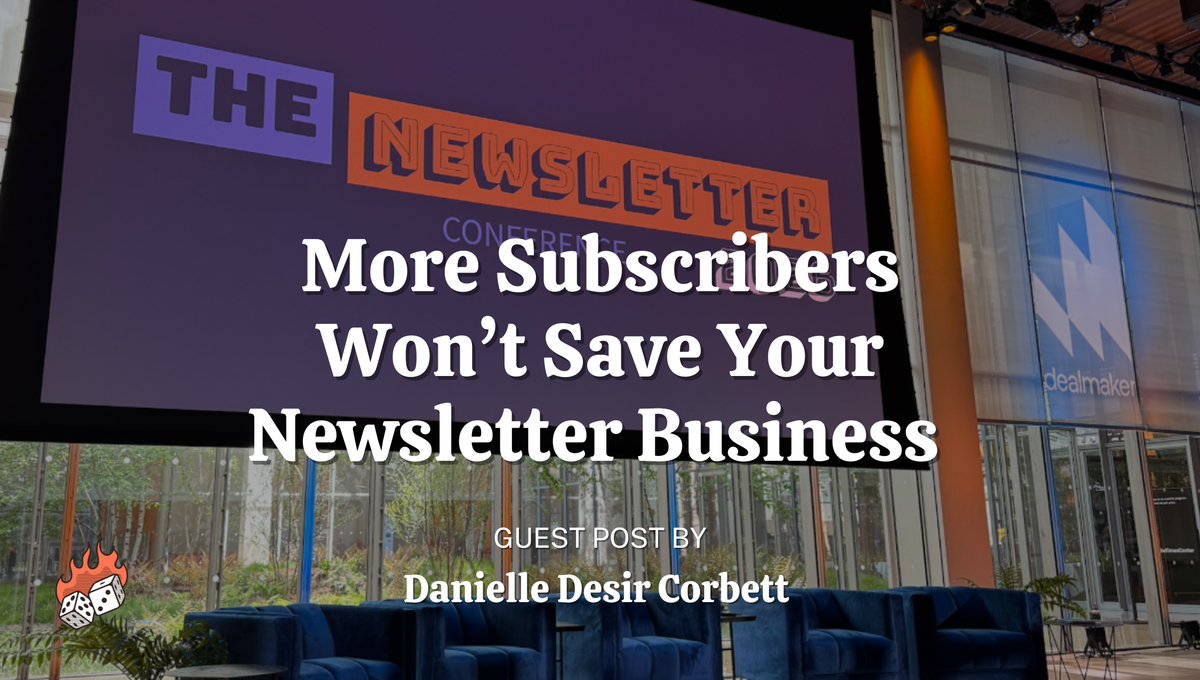
More subscribers won’t save your newsletter business (Revenuerulebreaker)
Summary: A newsletter operator argues that growth for its own sake is a flawed strategy, advocating instead for a ‘who’ business model focused on deepening engagement with a high-fit audience over a ‘how many’ model chasing scale. The piece emphasizes unique POV, qualitative subscriber data, and community-building tactics as the path to sustainable revenue via subscriptions, products, and services.
Why it matters: It challenges the default growth-at-all-costs playbook for independent media, proposing a concrete operational shift from audience size to audience fit.
Context: This reflects a broader maturation in the creator economy, where list monetization is moving beyond ad-driven CPMs toward direct reader revenue and community-based offerings.
"Dan stressed that to stand out in the inbox, you have to lean into what makes you exceptional. Insert your voice and unique POV (point of view) into every issue. Go deeper." — REVENUERULEBREAKER
Commentary: The argument is valuable as field-tested operator advice, not just theory. Its practical emphasis on segmentation, testing, and qualitative feedback provides a replicable framework for publishers hitting the ceiling of sponsorship revenue. The shift from ‘how many’ to ‘who’ redefines the core asset, turning a mailing list into a qualified lead database for higher-margin offerings.
Date: May 22, 2026 12:00 AM ET
URL: https://www.revenuerulebreaker.com/more-subscribers-wont-save-your-newsletter-business-takeaways-from-the-2026-newsletter-conference/
AI Sentiment Score: Negative (50%)
AI Credibility Score: 8.2/10 — High
Scores and text generated by AI analysis of the source article indicated.
Newsletter Trends | May 22, 2026 (Sponsorgap)
Summary: Sponsorship demand for newsletters is undergoing a structural bifurcation: while the overall market is flat, AI and SaaS sponsorships are surging, driven by Q2 funding deployments. Topic momentum has collapsed into a statistical anomaly, indicating a market reset where established topics are cycling, not genuinely accelerating. The real signals are in emerging sub-topics and in the strategic channel testing by major brands like Google and Midjourney.

Why it matters: For newsletter operators and media buyers, this data reveals a critical, time-sensitive window to capture new sponsor budgets before Q3 contracts are locked, and identifies the specific, high-growth niches where CPMs are set to rise.
Context: This analysis arrives during the pre-summer planning window, when sponsors finalize Q3 budgets, making its tactical recommendations operationally urgent.
"This isn’t a random fluctuation—it’s a structural shift driven by the Q2 funding cycle, where late-stage AI and SaaS companies are deploying newly raised capital into audience acquisition." — SPONSORGAP
Commentary: The report’s value lies in its field observation of budget cycles and channel-testing behavior, translating raw data into a tactical playbook. Its thesis—that growth now comes from specialization and hybrid angles—is a sharp corrective to the ‘go broad’ strategy, validated by the collapse of general topic momentum. Operators should treat its 14-day action items as a testable hypothesis for immediate outreach.
Date: May 22, 2026 12:00 AM ET
URL: https://sponsorgap.com/blog/weekly-trend-spotlight-may-15-22-2026
AI Sentiment Score: Positive (57%)
AI Credibility Score: 7.0/10 — Medium
Scores and text generated by AI analysis of the source article indicated.
Paid isn’t dead. But your playbooks need an upgrade. (Newsletter.Mkt1.Co)
Summary: The MKT1 newsletter argues that paid marketing for B2B is not obsolete but requires a fundamental shift from channel-first to audience-first execution, powered by AI and enriched first-party data. It contends that competitive advantage now lies in building dynamic audience lists from CRM data, syncing them across platforms, and creating a feedback loop between paid and organic efforts. The piece outlines a three-part upgrade: bringing your own audience (BYOA) to all channels, building an integrated paid flywheel, and using AI to scale creative variation beyond traditional bottlenecks.

Why it matters: This signals a maturation point for B2B marketing operations where tactical channel optimization is being superseded by strategic data architecture, creating a new performance gap between teams.
Context: This follows a broader industry trend of walled garden saturation and the search for incrementality, pushing marketers toward first-party data strategies once dominant in B2C.
"Paid fundamentals across targeting & messaging still work…but the 20% of teams that can execute and test faster, at higher volume and higher quality, with AI are crushing the other 80%." — NEWSLETTER.MKT1.CO
Commentary: The argument is valuable as a field observation and tactical analysis, diagnosing a systemic shift from creative-led to data-led paid operations. The emphasis on ‘audience-first’ as a foundational data practice, rather than a targeting tactic, reframes paid from a siloed performance channel to a core GTM intelligence system. This has concrete implications for marketing tech stacks, agency services, and internal team structures, privileging operations and analytics roles over pure media buying.
Date: May 22, 2026 12:00 AM ET
URL: https://newsletter.mkt1.co/p/ads
AI Sentiment Score: Negative (50%)
AI Credibility Score: 7.0/10 — Medium
Scores and text generated by AI analysis of the source article indicated.
Proven Paid Newsletter Monetization: 5 Models for Coaches in 2026 (Communipass)
Summary: Communipass, a platform for creators, argues that the classic paid newsletter subscription model is losing efficacy in 2026 due to AI commoditization of information. It proposes a stack of five alternative monetization models—Paid Subscriptions, Newsletter-to-Paid-Challenge Funnels, Paid Group Continuity, Paid AI Agents, and Standalone Payment Links—that treat the free newsletter as a trust-building front-end for interactive, outcome-based products. The analysis includes conversion math, operational mechanics, and a case study of a productivity coach who layered three models to increase monthly revenue from ~$1,150 to ~$4,650 within 90 days.
Why it matters: This signals a structural shift in the creator economy, where value is migrating from static content distribution to interactive, channel-agnostic experiences, with implications for platform fees, audience engagement, and the definition of expertise.
Context: The piece reflects a broader industry pivot away from pure content monetization as AI erodes the scarcity of generic insight, pushing creators toward community, coaching, and proprietary system delivery.
"Paid newsletter monetization in 2026 means using the newsletter as discovery and trust-building, then monetizing through interactive experiences (a Paid Challenge, a Paid Group, an AI Agent) rather than charging directly for the essay itself." — COMMUNIPASS
Commentary: The argument is valuable as field observation and operator analysis, grounded in concrete revenue mechanics and platform economics. Its thesis—that the newsletter is now a loss leader for interactive services—redefines the medium’s business purpose and pressures legacy platforms like Substack, whose 10% fee structure becomes punitive against lower-fee alternatives optimized for experiential products.
Date: 1 week ago
URL: https://communipass.com/blog/paid-newsletter-monetization/
AI Sentiment Score: Negative (71%)
AI Credibility Score: 9.7/10 — High
Scores and text generated by AI analysis of the source article indicated.
Rowan Cheung: Newsletter operating model | OnePersonAI (Ailearngo)
Summary: Rowan Cheung’s The Rundown AI demonstrates a refined operating model for independent media, moving from a daily AI newsletter to a multi-layered education and tools platform. It captures professional attention through a free daily briefing, monetizes that attention via sponsorships, and then converts the audience into paying customers for AI University courses and practical guides. This model explicitly trades on audience quality and professional intent, not just scale.
Why it matters: It provides a validated blueprint for independent operators to build durable, high-margin businesses by systematically moving an audience up the value stack from free media to paid utility.
Context: This analysis fits within a broader trend of newsletter operators expanding into SaaS, education, and community platforms, moving beyond advertising dependence.
"The Rundown AI uses a daily AI-news habit to capture professional attention, sells that attention to sponsors, then turns the same audience into a paid education platform for applying AI at work." — AILEARNGO
Commentary: Cheung’s model is notable for its explicit layering and clear audience progression, treating the newsletter as a top-of-funnel habit builder for a broader professional services platform. The operational insight is in designing the free product’s promise to naturally necessitate the paid one, turning daily curiosity into structured upskilling. This shifts the newsletter from a content channel to a core piece of business infrastructure.
Date: May 24, 2026 12:00 AM ET
URL: https://ailearngo.com/case/rowan-cheung-rundown-ai
AI Sentiment Score: Positive (40%)
AI Credibility Score: 7.0/10 — Medium
Scores and text generated by AI analysis of the source article indicated.
The four pillars of modern media (Onemanandhisblog)
Summary: The article argues that the core of the modern media ecosystem has shifted to four primary pillars: video-based social media, closed chat communities, newsletters, and podcasts. It posits that the traditional website is no longer the default center of a media business but rather one of several co-equal products, accessed primarily through prompts from these other channels or specific intent-driven searches. This reframes other formats from promotional tools to primary editorial products in their own right.

Why it matters: It matters because it challenges the operational and strategic assumptions of legacy and digital-native media businesses still anchored to a web-centric model, forcing a portfolio-based approach to content and distribution.
Context: This analysis aligns with the broader unbundling of media consumption and the rise of the ‘direct-to-audience’ economy, where attention is captured in fragmented, platform-specific environments.
"> The mass audience has now moved fully to video; the personal audience now lives in the group chat. Professionals are getting their information from newsletters and podcasts. The information landscape has." — ONEMANANDHISBLOG
Commentary: The piece is a valuable field observation for operators, diagnosing a structural shift that many institutions have been slow to operationalize. Its thesis—that the website is now a prompted destination, not a default hub—has concrete implications for editorial workflows, resource allocation, and revenue models, pushing for a true multi-format strategy rather than a web-first one with ancillary feeds.
Date: May 19, 2026 12:00 AM ET
URL: https://onemanandhisblog.com/2026/05/the-four-pillars-of-modern-media/
AI Sentiment Score: Positive (60%)
AI Credibility Score: 7.0/10 — Medium
Scores and text generated by AI analysis of the source article indicated.
May 2026 – Full Throttle Media (Fullthrottlemedia)
Summary: A media operator’s analysis distills LinkedIn’s operational mechanics for professional use, establishing a precise posting cadence (2-5 posts weekly, with 3 as the default floor) and engagement protocol to optimize for business outcomes rather than vanity metrics. It frames the platform as a system with specific triggers and diminishing returns, advising a disciplined, metric-driven monthly review cycle.

Why it matters: It provides a concrete, testable framework for independent operators and professional creators to systematize social media labor, shifting focus from content volume to calibrated business development.
Context: This reflects a maturation in creator/operator strategy, moving beyond growth-hacking maxims toward sustainable, evidence-based workflows that treat platforms as predictable, if opaque, business environments.
"Start with the overhead, not the product. Identify the three tasks that consume the most time from your highest-value people but do not require their expertise to complete. Draft emails, research compilation,." — FULLTHROTTLEMEDIA
Commentary: The analysis is valuable as field observation grounded in operator practice, offering a replicable system rather than generic inspiration. Its implication is the professionalization of platform labor: treating social media as a manageable production line with defined inputs (time, cadence) and outputs (conversations, pipeline), which recalibrates the creator’s relationship with algorithmic platforms from artistic expression to calibrated distribution.
Date: May 20, 2026 12:00 AM ET
URL: https://www.fullthrottlemedia.com/2026/05/
AI Sentiment Score: Positive (40%)
AI Credibility Score: 9.7/10 — High
Scores and text generated by AI analysis of the source article indicated.
Reuters Institute Predictions 2026: The Scorecard (Workflow.Ap)
Summary: A ten-week check on the Reuters Institute’s 2026 media predictions reveals a landscape of accelerated change. The forecasted collapse in search traffic is materializing faster and deeper than expected, especially for utility content, while breaking news referrals have paradoxically surged. AI integration into core workflows is widening the gap between early adopters and laggards, and the promised revenue from AI licensing deals is proving modest. The strategic imperative to build owned audiences and distinctive journalistic value is shifting from advice to necessity.

Why it matters: The speed and unevenness of these shifts force a rapid recalibration of strategy for any operator dependent on digital distribution and audience attention.
Context: The Reuters Institute’s annual predictions report serves as a key strategic benchmark for global news executives, framing 2026 as a pivotal year of pressure from AI and the creator economy.
"Breaking news is up 103% across all Google surfaces since November 2024, while every other content category — evergreen, landing pages, homepage traffic — is declining." — WORKFLOW.AP
Commentary: The divergence between breaking news and other content categories is the most operationally significant data point. It validates a path to survival not through volume but through distinctive, real-time human judgment—a clear mandate for broadcasters and newsrooms built for speed. Conversely, it condemns generic, synthesizable content to rapid obsolescence. The widening adoption gap in AI infrastructure suggests the industry is bifurcating into those building for a ‘liquid content’ future and those stuck in format-based silos.
Date: April 14, 2026
URL: https://workflow.ap.org/news/reuters-institute-predictions-2026
AI Sentiment Score: Positive (50%)
AI Credibility Score: 10.0/10 — High
Scores and text generated by AI analysis of the source article indicated.
How One Publisher Monetized His Audience With Amplify – Kajabi (Kajabi)
Summary: Kajabi’s Amplify platform, launched in April 2026, enables its creator experts to monetize their email lists by facilitating sponsored placements within each other’s broadcasts. One publisher used the system on day one, reaching 110,000 subscribers and generating 1,688 unique clicks from a single email. The platform automates the entire process—from profile creation and pricing to copy collaboration, payment, and delivery verification—removing the operational friction of traditional sponsorship deals.
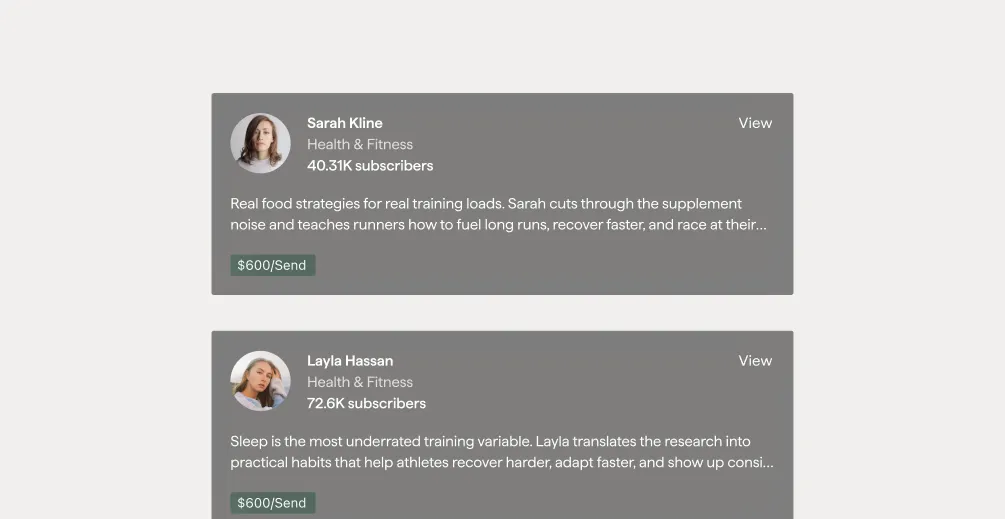
Why it matters: This represents a structural shift in the independent operator economy, moving audience monetization from a manual, relational business to a platform-mediated, scalable marketplace.
Context: The trend is toward embedded financialization within creator ecosystems, where platforms move beyond providing tools to actively orchestrating and clearing transactions between their users.
"Amplify handled the rest: the request, the copy collaboration, the payment, the delivery, and the verification that the email actually shipped." — KAJABI
Commentary: Amplify abstracts the sponsorship business into a pure yield optimization layer, turning audience attention into a standardized, tradeable asset. The risk is platform dependency and audience commodification, but the immediate gain for operators is radical simplification of a high-friction revenue stream. This model could pressure standalone newsletter platforms to offer similar networked monetization or risk being seen as merely delivery utilities.
Date: May 19, 2026 12:00 AM ET
URL: https://www.kajabi.com/blog/kajabi-amplify-publisher-case-study
AI Sentiment Score: Negative (57%)
AI Credibility Score: 7.0/10 — Medium
Scores and text generated by AI analysis of the source article indicated.
The Most Important Story of the Week Articles – Entertainment Strategy Guy (Entertainmentstrategyguy)
Summary: Netflix is releasing its live-action ‘The Chronicles of Narnia’ films in theaters globally, marking a significant strategic pivot for a streamer that has historically minimized theatrical windows. This move signals a reassessment of the economic and marketing value of the traditional cinema release model, even for a company built on direct-to-consumer streaming. The decision reflects broader industry pressures to maximize revenue from tentpole franchises and suggests a more pragmatic, hybrid distribution future is emerging.

Why it matters: It demonstrates a major platform’s operational shift that redefines content monetization and audience engagement strategies, affecting producers, theaters, and competing studios.
Context: Theatrical windows have been collapsing for years, but premium streaming services have largely avoided them for original content, treating theaters as a cost center rather than a profit center.
"Whoa! What Netflix Sending Narnia to Theaters Means for the Future of Film (Welcome to the “Most Important Story of the Week”, my bi-weekly strategy column analyzing the most important (but often." — ENTERTAINMENTSTRATEGYGUY
Commentary: This is valuable as field observation and strategic analysis from an operator perspective. The thesis—that Netflix’s move is a bellwether for a more financially integrated media ecosystem—is anchored in concrete business mechanics. It argues that even the most dominant streamer now sees theatrical not as an ideological rival but as a necessary revenue and marketing lever for franchise-scale investments, forcing a recalculation of asset value across the industry.
Date: May 18, 2026 12:00 AM ET
URL: https://entertainmentstrategyguy.com/weekly-news-update/
AI Sentiment Score: Positive (40%)
AI Credibility Score: 10.0/10 — High
Scores and text generated by AI analysis of the source article indicated.
How The Financial Times is betting on personality-led vodcasts as its next subscription lever (Digiday)
Summary: The Financial Times is launching a dedicated, personality-led vodcast series, ‘The Story of Money,’ on YouTube, marking a strategic shift to build parasocial relationships with audiences off-platform. This move, part of a broader push into multi-platform franchises, aims to cultivate future subscribers by deepening affinity with individual journalists rather than just the masthead. Analysts see this as a structural response to changes in audience discovery, where loyalty is built through long-term engagement in a creator-led media economy before any paywall interaction.

Why it matters: It signals a fundamental reconfiguration of subscription funnel strategy for premium publishers, moving from direct conversion to long-term audience cultivation through personality-driven content.
Context: This follows similar moves by rivals like Bloomberg and The Wall Street Journal, which have also developed discrete, show-like video formats, and occurs amid a broader industry shift where AI-driven search changes are reducing the efficacy of traditional SEO and brand-led discovery.
"Lock in a year of Digiday+ for 35% less. Ends June 5. How The Financial Times is betting on personality-led vodcasts as its next subscription lever The Financial Times is rolling out." — DIGIDAY
Commentary: The FT’s move is a high-signal adaptation from a financially secure player, validating the creator-economy playbook for elite B2B media. It operationalizes the theory that future subscriber value is accrued through prolonged, low-friction exposure to trusted journalist-personalities, effectively outsourcing top-of-funnel awareness to YouTube’s consideration-stage ecosystem. This makes audience development a content-format and talent-management problem first, a marketing problem second.
Date: 1 month ago
URL: https://digiday.com/media/how-the-financial-times-is-betting-on-personality-led-vodcasts-as-its-next-subscription-lever/
AI Sentiment Score: Negative (50%)
AI Credibility Score: 10.0/10 — High
Scores and text generated by AI analysis of the source article indicated.
Post ID: b05f07a6