Logistics Hubs, Ports & Freight Infrastructure
Google plans new logistics warehouse facility in Kannapolis (Charlotteobserver)
Summary: Google has leased a 729,872-square-foot logistics warehouse in Kannapolis, North Carolina, explicitly distinguishing it from its contentious data center expansions elsewhere in the state. The seven-year lease at Overlook 85 Industrial Park represents a diversification of its physical footprint in the region, separate from its concurrent $1 billion data center investment in Lenoir. This move follows Google’s established pattern of major capital deployment in North Carolina, now exceeding $1.2 billion.

Why it matters: It signals a strategic bifurcation in Google’s regional expansion, separating high-energy-demand data centers from logistics operations to manage community relations and operational needs.
Context: The Southeast, particularly the I-85 corridor in North Carolina, is experiencing intense competition for hyperscale data center and industrial development, often leading to local tension over energy use, incentives, and land.
"But the city stressed that this operation would not be for a data center, which remains a source of contention for many residents alarmed by their proliferation across the state." — CHARLOTTEOBSERVER
Commentary: Google is tactically segmenting its physical infrastructure growth, using logistics facilities to anchor its presence without triggering the same community backlash as data centers. This allows continued capital deployment while managing political and regulatory risk. The parallel $2 million Energy Impact Fund in Caldwell County is a direct, if modest, concession to the energy affordability concerns driving that backlash, establishing a playbook for other tech giants in energy-constrained markets.
Date: April 28, 2026 12:00 AM ET
URL: https://www.charlotteobserver.com/news/business/article315565048.html
AI Sentiment Score: Positive (40%)
AI Credibility Score: 10.0/10 — High
Scores and text generated by AI analysis of the source article indicated.
Southeast Regional LTL Carriers: Why Local Beats National – Davis Delivery (Davisdelivery)
Summary: A regional LTL carrier, Davis Delivery, argues that its direct-routing model within the Southeast outperforms national hub-and-spoke networks on cost, speed, and reliability for intra-regional freight. It details a 15-30% cost advantage, next-day transit on sub-300-mile lanes where nationals take 2-3 days, and lower damage rates due to fewer handlings. The analysis is framed as a guide for Southeast shippers in manufacturing, agriculture, textiles, construction, and e-commerce.

Why it matters: For Southeast-based businesses, carrier selection directly impacts inventory costs, production reliability, and accessorial fees, with regional carriers offering a structural advantage on the dense I-85 corridor that national networks cannot match.
Context: The Southeast’s freight density and just-in-time manufacturing have long created tension between the scale efficiency of national carriers and the lane-specific optimization of regional operators.
"For a typical two-pallet, 1,200-pound shipment traveling from Buford to Charlotte, a regional carrier’s all-in rate is typically 15 to 25 percent below the discounted national carrier rate." — DAVISDELIVERY
Commentary: This isn’t just a sales pitch; it’s a signal of inefficient arbitrage within national networks. The persistent cost and time delta on high-density lanes suggests national carriers are structurally mispriced for regional commerce, which may push more volume to specialists and force nationals to reconsider hub bypass or dedicated regional pricing tiers. The hybrid model advocated here formalizes a bifurcation in logistics procurement, where shippers manage two distinct networks—one for regional speed, another for national reach.
Date: April 13, 2026 12:00 AM ET
URL: https://davisdelivery.com/southeast-regional-ltl-carrier/
AI Sentiment Score: Negative (50%)
AI Credibility Score: 10.0/10 — High
Scores and text generated by AI analysis of the source article indicated.
Inland Port Greer drives growth in Southeast intermodal … (Container-News)
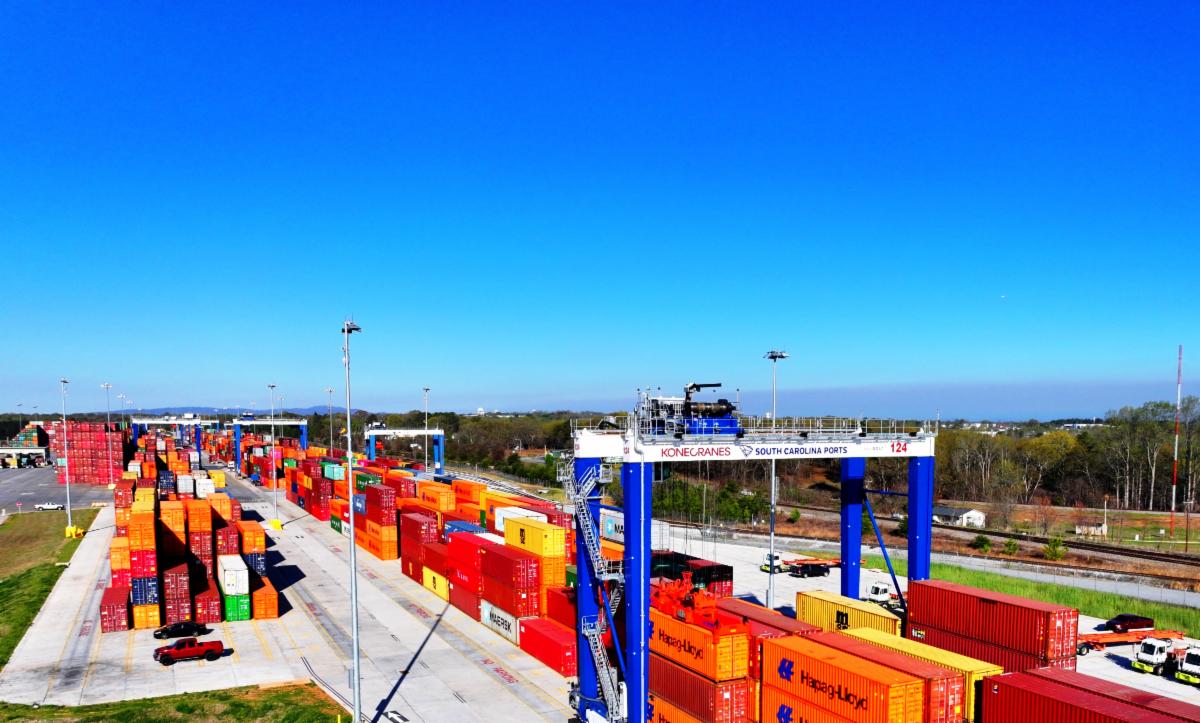
Summary: Inland Port Greer, a key intermodal hub in South Carolina, handled a record 200,000 rail moves in 2025. A recent $55 million expansion has increased its annual rail capacity to 300,000 lifts, solidifying its role as a high-volume, short-haul link between the Port of Charleston and a 94-million-consumer regional market.
Why it matters: This signals a continued concentration of logistics infrastructure and economic activity along the I-85 corridor, affecting where capital, manufacturing, and distribution networks anchor in the Southeast.
Context: Inland ports have become critical nodes for decongesting coastal gateways and shortening supply chains; Greer’s growth reflects a broader shift toward near-shoring and regionalized distribution models.
"The facility handled nearly 200,000 rail moves in 2025, marking a record year and reinforcing its position as a high-volume, short-haul intermodal solution." — CONTAINER-NEWS
Commentary: The expansion cements Greer as a primary conduit for imports into the Southeast’s industrial heartland, likely pulling more warehousing and light manufacturing to the Upstate SC region. Norfolk Southern’s network gains strategic density, while shippers gain resilience against port congestion—though this also concentrates systemic risk on this single corridor.
Date: April 29, 2026 12:00 AM ET
URL: https://container-news.com/inland-port-greer-drives-growth-in-southeast-intermodal-logistics/
AI Sentiment Score: Positive (50%)
AI Credibility Score: 10.0/10 — High
Scores and text generated by AI analysis of the source article indicated.
Intermodal and U.S. Ports Freight Market Update | C.H. Robinson (Chrobinson)
Summary: C.H. Robinson’s freight market update signals a nascent recovery in North American intermodal volumes, with Q1 2026 expected to slightly exceed 2025 levels despite difficult comparisons. Southern California port activity has normalized post-tariff volatility, contributing to early demand upticks. A widening cost gap is emerging as truckload rates are projected to rise at a high single-digit pace in Q2, while intermodal increases remain in low single digits, reinforcing intermodal’s advantage in key corridors like Southern California, the Southeast, and the Midwest.

Why it matters: For logistics operators and shippers, the diverging rate trajectories between truckload and intermodal will recalibrate routing decisions and contract strategies, particularly for mid-length hauls.
Context: Intermodal volumes have been suppressed following 2025’s tariff-driven pull-forward and a muted peak season, making even slight year-over-year growth a notable inflection point.
"The North American intermodal market is beginning to show early signs of recovery. First quarter volumes are expected to finish slightly above prior-year levels, despite difficult comparisons to 2025 when tariff-driven pull-forward." — CHROBINSON
Commentary: The rate divergence pressures asset-light truckload carriers and favors integrated logistics providers with rail access. Southeast and Midwest industrial growth will intensify as cost-sensitive freight shifts back to rail, affecting port and inland hub capacity planning. West Coast contract timing suggests carriers are betting on a stronger 2026 peak season, a test of sustained U.S.-China trade stability.
Date: April 27, 2026 12:00 AM ET
URL: https://www.chrobinson.com/en-gb/resources/insights-and-advisories/north-america-freight-insights/apr-2026-freight-market-update/intermodal/
AI Sentiment Score: Negative (50%)
AI Credibility Score: 10.0/10 — High
Scores and text generated by AI analysis of the source article indicated.
Intermodal and U.S. Ports Freight Market Update | C.H. Robinson (Chrobinson)
Summary: C.H. Robinson’s freight market update indicates the North American intermodal sector is showing early recovery signs, with Q1 volumes expected to slightly exceed prior-year levels. Southern California ports have normalized after a muted 2025 peak season, benefiting from stabilized U.S.-China trade flows and more predictable tariff policy. A widening cost gap is emerging, with truckload rates projected for high single-digit increases in Q2 while intermodal rates rise only in low single digits, reinforcing intermodal’s advantage in key corridors.
Why it matters: This signals a shift in modal share and regional freight flows, with direct consequences for logistics costs, port competitiveness, and rail carrier performance.
Context: Intermodal volumes have been volatile, influenced by tariff-driven pull-forwards, truckload capacity cycles, and West Coast port dynamics. The sector’s recovery often precedes broader industrial demand shifts.
"The North American intermodal market is beginning to show early signs of recovery. First quarter volumes are expected to finish slightly above prior-year levels, despite difficult comparisons to 2025 when tariff-driven pull-forward." — CHROBINSON
Commentary: The projected rate divergence will accelerate the reallocation of mid-haul freight (550-1,500 miles) from truck to rail, directly benefiting Class I railroads and intermodal marketing companies like C.H. Robinson. Southern California’s return to ‘normalized conditions’ suggests shippers are recalibrating supply chains away from contingency routing, which may concentrate volume and infrastructure investment back into traditional West Coast gateways. The Southeast and Midwest, highlighted as regions of tightening truck capacity, will see increased intermodal development pressure, potentially reshaping regional distribution center strategies.
Date: April 26, 2026 12:00 AM ET
URL: https://www.chrobinson.com/en-sg/resources/insights-and-advisories/north-america-freight-insights/apr-2026-freight-market-update/intermodal/
AI Sentiment Score: Negative (75%)
AI Credibility Score: 10.0/10 — High
Scores and text generated by AI analysis of the source article indicated.
Annual conference highlights advances, future plans at Port of … (Statesboroherald)
Summary: Georgia Ports Authority is consolidating Savannah’s position as the Southeast’s primary freight gateway, with new data quantifying a $1,000-per-container cost advantage over West Coast ports for key inland markets. A $5 billion, 10-year investment plan targets 54% container throughput growth via new berths and rail infrastructure, while a formal study process begins to further deepen and widen Savannah Harbor. The strategy explicitly leverages the Mason Mega Rail Terminal’s record volumes and speed to serve inland consumer and manufacturing markets.

Why it matters: This signals a structural shift in U.S. logistics, where cost and reliability are pulling container traffic from traditional West Coast gateways to Southeastern ports, with material implications for regional investment, industrial site selection, and intermodal rail volumes.
Context: Post-pandemic supply chain re-evaluation accelerated the ‘East Coast shift,’ with Savannah’s growth outpacing national averages. Investments here directly challenge the dominance of Los Angeles/Long Beach and position the Southeast as a primary import corridor.
"New findings from Georgia Tech researchers show using the Port of Savannah saves shippers more than $1,000 per container to Atlanta, Memphis and Nashville, compared to West Coast gateways, along with more predictable transit times." — STATESBOROHERALD
Commentary: The quantified $1,000 advantage transforms a qualitative claim into a hard business case for routing decisions, likely accelerating the re-routing of discretionary cargo. Coupled with the planned harbor expansion, this suggests Savannah is preparing for a permanent, not cyclical, increase in its market share, which could pressure competing ports to match its rail efficiency and public-private capital commitment.
Date: May 01, 2026 12:00 AM ET
URL: https://www.statesboroherald.com/local/annual-conference-highlights-advances-future-plans-at-port-of-savannah/
AI Sentiment Score: Negative (66%)
AI Credibility Score: 9.6/10 — High
Scores and text generated by AI analysis of the source article indicated.
Most Extensive Rail Network… (Seda)
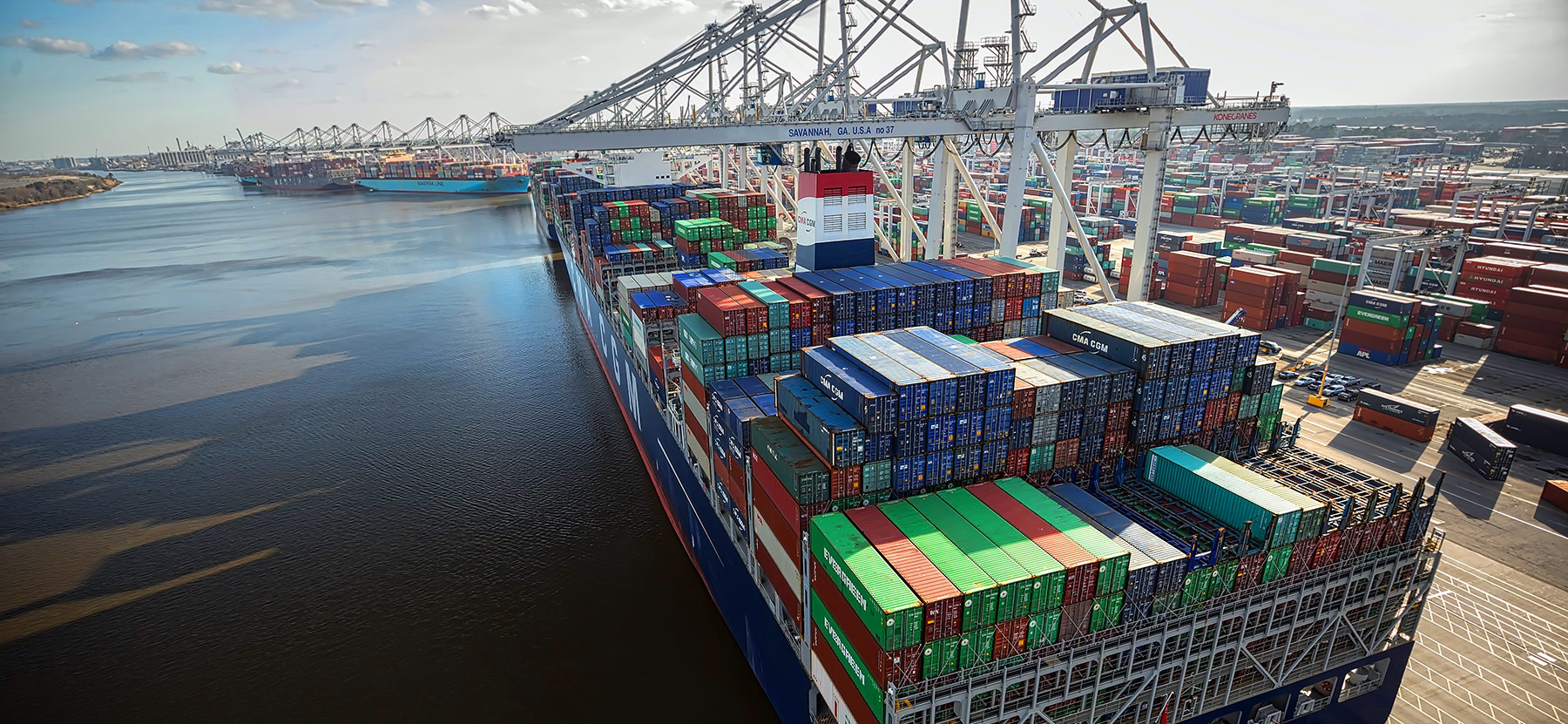
Summary: The Georgia Ports Authority is executing a $4.5 billion, self-financed expansion of the Port of Savannah, targeting a capacity increase from 5.7 million TEUs in 2025 to 7.5 million by 2030. Core projects include a new highway exit ramp for trucks, raising the Talmadge River bridge for larger ships, and constructing the Savannah Container Terminal to add three big-ship berths. Combined with the 2023 Garden City Terminal project, this will deliver a total of 12 big-ship berths, doubling capacity within six years while expanding yard, gate, and rail infrastructure.
Why it matters: This concentrated public-private investment signals a strategic bet on the Southeast as the dominant U.S. logistics hub, with concrete implications for regional capital allocation, industrial real estate, and inter-port competition.
Context: The expansion occurs amid a broader reconfiguration of U.S. supply chains toward Southeastern ports, driven by nearshoring, population growth, and infrastructure spending outpacing other regions.
"These ship berth improvements combined with the recent Garden City Terminal berth one project (which opened in 2023) will deliver a total of 12 big ship berths, representing a 100% increase in big ship berth capacity over the next six years and significantly increase, yard, gate and rail capabilities." — SEDA
Commentary: Savannah’s self-financed model and integrated inland projects (like the direct highway ramp to Atlanta) create a structural cost and efficiency advantage that could pressure rival ports, notably Charleston and Jacksonville, to accelerate their own capital plans. The co-location of the state’s Center of Innovation for Logistics in Savannah suggests a deliberate policy to anchor advanced logistics firms and talent within Georgia’s ecosystem, further concentrating economic activity.
Date: April 23, 2026 12:00 AM ET
URL: https://seda.org/do-business-here/infrastructure/
AI Sentiment Score: Positive (42%)
AI Credibility Score: 9.5/10 — High
Scores and text generated by AI analysis of the source article indicated.
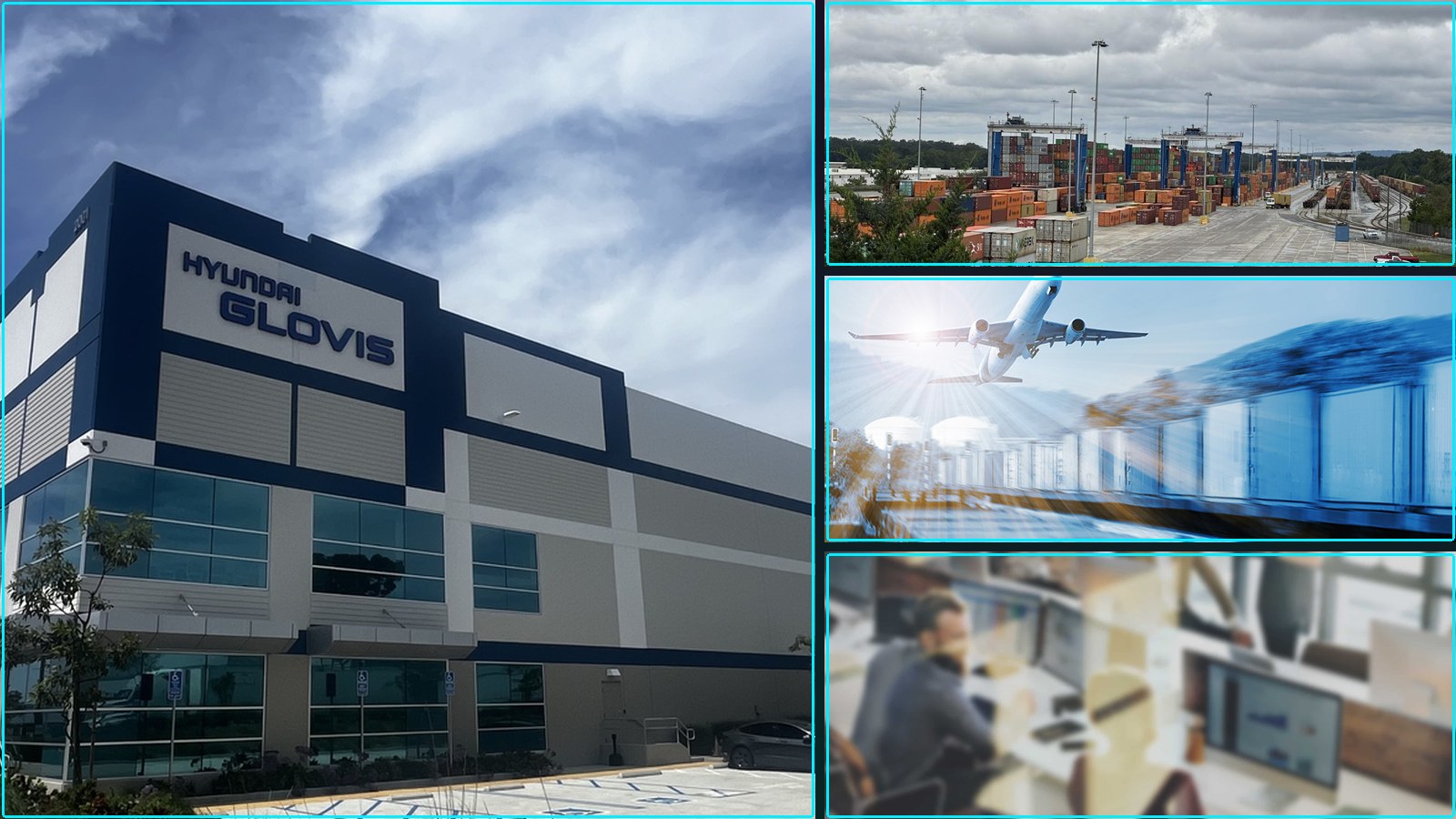
Hyundai Glovis Opens LA Logistics Hub, Savannah Warehouse to … (En.Sedaily)
Summary: Hyundai Glovis has opened two major logistics facilities in the US: an integrated center in Los Angeles and a 69,000-square-meter consolidated warehouse in Savannah, Georgia. These openings in Q1 2026 represent a strategic expansion of its North American supply chain footprint, directly linking to key automotive import gateways.

Why it matters: This signals a deepening of Korean industrial capital in the Southeast’s logistics infrastructure, reinforcing Savannah’s role as a critical node for East Coast automotive distribution and challenging established port-centric logistics models.
Context: The Southeast has become a focal point for foreign direct investment in manufacturing and logistics, particularly for automakers and their suppliers establishing post-pandemic, nearshored supply chains.
"Hyundai Glovis announced on the 15th that it sequentially opened an integrated logistics center in Los Angeles, California and a consolidated warehouse in Savannah, Georgia during the first quarter of this year." — EN.SEDAILY
Commentary: The Savannah investment is a direct hedge against West Coast port congestion and a bet on the continued growth of Hyundai Motor Group’s manufacturing cluster in Georgia and Alabama. It could pressure third-party logistics providers and may accelerate the vertical integration of automaker-affiliated logistics arms, concentrating more control over the last-mile delivery of vehicles and parts.
Date: April 15, 2026 12:00 AM ET
URL: https://en.sedaily.com/finance/2026/04/15/hyundai-glovis-opens-la-logistics-hub-savannah-warehouse-to
AI Sentiment Score: Negative (50%)
AI Credibility Score: 10.0/10 — High
Scores and text generated by AI analysis of the source article indicated.
Charleston SC Warehouse Logistics Facility Overview – IWLA (Iwla)
Summary: Coastal Logistics Group details the specifications of its Charleston, SC warehouse, a 230,368-square-foot facility with 49 dock doors and two acres of yard storage, positioned 11 miles from the Port of Charleston. The asset is marketed as a key node for high-volume operations, transloading, and regional distribution, leveraging proximity to I-26 and I-95.

Why it matters: For observers tracking capital allocation and infrastructure in the Southeast, this data point quantifies the scale of private investment betting on Charleston’s continued ascendance as a logistics hub, directly linking port capacity to inland distribution.
Context: The Port of Charleston has seen record container volumes, driving demand for proximate industrial real estate. This facility exemplifies the build-out of the ‘inland port’ model, where drayage efficiency and yard storage buffer port congestion.
"Located at 5031 Ladson Industry Drive in Ladson, SC, this facility features 230,368 square feet of warehouse space, 2 acres of yard storage, and 49 dock doors." — IWLA
Commentary: The scale and door count signal an operation designed for high-velocity cross-dock activity, not just storage, reflecting shippers’ need for speed over inventory. This specific build-out, so close to the port, suggests logistics providers are competing on marginal transit-hour advantages, a shift that could pressure older facilities farther inland. The concentration of such assets in Ladson may begin to strain local road infrastructure, presenting a future friction point for the very efficiency it promises.
Date: April 16, 2026 12:00 AM ET
URL: https://iwla.com/clgs-new-charleston-facility-enhanced-logistics-supply-chain-solutions/
AI Sentiment Score: Negative (70%)
AI Credibility Score: 9.9/10 — High
Scores and text generated by AI analysis of the source article indicated.
Inland Port Greer is proven model for short haul intermodal – SC … (Scspa)
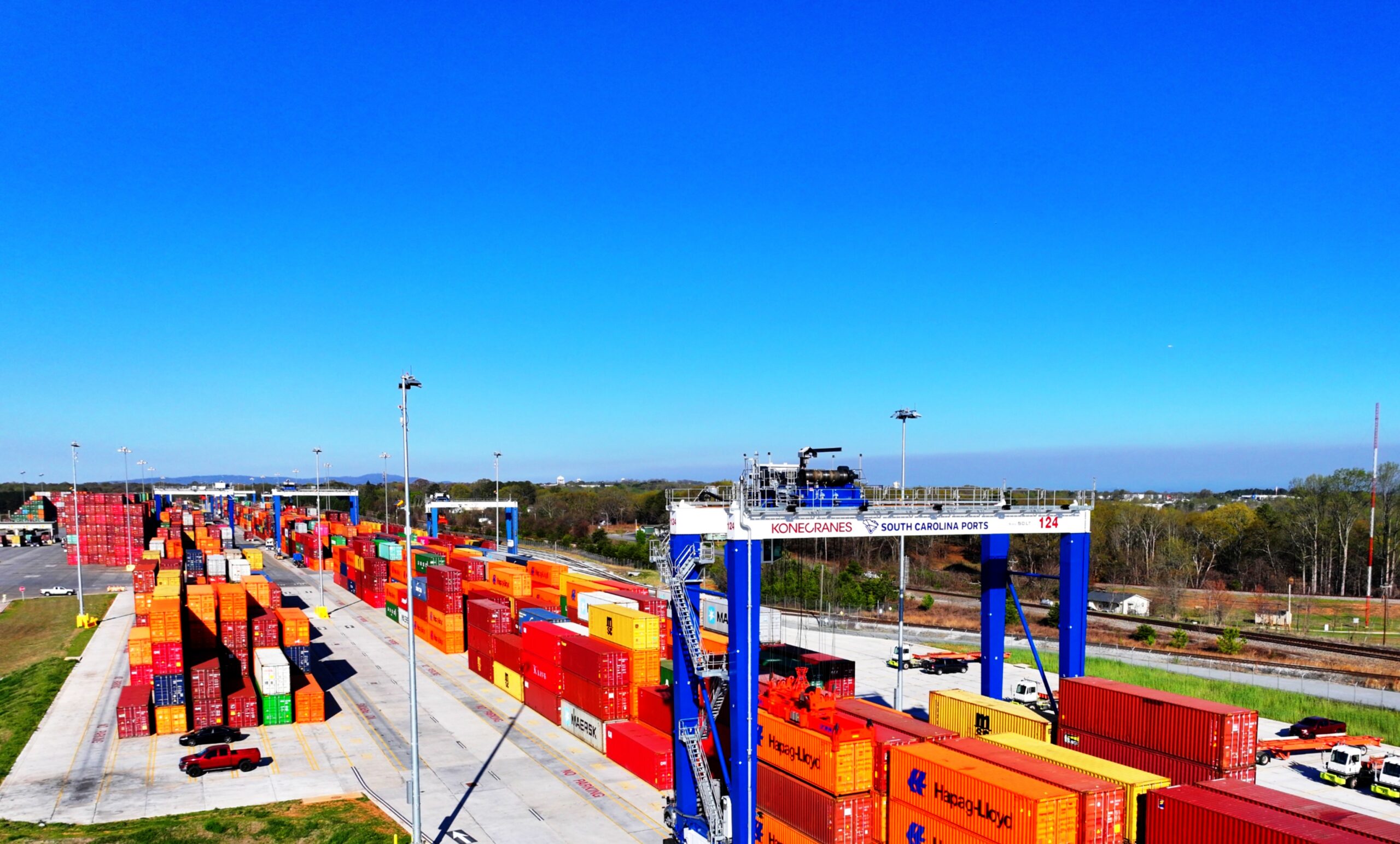
Summary: South Carolina Ports has completed a $55 million expansion at Inland Port Greer, increasing its annual rail lift capacity to 300,000 containers. The project includes a 50% larger container yard, an expanded chassis lot, and 9,000 feet of additional rail to handle longer trains. This positions the facility as a proven short-haul intermodal hub connecting the Port of Charleston to key Southeast markets.
Why it matters: This expansion signals a strategic bet on the Southeast’s continued growth as a manufacturing and consumption corridor, directly affecting logistics costs, regional rail competitiveness, and industrial site selection.
Context: Inland Port Greer is a core component of the ‘Port of Charleston’ system, designed to bypass road congestion and extend the port’s reach inland. Similar inland port models are being replicated in the Southeast as states compete for logistics-driven investment.
"SC Ports recently completed a customer-driven $55 million expansion project at Inland Port Greer, boosting its annual rail lift capacity to 300,000." — SCSPA
Commentary: The ‘customer-driven’ nature of the investment underscores how shipper demand is reshaping regional infrastructure, not just port authority planning. This capacity increase pressures competing rail corridors and makes Upstate South Carolina a more attractive node for distribution centers, likely pulling traffic from traditional hubs like Atlanta. The focus on longer train handling indicates a shift toward more efficient, high-volume rail moves, which could lower per-unit costs for importers serving the Southeast.
Date: April 28, 2026 12:00 AM ET
URL: https://scspa.com/news/inland-port-greer-is-proven-model-for-short-haul-intermodal/
AI Sentiment Score: Positive (50%)
AI Credibility Score: 10.0/10 — High
Scores and text generated by AI analysis of the source article indicated.
Inland Port Greer hits record year with nearly 200,000 rail moves in … (Greernews)
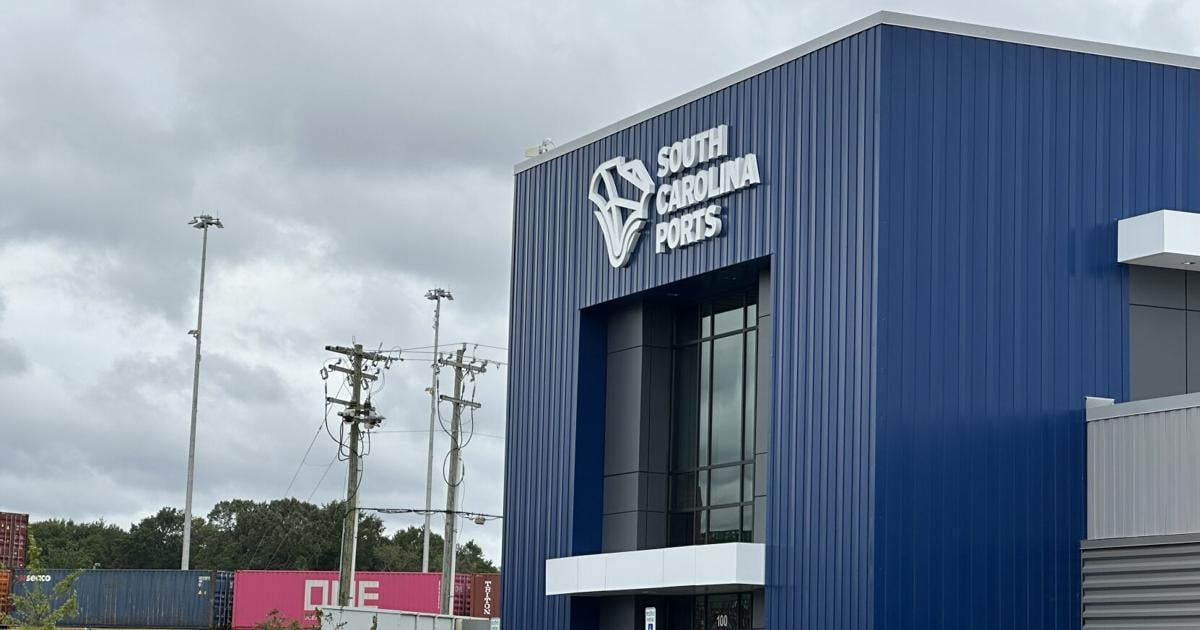
Summary: South Carolina Ports’ Inland Port Greer reported a record year, handling nearly 200,000 rail moves. This follows a $55 million expansion that increased annual rail lift capacity to 300,000 and boosted cargo capacity by 50%, positioning the facility for continued growth.
Why it matters: This signals a deepening of intermodal logistics infrastructure in the Southeast, directly affecting regional competitiveness for manufacturing and distribution investment.
Context: Inland Port Greer is a critical node connecting the Port of Charleston to inland markets, part of a broader strategy to capture supply chain shifts toward Southeastern U.S. manufacturing and consumption hubs.
"SC Ports recently completed a customer-driven $55 million expansion project at Inland Port Greer, boosting its annual rail lift capacity to 300,000." — GREERNEWS
Commentary: The expansion is a pre-emptive bet on sustained nearshoring and Southeast industrial growth. It pressures competing inland ports in Georgia and Tennessee to match capacity or risk losing volume. For shippers, it consolidates Greer as a default routing option, potentially lowering drayage costs but increasing regional dependency on this single corridor.
Date: April 30, 2026 12:00 AM ET
URL: https://www.greernews.com/news/inland-port-greer-hits-record-year-with-nearly-200-000-rail-moves-in-2025/article_1a36af02-9194-4305-b4e7-2d19a3ba10a3.html
AI Sentiment Score: Negative (66%)
AI Credibility Score: 10.0/10 — High
Scores and text generated by AI analysis of the source article indicated.
Reefer – Georgia Ports Authority (Gaports)
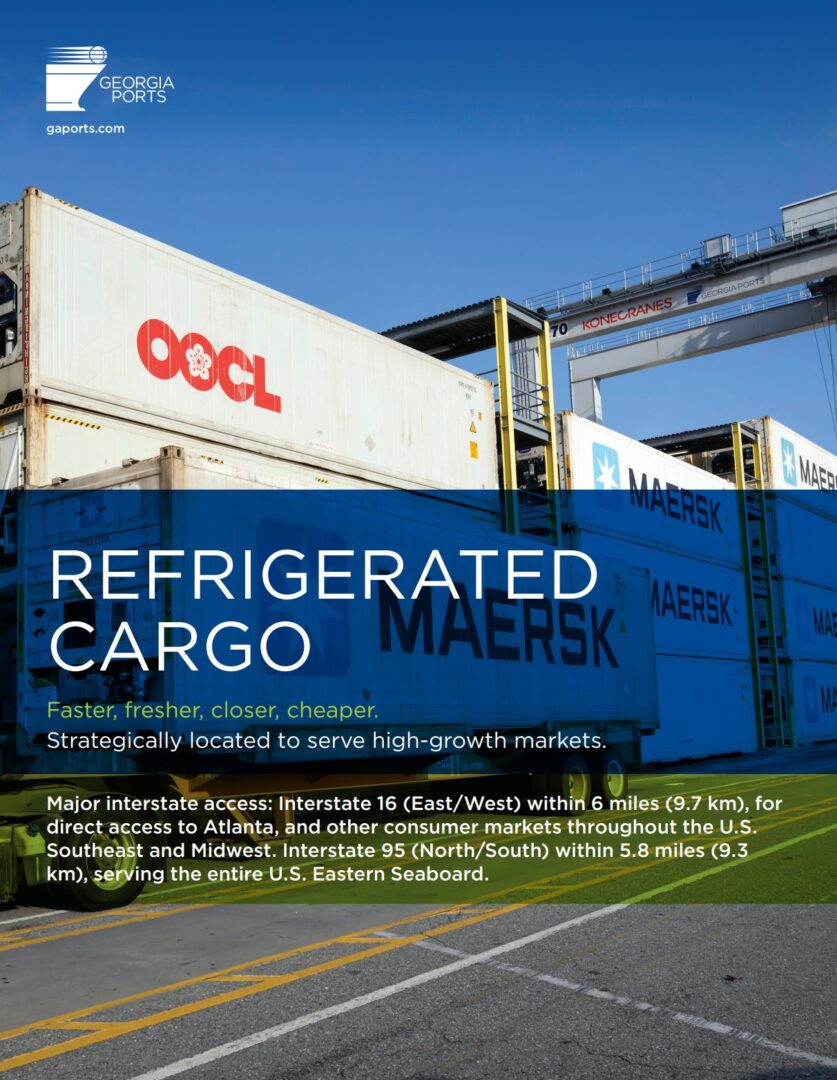
Summary: The Georgia Ports Authority is investing $44 million in a new on-terminal USDA/CBP inspection facility at the Port of Savannah, explicitly targeting the perishable cargo market. The move is framed as establishing Savannah as the ‘premier gateway’ for perishables to the U.S. Southeast, leveraging its existing infrastructure of over 3,000 reefer plugs. The strategy involves expanding the list of approved commodities and countries of origin, with blueberries cited as the latest addition.
Why it matters: This signals a deliberate shift in port strategy and regional supply chain geography, directly competing with established perishable gateways like Miami and Philadelphia for high-value agricultural imports.
Context: Ports are specializing beyond container volume to capture specific, high-margin cargo segments. The Southeast’s population growth and distribution networks make it a logical battleground for perishable logistics dominance.
"Through reliable operations and efficient and timely inspections of perishable products, GPA is establishing Savannah as the premier gateway to the U.S. Southeast for perishable cargo." — GAPORTS
Commentary: The $44M investment is a tactical play to reduce a key friction point—inspection delays—that typically advantages first-port-of-call facilities. If successful, this will pull cold-chain logistics, distribution center investment, and associated jobs further inland, reshaping the Southeast’s agricultural import map and putting pressure on competing ports to match the infrastructure spend.
Date: April 14, 2026 12:00 AM ET
URL: https://gaports.com/cargo/reefer/
AI Sentiment Score: Positive (42%)
AI Credibility Score: 10.0/10 — High
Scores and text generated by AI analysis of the source article indicated.
3PL Warehouse Georgia | Bonded Warehousing & Distribution | PCL (Portcitylogistics)
Summary: PortCity Logistics is expanding its warehousing and transload footprint across the Southeast, with significant new capacity in Savannah (3M sq ft), Greer (1M+ sq ft), and a planned 150,000 sq ft facility at the Port of Wilmington opening in 2025. The company is leveraging its Foreign Trade Zone (FTZ) designations and bonded warehousing to offer clients duty deferral, tax savings, and streamlined customs processes. Its security and tech stack, including Flock Safety cameras and multiple WMS integrations, underscores a focus on high-velocity, secure throughput for e-commerce and import/export volumes.

Why it matters: This expansion signals where capital and logistics infrastructure are concentrating in the Southeast, directly affecting where manufacturing, distribution centers, and inventory will cluster to serve regional and national demand.
Context: The Southeast has become a primary logistics corridor due to port expansion, interstate access, and favorable tax policies, with firms like PortCity scaling to capture market share in transloading and FTZ services.
"Coming soon: Deliberately located less than one mile from the NC Port Container Gate, our 150,000 square foot Wilmington, NC transload facility is designed for high-velocity throughput, making speed-to-market a top priority for your cargo. Opening 2025." — PORTCITYLOGISTICS
Commentary: PortCity’s targeted build-out within a mile of port gates is a tactical move to capture the final-mile transload market, compressing dwell times for importers. The emphasis on FTZ benefits and bonded warehousing indicates a shift toward onshore inventory staging as firms seek to mitigate tariff complexity and improve cash flow. This concentrated infrastructure investment will pull more freight volume through Wilmington and Greer, potentially diverting traffic from traditional hubs and reshaping regional trucking and rail patterns.
Date: April 16, 2026 12:00 AM ET
URL: https://portcitylogistics.com/logistic-services/warehousing-distribution/
AI Sentiment Score: Negative (50%)
AI Credibility Score: 9.9/10 — High
Scores and text generated by AI analysis of the source article indicated.
Norfolk Southern rail-served sites in Kentucky, South Carolina, and … (Norfolksouthern)
Summary: Norfolk Southern has secured Site Selectors Guild REDI designations for three rail-served industrial sites in Kentucky, South Carolina, and Virginia. The program certifies site readiness, aiming to reduce due diligence timelines for corporate end users. This is a targeted move to attract capital investment to specific Southeastern logistics corridors.

Why it matters: For observers of regional capital flows, this signals where Norfolk Southern and the Guild are betting on near-term industrial expansion, offering a concrete proxy for infrastructure-led economic development.
Context: The REDI program is an industry-led effort to pre-vet industrial sites, addressing a key bottleneck in corporate location decisions. Norfolk Southern’s active participation reflects a strategic shift among Class I railroads from pure transport to integrated real estate and economic development partners.
"Norfolk Southern is pleased to announce that three of its rail-served industrial sites, located in Kentucky, South Carolina, and Virginia, have received designations from the Site Selectors Guild’s REDI (Readiness Evaluation and Designation Initiative) Sites Program." — NORFOLKSOUTHERN
Commentary: This is less about new infrastructure and more about marketing and de-risking existing assets. The designations effectively anoint these sites as preferred nodes for heavy manufacturing, logistics, or energy-intensive projects, potentially steering the next wave of ‘onshoring’ or ‘friend-shoring’ investments away from competing, non-designated locations. It underscores the railroads’ evolving role as quasi-public development authorities.
Date: April 27, 2026 12:00 AM ET
URL: https://www.norfolksouthern.com/en/newsroom/news-releases/norfolk-southern-rail-served-sites-in-kentucky--south-carolina--and-virginia-recognized-by-national-redi-sites-program
AI Sentiment Score: Neutral (50%)
AI Credibility Score: 10.0/10 — High
Scores and text generated by AI analysis of the source article indicated.
Inland Port Greer Continues to Set Standard for Short-Haul … (Expansionsolutionsmagazine)
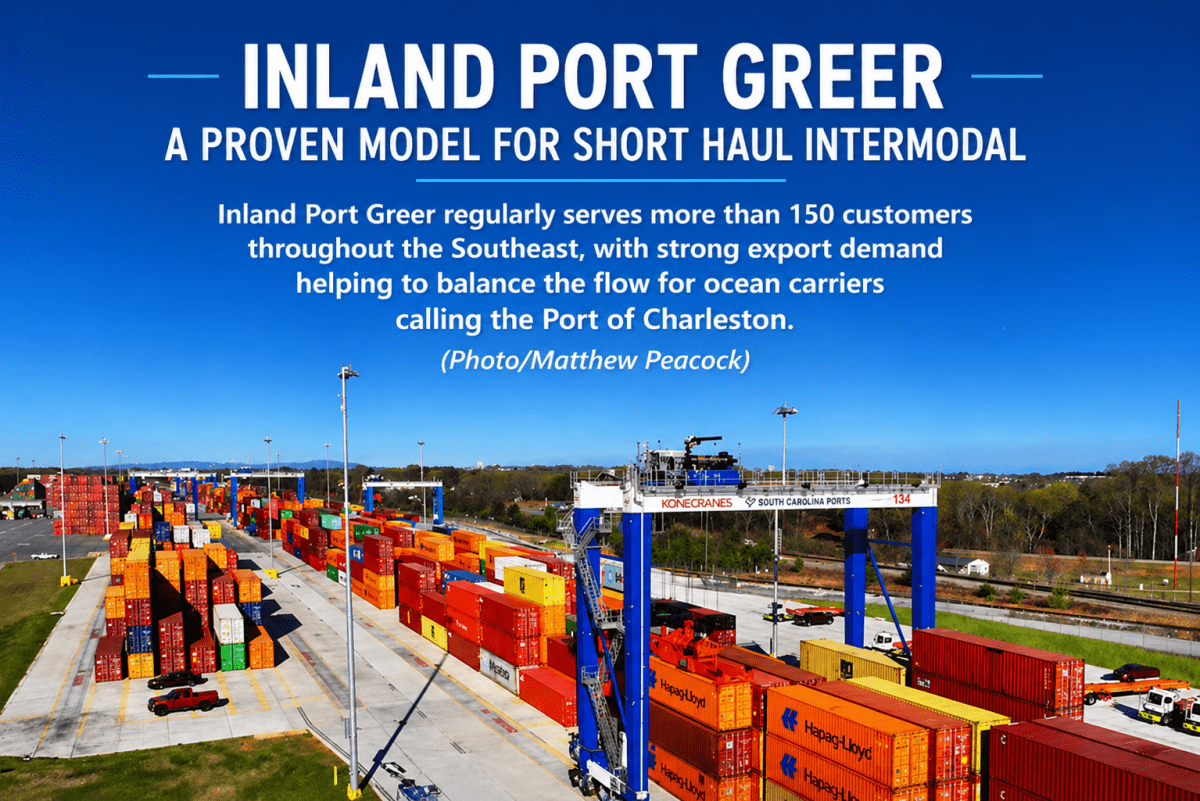
Summary: Inland Port Greer, a key South Carolina Ports facility, processed nearly 200,000 rail moves in 2025, a record volume for its short-haul intermodal operations connecting inland markets to Charleston. A recently completed $55 million expansion has increased its annual rail lift capacity to 300,000 moves, adding significant container yard space, chassis capacity, and rail track. The port emphasizes operational efficiency with 11-minute average turn times and 24/7 gate availability.
Why it matters: This signals a deepening concentration of logistics infrastructure and capital investment in the Southeast’s I-85 corridor, directly affecting shipper reliability, regional competitiveness, and the calculus for industrial site selection.
Context: The Southeast has become a primary battleground for logistics efficiency, with inland ports like Greer reducing drayage costs and port congestion by shifting container sorting inland. This model is being replicated across the region as supply chains prioritize resilience and speed.
"Following a record-setting 2025 with nearly 200,000 rail moves, the facility has solidified its role as a leading high-volume inland port in the Southeast." — EXPANSIONSOLUTIONSMAGAZINE
Commentary: The expansion to 300,000-move capacity is a tangible bet on sustained nearshoring and Southeast manufacturing growth. It pressures competing logistics hubs in Georgia and Tennessee to match its throughput and turn-time metrics to retain volume. For Norfolk Southern, this cements a critical, high-velocity corridor, potentially shifting intermodal market share.
Date: April 29, 2026 12:00 AM ET
URL: https://www.expansionsolutionsmagazine.com/inland-port-greer-continues-short-haul-intermodal-efficiency/
AI Sentiment Score: Positive (40%)
AI Credibility Score: 10.0/10 — High
Scores and text generated by AI analysis of the source article indicated.
Sc ports brace for slowdown amid rising fuel costs concern | News (Greernews)
Summary: The Port of Charleston recorded its strongest import surge since August 2025 in March 2026, handling over 109,000 TEUs. However, the South Carolina State Ports Authority anticipates a downturn due to rising fuel costs and the Iran conflict. Year-over-year imports are down 3.6%, and year-to-date container volume has fallen nearly 12%, with BMW exports also declining.
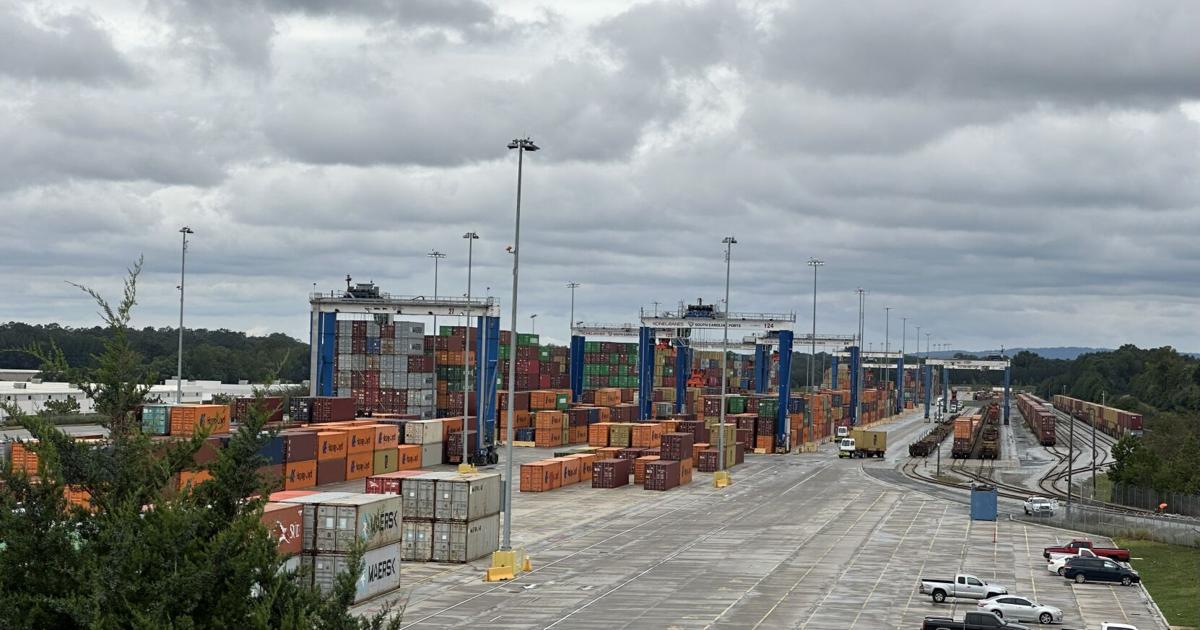
Why it matters: The port’s near-term outlook signals potential supply chain stress and cost pressures for Southeast manufacturers and logistics networks, directly impacting regional trade flows and industrial output.
Context: Southeastern ports have been critical nodes for automotive exports and Asian imports, but are increasingly sensitive to global fuel price volatility and geopolitical disruptions.
"MOUNT PLEASANT — The Port of Charleston in March saw the biggest surge in imported cargo since last summer, but the S.C. State Ports Authority is bracing for declines in coming months." — GREERNEWS
Commentary: The March spike appears to be a last-gasp surge before contraction, not a recovery. The explicit linkage of the Iran war to operational planning suggests logistics managers are pricing in prolonged disruption, which will compress margins for Upstate automotive and other export-dependent industries.
Date: April 21, 2026 12:00 AM ET
URL: https://www.greernews.com/news/after-positive-month-rising-fuel-costs-have-sc-ports-bracing-for-slowdown/article_5c825b37-1039-49d5-ae82-e467e2af2b15.html
AI Sentiment Score: Negative (66%)
AI Credibility Score: 7.0/10 — Medium
Scores and text generated by AI analysis of the source article indicated.
RIM US Inland Digest | April 28th, 2026 (Rimlogistics)
Summary: The US trucking spot market shows tightening capacity and rising rates, with national averages up over 24% year-on-year. The Southeast is a focal point, experiencing a sharp rate increase to $3.69 per mile, driven by seasonal produce, construction, and weather disruptions. This contrasts with slight softening in other regions like the Midwest.

Why it matters: For shippers, carriers, and logistics planners, these regional divergences signal where supply chain costs will spike and where operational flexibility will be most constrained.
Context: Spot market rates are a leading indicator of regional economic pressure, often preceding broader inflationary trends and shifts in industrial and agricultural logistics patterns.
"The Southeast, Gulf Coast, and Texas are experiencing tightened capacity due to produce season, construction activity, and weather-related disruptions." — RIMLOGISTICS
Commentary: The Southeast’s outlier status suggests a concentration of economic heat—seasonal demand intersecting with structural activity—that will test regional infrastructure and likely pull capacity from adjacent markets. This divergence from national ‘stabilization’ narratives underscores the granular, region-specific nature of current supply chain stress.
Date: April 28, 2026 12:00 AM ET
URL: https://www.rimlogistics.com/rim-us-inland-digest-april-28th-2026/
AI Sentiment Score: Negative (80%)
AI Credibility Score: 7.0/10 — Medium
Scores and text generated by AI analysis of the source article indicated.
South Jersey Ports Expands Green Fleet with Electric and … (Southjerseyport)
Summary: South Jersey Ports is expanding its green fleet with nine light-duty electric and plug-in hybrid vehicles, bringing a quarter of its light-duty fleet to environmentally friendly status. The port operator has also invested $6.6 million to replace 26 diesel forklifts with electric models and is acquiring 23 electric cargo handlers. This represents a tangible capital shift within regional port infrastructure.

Why it matters: It signals where public and private capital is flowing for operational upgrades in the Northeast Corridor’s logistics sector, with implications for equipment manufacturers, energy demand, and regional air quality compliance.
Context: Port authorities along the Eastern Seaboard are under regulatory and community pressure to reduce diesel emissions, creating a competitive sub-market for electric heavy machinery and fleet vehicles.
"South Jersey Ports has spent $6.6 million to replace 26 older diesel forklifts with state-of-the-art electric models, significantly reducing emissions and improving operational efficiency." — SOUTHJERSEYPORT
Commentary: The $6.6 million forklift replacement is the substantive capital outlay here, not the light-duty vehicles. This moves the needle on local emissions and locks SJP into a specific vendor ecosystem for maintenance and parts. It’s a defensive investment against future environmental regulations and a bid for green shipping contracts, but the real test will be in total cost of ownership and grid resilience during peak operations.
Date: April 30, 2026 12:00 AM ET
URL: https://southjerseyport.com/south-jersey-ports-expands-green-fleet-with-electric-and-hybrid-vehicles/
AI Sentiment Score: Negative (66%)
AI Credibility Score: 7.0/10 — Medium
Scores and text generated by AI analysis of the source article indicated.
Post ID: 85edc7eb