
Hacker Community
Flipper Zero Transmits APRS With No Extra Parts – Hackaday (Hackaday)
Summary: A developer has modified the Flipper Zero, a popular RF hacking tool, to transmit APRS (Automatic Packet Reporting System) packets using only its internal hardware, bypassing the need for an external transmitter. The hack leverages the device’s existing 435 MHz ISM band radio and employs software trickery to approximate the required FM modulation using FSK. While the resulting signal may not be decoded by all standard receivers, it represents a significant reduction in the bill of materials for creating an APRS station.
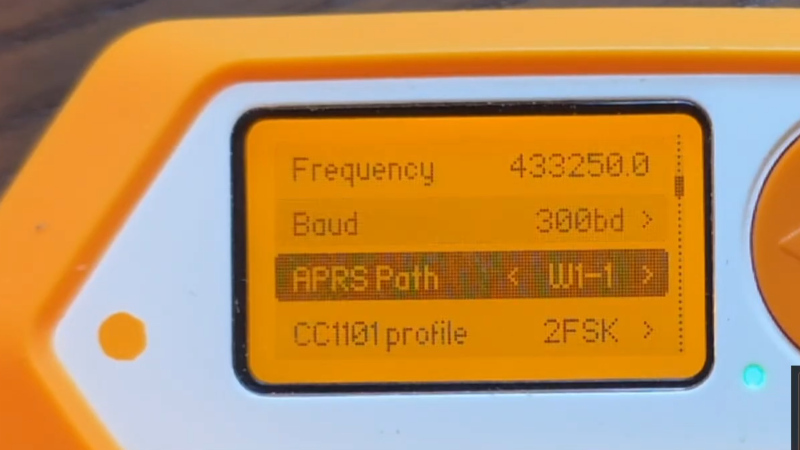
Why it matters: This demonstrates the continued push within the hardware-hacking community to repurpose consumer-grade tools for licensed radio spectrum activities, testing regulatory and technical boundaries.
Context: The Flipper Zero occupies a unique niche as a mainstream-adjacent hacking device, and its modification for amateur radio protocols fits a pattern of cypherpunk infrastructure development, often operating in legal gray areas.
[Richard YO3GND] has made his Flipper do the job without any external parts at all.
Commentary: This is a hardware-hacking signal that blurs the line between a consumer hacking gadget and licensed amateur radio equipment. The technical workaround—using FSK to mimic FM—highlights a community ethos of maximizing capability within constraints, but also invites scrutiny from both radio purists and regulators. It exemplifies the ‘tool release’ archetype, pushing a popular platform into new, potentially contentious applications.
Date: April 21, 2026 12:00 AM ET
URL: https://hackaday.com/2026/04/21/flipper-zero-transmits-aprs-with-no-extra-parts/
AI Sentiment Score: Neutral (50%)
AI Credibility Score: 9.9/10 — High
Scores and text generated by AI analysis of the source article indicated.
Pluralistic: There’s no such thing as "age verification" (19 May 2026) (Pluralistic.Net)
Summary: Cory Doctorow argues that ‘age verification’ is a political consensus hallucination, akin to bans on cryptography or the fiction of ‘streaming,’ which inevitably leads to a cascade of increasingly invasive and damaging measures. He cites Utah’s new VPN law and similar UK proposals as the predictable next step after the failure of verification schemes, which were always doomed to be circumvented by VPNs. The piece frames this as a classic ‘security syllogism’ failure: something must be done, therefore something is done, regardless of efficacy or consequences.

Why it matters: For hacker culture, this is a core digital-rights fight and an ignored warning becoming policy reality, directly impacting tools (VPNs) and setting a precedent for pervasive, identity-linked internet control.
Context: Doctorow’s argument extends his and others’ long-standing critique of ‘technosolutionism’ and the ‘war on general-purpose computing,’ where policy mandates create systemic vulnerabilities and surveillance infrastructure while failing to solve the stated problem.
"Today’s links – There’s no such thing as "age verification": The foreseeable and foreseen consequences of "something must be done"/"there, I’ve done something." – Hey look at this: Delights to delectate. -." — PLURALISTIC.NET
Commentary: The operational consequence is a rapid shift from abstract policy debates to concrete legal attacks on core privacy infrastructure (VPNs), validating years of cypherpunk warnings. This creates immediate toolchain pressure for obfuscation techniques and forces a community defense posture, while the leaked identity databases could become a permanent source of security debt and exploitation.
Date: Tue, 19 May 2026 07:17:09 +0000
URL: https://pluralistic.net/2026/05/19/shes-dead-of-course/
AI Sentiment Score: Negative (88%)
AI Credibility Score: 10.0/10 — High
Scores and text generated by AI analysis of the source article indicated.
Jenny’s Daily Drivers: Going 32-Bit With SliTaz In 2026 (Hackaday)
Summary: A Hackaday contributor installs SliTaz, a minimalist Linux distribution, on a 2005-era 32-bit Dell Latitude D610 to test its viability as a daily driver in 2026. The experiment demonstrates that while the machine remains functional for basic tasks, the broader software ecosystem is rapidly abandoning 32-bit support. The piece concludes that while the exercise suggests the dedication of open-source maintainers, it’s ultimately a ‘pointless’ endeavor given the superior longevity of slightly newer 64-bit hardware.

Why it matters: It signals the final, practical endpoint for a major hardware architecture within the hacker community, forcing a reckoning with the real-world limits of hardware preservation and the allocation of open-source maintenance effort.
Context: This is a ‘village/workshop signal’—a hands-on report from the hacker-space bench testing a community-built alternative (SliTaz) against the tide of mainstream software deprecation.
"Researching this piece though it’s very obvious that much of the software necessary for modern computing is slipping out of 32 bit support, so I have to question how much longer they can keep it up. Considering that this machine has about the same intrinsic monetary value as a Core2-based machine made a little over a year later which supports 64 bit code I have to concede that what I’ve just done is a fairly pointless exercise." — HACKADAY
Commentary: The piece moves beyond nostalgic tinkering to a cold cost-benefit analysis for the repair-and-preservation community. It implicitly argues for redirecting effort toward the 64-bit threshold (circa 2007), where the software support runway is longer, making hardware reuse more sustainable. This is a pragmatic, if sobering, calibration for projects focused on fighting e-waste.
Date: Thu, 30 Apr 2026 17:00:22 +0000
URL: https://hackaday.com/2026/04/30/jennys-daily-drivers-going-32-bit-with-slitaz-in-2026/
AI Sentiment Score: Negative (50%)
AI Credibility Score: 10.0/10 — High
Scores and text generated by AI analysis of the source article indicated.
How TTY Opened Up The Phones For The Hard of Hearing (Hackaday)
Summary: The teletypewriter (TTY), developed in 1964 by deaf inventors James C. Marsters and Robert Weitbrecht, repurposed surplus military teleprinters and acoustic couplers to enable text-based communication over analog phone lines for the deaf and hard of hearing. It established a half-duplex protocol with its own lingo (e.g., ‘GA’ for ‘go ahead’) and spurred the creation of relay services, where human operators mediated calls between TTY users and the hearing world. While largely supplanted by SMS and IP-based systems, TTY remains a functional, if fading, link on legacy networks.

Why it matters: This is a foundational case study in community-built, pre-digital accessibility infrastructure, illustrating how hacker-world principles—repurposing hardware, establishing open protocols, and creating relay networks—can directly empower marginalized groups.
Context: A recurring archetype: the ‘hackerspace-to-mainstream pipeline’ for assistive technology, where a community-driven solution (often built from surplus or repurposed gear) fills a critical gap long before institutional or commercial actors intervene.
"Their idea was to create a method for deaf individuals to communicate over the phone network in a textual manner. To this end, the group sourced teleprinters formerly used by the US Department of Defense, and hooked them up with acoustic couplers that would allow them to mate with the then-ubiquitous AT&T Model 500 telephone." — HACKADAY
Commentary: The TTY’s history underscores a core hacker ethos: accessibility as a systems-level engineering problem, solved not by waiting for market solutions but by creatively bridging existing infrastructure (surplus DoD hardware, the POTS network). Its legacy is not just in the protocol but in the model of the relay service—a human-in-the-loop system that prefigures modern API-driven accessibility layers. Its decline highlights a recurring tension: digital ‘upgrades’ often break community-built systems, creating new forms of security debt for vulnerable populations.
Date: Thu, 30 Apr 2026 14:00:04 +0000
URL: https://hackaday.com/2026/04/30/how-tty-opened-up-the-phones-for-the-hard-of-hearing/
AI Sentiment Score: Negative (83%)
AI Credibility Score: 10.0/10 — High
Scores and text generated by AI analysis of the source article indicated.
PocketPD – USB-C Portable Bench Power Controller (Hackaday.Io)
Summary: PocketPD, a USB-C portable bench power controller, has moved from a CrowdSupply campaign to direct sales, with firmware and hardware designs open-sourced. The project emphasizes physical knobs and buttons for reliability over networked control interfaces, targeting DIY applications like custom chargers and reflow ovens. It has undergone multiple hardware revisions, addressed international shipping and compliance hurdles, and is now being showcased at events like Teardown 2026.

Why it matters: It represents a maturation path for open-hardware tools, moving from crowdfunding to sustainable distribution while prioritizing hacker values of repairability and operational simplicity over feature creep.
Context: This fits the ‘tool release’ and ‘hackerspace-to-mainstream pipeline’ archetypes, reflecting a trend where community-developed test equipment achieves production stability and begins to influence professional workshop practices.
"As the DIY community has grown, there are multiple ways to implement control features like adjusting parameters via Wifi, Bluetooth, or touch screen. We want to keep the design language simple, just physical knobs and buttons to control. This will give the system higher reliability when you need it to work." — HACKADAY.IO
Commentary: The deliberate rejection of networked UI in favor of tactile controls is a significant design philosophy, positioning the tool against the IoT trend and its associated security-debt and reliability failures. Its journey through compliance testing, tariff-optimized logistics, and open-case design shows the operational scaffolding required to move a hacker project into global commerce. The project’s persistence through manufacturing hiccups and campaign withdrawal signals a shift towards more resilient, direct-to-community hardware ventures.
Date: May 19, 2026 12:00 AM ET
URL: https://hackaday.io/project/194295-pocketpd-usb-c-portable-bench-power-controller
AI Sentiment Score: Negative (50%)
AI Credibility Score: 10.0/10 — High
Scores and text generated by AI analysis of the source article indicated.
The Final Steps to a Sub-Minute Benchy (Hackaday)
Summary: Jan Roetz has successfully printed a 3D Benchy benchmark model in under one minute, concluding a two-year project focused on extreme speed optimization. The final iteration overcame bottlenecks in extrusion, cooling, and motion by employing a quad-filament hotend, aggressive air cooling, and a lightweight carbon-fiber bed frame sliding on a granite slab. The system achieved accelerations of 225 G, necessitating cable guides to manage whip. While print quality was sacrificed, the dimensional accuracy and mechanical soundness of the sub-60-second prints validate the engineering approach.

Why it matters: This represents a hardware-hacking signal, pushing the physical limits of consumer-grade 3D printing technology and revealing the trade-offs between speed, material science, and mechanical design that inform next-generation printer development.
Context: The pursuit of faster 3D printing is a persistent theme in the maker and hacker community, often serving as a benchmark for innovation in motion systems, thermal management, and extrusion technology. This project evolves from earlier parallelization attempts into a focused study on the fundamental constraints of speed.
"The first test was a sub-60-second dry run to make sure nothing would break. This revealed the need for cable guides to keep them from whipping around (not surprising when they were pulling the bed at an acceleration of 225 G)." — HACKADAY
Commentary: The project’s significance lies less in the specific time achieved and more in its systematic deconstruction of the three core limiting factors—flow, cooling, and motion—and the extreme engineering solutions applied to each. It demonstrates that the frontier for desktop fabrication is no longer just software or resolution, but overcoming classical physics of inertia and heat transfer, a shift that will influence both hobbyist tinkering and professional R&D.
Date: Sun, 31 May 2026 05:00:07 +0000
URL: https://hackaday.com/2026/05/30/the-final-steps-to-a-sub-minute-benchy/
AI Sentiment Score: Neutral (33%)
AI Credibility Score: 10.0/10 — High
Scores and text generated by AI analysis of the source article indicated.
How Piracy Has Changed Forever.. (Youtube)
Summary: A YouTube video analysis posits that 2026 marks a turning point in the decades-long battle between DRM and software pirates, focusing on the apparent defeat of Denuvo’s hypervisor-based protection. It details the evolution from early, easily-broken DRM to Denuvo’s persistent, kernel-level checks, and the emergence of a new cracking method using a hypervisor to create a deep system illusion that feeds the DRM fake validation responses. The piece highlights specific crackers like ‘Kirigiri’ and ‘Voices 38’, who have rapidly defeated protections on major titles like ‘Doom: The Dark Ages’.

Why it matters: The effective neutralization of a once-impregnable DRM standard reshapes the economics of game development, digital ownership debates, and the cat-and-mouse dynamics of software security.
Context: Denuvo has represented the high-water mark of commercial anti-tamper technology for a decade, imposing significant costs and performance debates, making its perceived vulnerability a major industry event.
"In 2014, a new anti-piracy system changed everything. For years, it was considered nearly impossible to break. But in 2026… something changed. This video explores the rise of Denuvo, how it reshaped." — YOUTUBE
Commentary: This signals a potential end to the current DRM epoch, forcing publishers to reconsider investment in similar protection schemes and possibly accelerating shifts towards service-based models. The hypervisor-based crack represents a tool release and ignored warning archetype, demonstrating how offensive security research is leapfrogging commercial defensive postures. If sustained, it could re-empower the preservation and modding communities, but may also trigger more aggressive legal and technical countermeasures, including always-online requirements or deeper hardware-level trusted computing.
Date: April 23, 2026 12:00 AM ET
URL: https://www.youtube.com/watch?v=JwMkS3oTTag
AI Sentiment Score: Negative (55%)
AI Credibility Score: 10.0/10 — High
Scores and text generated by AI analysis of the source article indicated.
Your cyberpunk games are dangerous – openDemocracy (Opendemocracy.Net)
Summary: A historical analysis revisits the 1990 US Secret Service raid on Steve Jackson Games, which seized the manuscript for GURPS Cyberpunk and the company’s computers. The raid was part of a broader investigation into the distribution of a stolen Bell South 911 document via the hacker newsletter Phrack. The incident, conflating a role-playing game supplement with a manual for computer crime, catalyzed the formation of the Electronic Frontier Foundation (EFF). The article frames this as a foundational moment where state ignorance of digital culture triggered organized resistance.

Why it matters: It underscores the perennial tension between law enforcement’s threat perception and hacker culture’s speculative artifacts, a dynamic that continues to shape digital rights litigation and policy.
Context: This is a digital-rights fight archetype, specifically a foundational case study in the hacker-to-mainstream pipeline. The Steve Jackson Games raid is a canonical event in cyberlaw, demonstrating how overreach against a gaming publisher galvanized the creation of a major civil liberties institution.
"It is easy to put yourself in the hysterical script of the movie WarGames when you lack the technical expertise to distinguish a game about hacking from reality." — OPENDEMOCRACY.NET
Commentary: The conflation of speculative fiction with operational manuals remains a potent vector for state overreach, as seen in modern debates over vulnerability research and ‘material support.’ The EFF’s origin story here is not mere history; it’s a template for how technical ignorance begets legal aggression, and how that aggression, in turn, forges durable counter-institutions. The raid’s legacy is the institutionalization of hacker-world defense.
Date: April 22, 2026 12:00 AM ET
URL: https://www.opendemocracy.net/your-cyberpunk-games-are-dangerous/
AI Sentiment Score: Negative (75%)
AI Credibility Score: 10.0/10 — High
Scores and text generated by AI analysis of the source article indicated.
Post ID: 8cbccdf5