Mars & Lunar Exploration Updates
NASA Says Farewell to MAVEN Mars Mission, Hosts Media Call Today (Nasa.Gov)
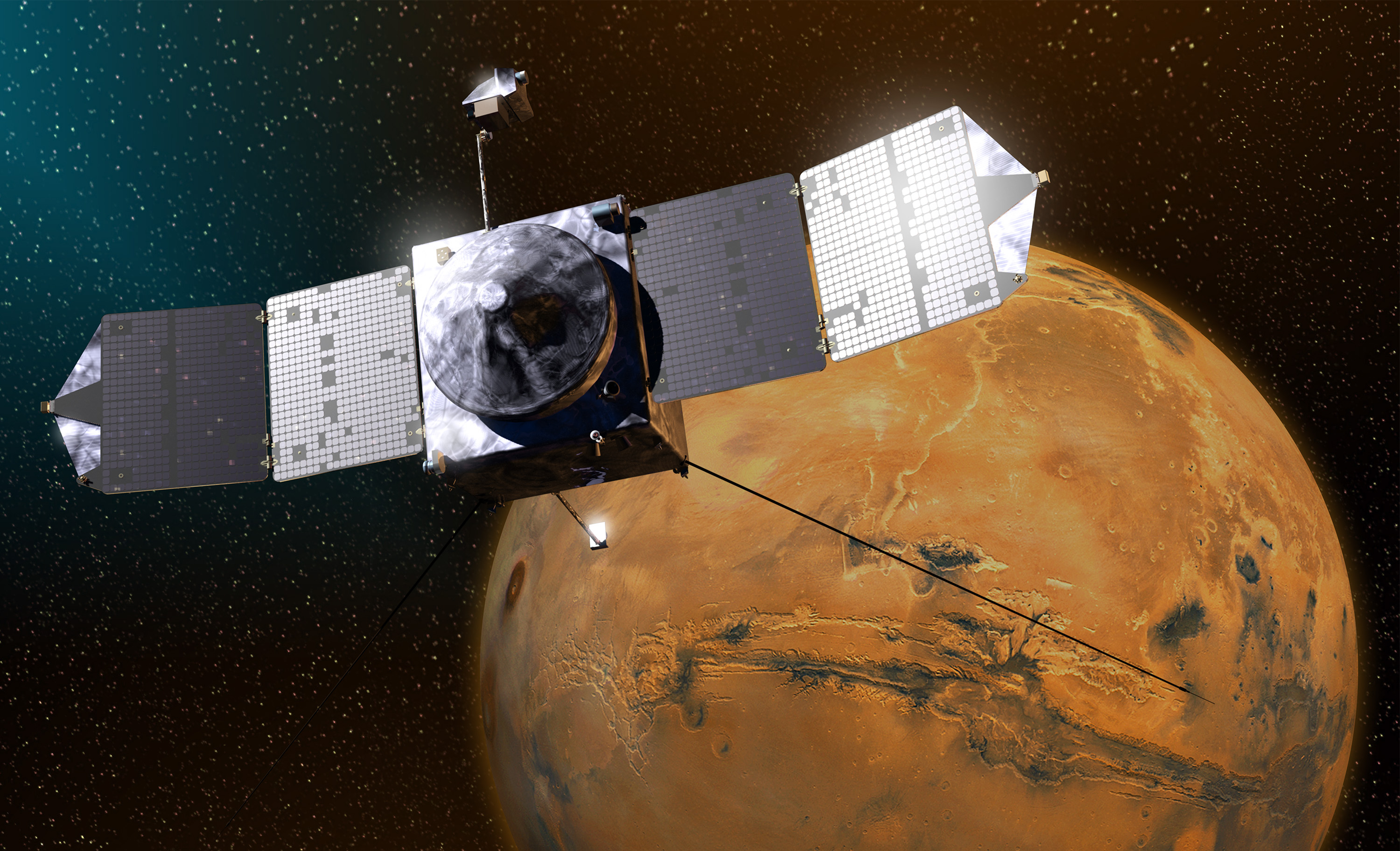
Summary: NASA has declared the MAVEN Mars orbiter mission unrecoverable and begun decommissioning after an anomaly in December 2023. The spacecraft, which had operated for over 11 years, experienced a loss of signal after passing behind Mars, with telemetry indicating it entered a high-rate spin that drained its batteries. The mission, which studied atmospheric loss and served as a critical data relay for surface assets, will now have its full dataset archived. An anomaly review board continues to investigate the root cause.
Why it matters: The end of MAVEN removes a key asset for both Martian atmospheric science and the operational relay network supporting rovers, forcing a re-evaluation of data flow and long-duration mission risk profiles.
Context: MAVEN launched in 2013 for a one-year primary mission but operated for over a decade, exemplifying the extended utility common to NASA’s planetary science missions. Its loss follows a pattern of aging Mars orbiters encountering terminal anomalies, increasing pressure on newer assets like MRO and the ESA’s Trace Gas Orbiter.
"The first mission devoted to observing the Martian atmosphere and its evolution, NASA’s MAVEN (Mars Atmosphere and Volatile Evolution), has ended after more than 11 years in orbit at Mars and a." — NASA.GOV
Commentary: The anomaly’s timing—occurring during a routine occultation—suggests a sudden, catastrophic failure of attitude control or propulsion, a critical risk for any long-duration orbiter. The loss of MAVEN’s relay capacity will strain the remaining Mars communications architecture, potentially impacting data return rates for Perseverance and Curiosity until other orbiters can be re-tasked. The forthcoming anomaly report will be scrutinized for lessons applicable to future long-lived assets, including those intended for human exploration.
Date: Wed, 03 Jun 2026 13:12:05 +0000
URL: https://www.nasa.gov/news-release/nasa-says-farewell-to-maven-mars-mission-hosts-media-call-today/
AI Sentiment Score: Negative (90%)
AI Credibility Score: 10.0/10 — High
Scores and text generated by AI analysis of the source article indicated.
After 11 years at Mars, NASA’s MAVEN spacecraft went out with a whisper (Arstechnica)
Summary: NASA has officially ceased recovery efforts for the MAVEN spacecraft, which unexpectedly lost contact during a routine occultation behind Mars in December 2025. The mission, which launched in 2013 and studied Mars’s upper atmosphere, had far exceeded its planned lifespan. Engineers recovered fragments of telemetry post-event, but the definitive cause of the failure remains unknown.

Why it matters: The unexplained loss of a healthy, long-duration science asset signals a potential gap in understanding deep-space mission failure modes and end-of-life risks, with implications for mission design and anomaly resolution for current and future Mars orbiters.
Context: MAVEN joins a pattern of NASA planetary missions operating far beyond their prime missions, where extended operations increase exposure to single-point failures. Its sudden silence contrasts with controlled, fuel-depletion end-of-mission scenarios more common for aging orbiters.
"“NASA has ceased efforts to search for the MAVEN spacecraft and are beginning activities to decommission the mission,” said Mike Moreau, MAVEN’s project manager at NASA’s Goddard Space Flight Center in Maryland." — ARSTECHNICA
Commentary: The failure mode—sudden loss during a routine orbital event—is more operationally significant than a gradual degradation. It suggests a latent subsystem vulnerability, possibly in power or communications, that could inform redundancy strategies for Perseverance support and future orbiter designs. The reliance on recovered telemetry fragments for post-mortem analysis underscores the forensic challenges of deep-space anomaly investigation.
Date: June 04, 2026 12:21 PM ET
URL: https://arstechnica.com/space/2026/06/after-11-years-at-mars-nasas-maven-spacecraft-went-out-with-a-whisper/
AI Sentiment Score: Negative (61%)
AI Credibility Score: 10.0/10 — High
Scores and text generated by AI analysis of the source article indicated.
NASA concludes MAVEN mission at Mars, uses data to discover new atmospheric phenomenon (Nasaspaceflight)
Summary: NASA has concluded the Mars Atmosphere and Volatile Evolution (MAVEN) mission after losing contact with the spacecraft in December 2025 following an anomaly. The orbiter, which launched in 2013, far exceeded its planned two-year primary mission, operating for 11 years and supporting rover communications while studying atmospheric loss. A final review board determined recovery was impossible, likely due to battery depletion from an uncontrolled spin. Despite the end of operations, analysis of its archived data continues, recently leading to the discovery of a solar wind deflection phenomenon—the Zwan-Wolf effect—within Mars’ ionosphere, a process previously observed only within planetary magnetospheres.

Why it matters: MAVEN’s operational end closes a decade-long chapter in Mars atmospheric science, but its data legacy directly informs human mission planning and alters fundamental models of planetary atmospheric interaction with space weather.
Context: MAVEN was the first dedicated mission to study the Martian upper atmosphere and its erosion, providing a baseline for understanding planetary climate evolution and informing radiation models for future crewed missions.
"“When investigating the data, I all of a sudden noticed some very interesting wiggles. I would never have guessed it would be this effect, since it’s never been seen in a planetary atmosphere before,” Fowler explained." — NASASPACEFLIGHT
Commentary: The discovery of the Zwan-Wolf effect in an ionosphere, not a magnetosphere, rewrites a textbook assumption and suggests similar processes may be active on other unmagnetized bodies like Venus or Titan. MAVEN’s unplanned longevity provided the dataset necessary for this finding, underscoring the value of extended missions even after operational loss. The anomaly’s unresolved cause remains a minor engineering signal for future orbiter design, but the mission’s end is a managed conclusion, not a failure, with its archive now a permanent asset for comparative planetology.
Date: June 07, 2026 04:11 PM ET
URL: https://www.nasaspaceflight.com/2026/06/maven-end-of-mission/
AI Sentiment Score: Negative (75%)
AI Credibility Score: 10.0/10 — High
Scores and text generated by AI analysis of the source article indicated.
Curiosity Blog, Sols 4908-4912: Goodbye Campo Marte, It’s Been Fun! (Science.Nasa.Gov)
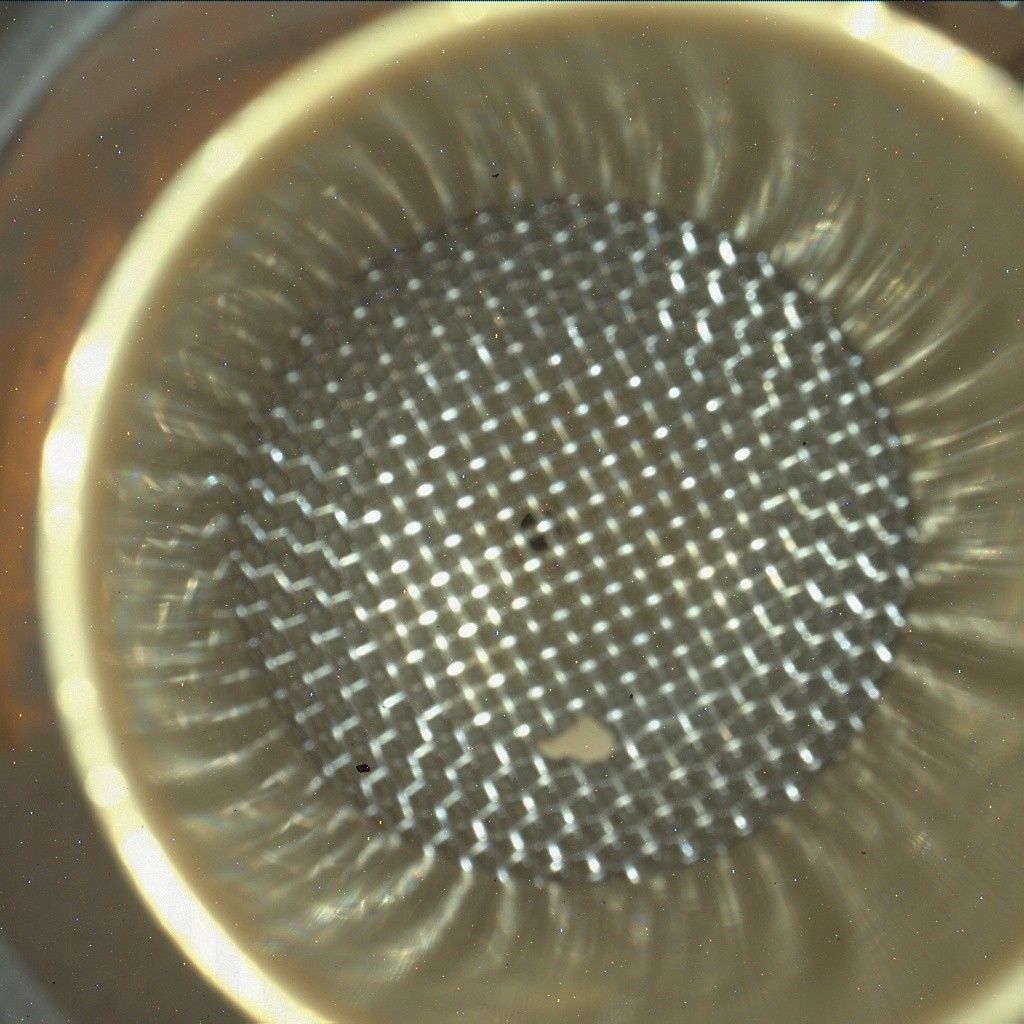
Summary: Curiosity has completed its 47th successful drill operation, ‘Campo Marte,’ on Mount Sharp. The rover team conducted a comprehensive post-drill analysis using CheMin, SAM, ChemCam, APXS, MAHLI, and Mastcam instruments, including high-precision laser targeting on millimeter-scale sedimentary layers and a potential record-breaking long-distance imaging mosaic. With this campaign concluded, the rover is now driving toward a new area of scientific interest, likely featuring cross-bedding, as the mineralogy data from the drill sample is processed.
Why it matters: It demonstrates the sustained operational tempo and scientific productivity of a flagship Mars mission well beyond its primary mission, yielding high-fidelity geological data that refines models of Martian aqueous history.
Context: Curiosity’s extended mission focuses on ascending Mount Sharp’s strata to read the planet’s climatic history; each drill sample and contextual observation builds a more detailed paleoenvironmental record.
"ChemCam carried out an expert’s targeting exercise by setting two targets up to aim at two different layers on adjacent spots on the finely laminated sediments. That involves aiming at millimeter-sized targets, named “Corcovado” and “Junakas,” respectively, about 3 meters away (about 10 feet)!" — SCIENCE.NASA.GOV
Commentary: The millimeter-scale targeting of distinct laminae underscores an evolved, precision-guided capability in remote sensing, moving from bulk composition to discerning micro-environments within sedimentary units. This operational refinement, coupled with the extended APXS integration time for superior statistics, signals a shift toward maximizing data quality over sheer quantity as the mission matures. The drive toward suspected cross-bedding indicates the strategic selection of features that record flow direction and energy, key to reconstructing depositional systems. The sustained ability to set new operational records, like the lengthy RMI mosaic, after 13+ years speaks to both the rover’s engineering durability and the team’s adeptness at leveraging its degraded systems for novel science.
Date: Thu, 04 Jun 2026 01:28:11 +0000
URL: https://science.nasa.gov/blog/curiosity-blog-sols-4908-4912-goodbye-campo-marte-its-been-fun/
AI Sentiment Score: Positive (75%)
AI Credibility Score: 10.0/10 — High
Scores and text generated by AI analysis of the source article indicated.
NASA Finds New Way Earth May Have Received Elements Needed for Life (Science.Nasa.Gov)
Summary: A Rice University study published in Science Advances proposes a revised model for Earth’s acquisition of life-essential phosphorus and nitrogen. By analyzing phosphorus-to-nitrogen ratios in iron meteorites and chondrites—representing first- and second-generation planetesimals—the research indicates Earth’s elemental budget matches inner solar system material. Critically, it posits Jupiter’s growth acted as a barrier, trapping higher P/N ratios in the inner system during the second generation of planetesimal formation.

Why it matters: This reframes a key debate in planetary habitability, suggesting Earth’s life-essential chemistry could be a default outcome of inner-system accretion in systems with a giant planet, rather than requiring late-stage delivery from the outer solar system.
Context: The origin of Earth’s volatile elements, particularly nitrogen and phosphorus, has long been contested, with models often invoking chondritic delivery from beyond Jupiter as a late veneer.
"NASA-supported scientists have provided new information about how the early Earth may have acquired some elements necessary for the planet to become habitable. They also suggest a new role for Jupiter in." — SCIENCE.NASA.GOV
Commentary: The implication extends beyond our solar system: if a Jupiter-like planet is necessary to create this inner-system elemental reservoir, then exoplanet systems without gas giants may have a different, potentially less life-conducive, distribution of key volatiles. This shifts the astrobiological focus from late accretion models to the earlier, dynamical role of giant planets during disk evolution.
Date: Wed, 03 Jun 2026 18:01:00 +0000
URL: https://science.nasa.gov/science-research/planetary-science/astrobiology/nasa-finds-new-way-earth-may-have-received-elements-needed-for-life/
AI Sentiment Score: Negative (75%)
AI Credibility Score: 10.0/10 — High
Scores and text generated by AI analysis of the source article indicated.
Let’s build the moon base, but not lose sight of Mars (Spacenews)
Summary: In a Spacenews op-ed, Explore Mars CEO Chris Carberry and Advancing Frontiers CEO Jennifer Rochlis argue that while establishing a sustainable lunar presence under Artemis is the immediate priority, mission planning must deliberately ‘feed forward’ lessons to Mars. They cite NASA Administrator Jared Isaacman’s view that lunar operations are a primary training ground for Mars, but warn that without intentional framing, the program risks becoming insular. The authors identify specific transferable capabilities, like power networks and surface operations, while noting that certain Mars-specific technologies, such as Entry, Descent, and Landing systems, require parallel development to avoid future delays.

Why it matters: This highlights a growing strategic tension within NASA and the space industry: whether Artemis is an end in itself or a stepping stone, with significant implications for budget allocation, technology roadmaps, and the long-term viability of a human Mars mission.
Context: The debate over the ‘moon-first’ versus ‘Mars-direct’ pathways has persisted for decades; the current Artemis program represents a political and technical commitment to the former, but its ultimate justification to stakeholders often hinges on its utility for the latter.
"These are heady days for NASA and the space industry. The Artemis 2 crew flew around the moon, traveling farther into space than any humans previously had; NASA announced an ambitious new." — SPACENEWS
Commentary: The op-ed’s core argument is an institutional risk assessment: without mandated cross-program lessons-learned processes, the natural bureaucratic and contractor momentum of Artemis will consume resources without systematically de-risking Mars. The call for parallel development of Mars EDL systems is a tacit admission that lunar surface experience alone is insufficient, signaling a potential future budget fight between lunar infrastructure and deep-space propulsion and landing technologies.
Date: June 05, 2026 09:00 AM ET
URL: https://spacenews.com/lets-build-the-moon-base-but-not-lose-sight-of-mars/
AI Sentiment Score: Negative (77%)
AI Credibility Score: 10.0/10 — High
Scores and text generated by AI analysis of the source article indicated.
After New Glenn anomaly, Blue Origin keeps focus on upcoming Blue Moon and Mars missions (Nasaspaceflight)
Summary: Blue Origin’s New Glenn anomaly in late May has disrupted timelines for its lunar and Martian ambitions, but the company is maintaining focus on its core NASA contracts. The Blue Moon Mark 1 lander ‘Endurance’ is slated for NASA’s inaugural Moon Base mission, but its 2026 launch is now contingent on New Glenn’s return to flight by year’s end. Concurrently, Blue Origin is proposing its Blue Ring platform for NASA’s revived Mars Telecommunications Orbiter, competing with Rocket Lab. The Artemis III mission’s re-scoping to low-Earth orbit testing also alters the operational context for the crewed Blue Moon Mark 2.

Why it matters: New Glenn’s failure directly threatens the schedule and payload capacity underpinning NASA’s near-term lunar surface strategy and commercial deep-space communications.
Context: Heavy-lift launch vehicle failures create cascading delays for large, integrated exploration architectures, where landers, orbiters, and ground systems are designed for specific launch windows and mass margins.
"Following the damaging loss of New Glenn during hotfire testing at Launch Complex 36 in late May, Blue Origin is moving quickly to get its massive orbital rocket back to flight by." — NASASPACEFLIGHT
Commentary: NASA’s public support signals a strategic dependency on Blue Origin’s heavy-lift capability for its lunar base timeline, making the agency a de facto risk-sharing partner in the recovery. The pivot to compete for the Mars Telecommunications Orbiter contract indicates Blue Origin is leveraging its spacecraft platform to diversify revenue and mission relevance beyond Earth-Moon logistics, directly challenging Rocket Lab’s deep-space niche. The Artemis III rework to LEO testing reduces near-term pressure on MK2 but extends the validation period for its crewed systems.
Date: June 05, 2026 08:22 PM ET
URL: https://www.nasaspaceflight.com/2026/06/blue-moon-mto-update/
AI Sentiment Score: Negative (72%)
AI Credibility Score: 10.0/10 — High
Scores and text generated by AI analysis of the source article indicated.
Final Artemis III SLS Booster Segments En Route to NASA Kennedy (Nasa.Gov)
Summary: The final eight booster motor segments for the Artemis III SLS rocket have shipped from Northrop Grumman’s Utah facility to Kennedy Space Center. These segments will form the twin solid rocket boosters, which provide over 75% of the vehicle’s liftoff thrust. Their arrival marks the completion of booster hardware delivery for the mission intended to land astronauts on the lunar surface.

Why it matters: This shipment signals the transition from long-lead manufacturing to final assembly and integration for the Artemis III vehicle, a critical path item for the mission’s schedule.
Context: Artemis III hardware delivery has faced scrutiny due to delays in other elements, notably the human landing system; on-schedule delivery of SLS components provides a stable baseline against which other delays are measured.
"The eight booster motor segments are on their way to NASA’s Kennedy Space Center in Florida where they will form the SLS rocket’s twin, five-segment solid rocket boosters, which produce more than 75% of the total thrust at liftoff." — NASA.GOV
Commentary: While this shipment is a necessary milestone, it highlights the program’s segmented risk profile: SLS core elements proceed while lunar lander and spacesuit development remain the pacing items. The focus now shifts to integration flow at KSC and the readiness of ground support equipment to receive these segments.
Date: June 04, 2026 12:53 PM ET
URL: https://www.nasa.gov/blogs/missions/2026/06/04/final-artemis-iii-sls-booster-segments-en-route-to-nasa-kennedy/
AI Sentiment Score: Positive (40%)
AI Credibility Score: 10.0/10 — High
Scores and text generated by AI analysis of the source article indicated.
Post ID: 275c632f