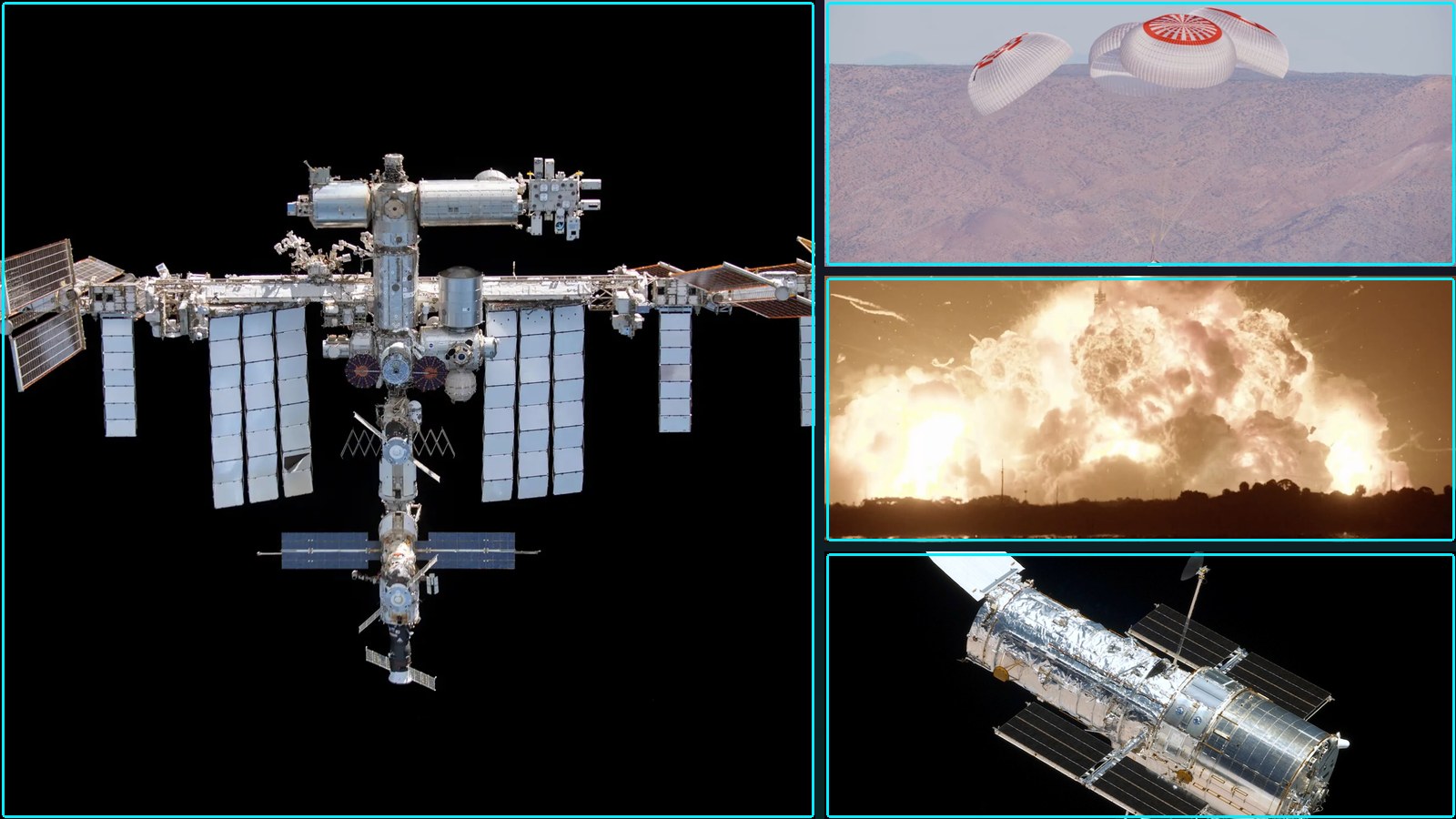
Space Station & Orbital Operations
The saga of the International Space Station air leak took a worrying turn Friday (Arstechnica)
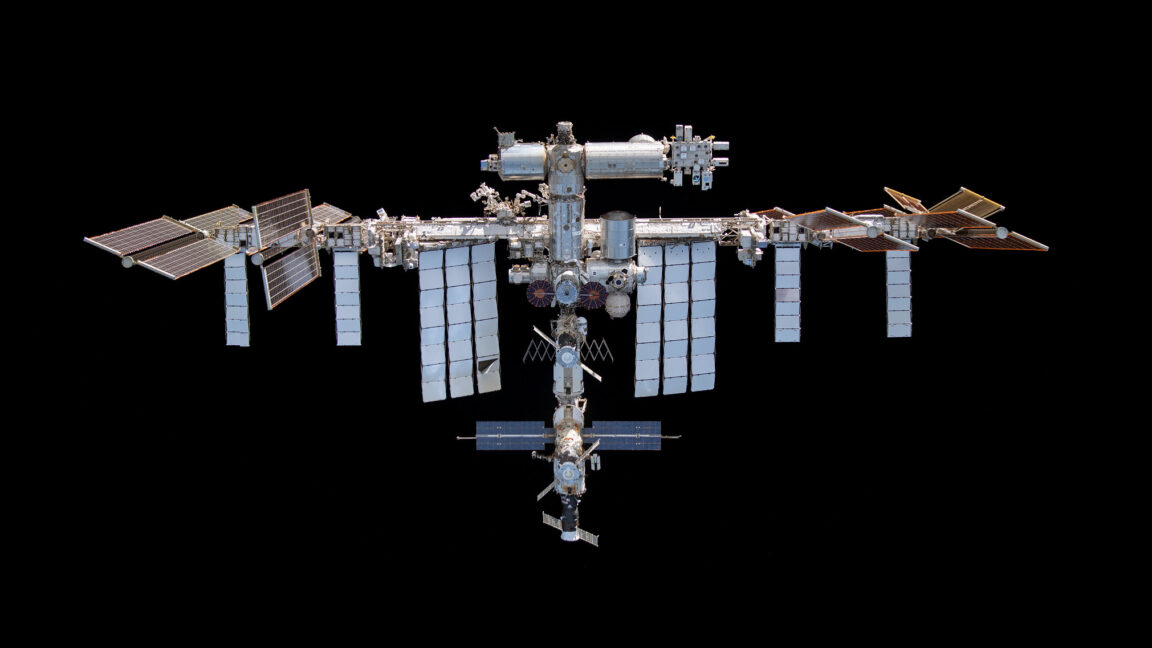
Summary: On Friday, NASA ordered five of the seven International Space Station crew members into the SpaceX Crew Dragon Freedom as a precautionary safe haven. This action was prompted by two Russian cosmonauts conducting repair work on persistent air leaks in the transfer tunnel of the Russian Zvezda Service Module. The leak, attributed to microscopic cracks, has recurred after a brief period of stability earlier this year, defying previous repair attempts.
Why it matters: The incident underscores the operational fragility of aging ISS infrastructure and the real-time risk management required to maintain crew safety, directly impacting mission planning and international partnership protocols.
Context: For over six years, Roscosmos and NASA have monitored and attempted to seal these leaks in the Zvezda module’s PrK transfer tunnel, with the problem proving resistant to permanent fixes.
"Five of the seven crew members on the International Space Station briefly sought refuge inside a SpaceX return capsule Friday morning as two Russian cosmonauts worked on an air leak on the." — ARSTECHNICA
Commentary: The shelter-in-place order, while precautionary, signals a shift from routine monitoring to active contingency planning for a known, worsening fault. This elevates the leak from a persistent engineering nuisance to a factor influencing crew safety procedures and potentially accelerating discussions on station end-of-life logistics and successor platform resilience.
Date: June 05, 2026 03:03 PM ET
URL: https://arstechnica.com/space/2026/06/work-on-russias-leaky-space-station-module-causes-astronauts-to-take-shelter/
AI Sentiment Score: Negative (80%)
AI Credibility Score: 10.0/10 — High
Scores and text generated by AI analysis of the source article indicated.
NASA concerns about Russian repairs prompted ISS safe haven decision (Spacenews)
Summary: NASA ordered ISS crew to shelter in a Crew Dragon spacecraft on June 5, 2026, due to concerns over a planned Russian repair operation. Cosmonauts were to cut a bracket in the PrK vestibule of the Zvezda module, an area with a persistent air leak, using a method NASA deemed an ‘elevated risk’ to station structure. The cosmonauts ultimately deferred the structural work, opting for measurements and sealant application instead, after which the crew resumed normal operations. The incident highlights ongoing technical disagreements and procedural friction between partners over a long-standing leak issue.

Why it matters: This event underscores the operational fragility and persistent technical disagreements within the ISS partnership, directly impacting crew safety protocols and joint mission management.
Context: The PrK leak in Zvezda has been a recurring issue for years, with NASA and Roscosmos historically differing on its severity and root cause. Previous sealant-based repairs were declared successful, but the underlying problem evidently persists.
"This revised approach involved cutting a bracket to better access an area identified as a possible leak source for further inspection, using a method that could have resulted in elevated risk to the structure in the area." — SPACENEWS
Commentary: NASA’s decision to enact a safe haven is a significant, real-time vote of no confidence in a partner’s planned engineering procedure. It signals that operational risk assessments between agencies are not fully aligned, forcing contingency measures that disrupt station work. The incident will likely tighten NASA’s scrutiny of all non-standard maintenance, especially on Russian segments, and may influence future protocol negotiations for post-ISS commercial stations.
Date: June 06, 2026 01:33 PM ET
URL: https://spacenews.com/nasa-concerns-about-russian-repairs-prompted-iss-safe-haven-decision/
AI Sentiment Score: Negative (75%)
AI Credibility Score: 10.0/10 — High
Scores and text generated by AI analysis of the source article indicated.
Astronauts briefly shelter in Dragon during ISS leak repair (Spacenews)
Summary: On June 5, NASA instructed five astronauts to shelter in a Crew Dragon spacecraft as Roscosmos cosmonauts prepared to repair an air leak in the Zvezda module’s PrK vestibule, a long-standing issue. The repair attempt was deemed risky enough to warrant the shelter-in-place order. Within two hours, Roscosmos called off the repair operation, opting instead for measurements, and the astronauts returned to station duties. The incident highlights ongoing technical and procedural friction between NASA and Roscosmos regarding the leak’s management.

Why it matters: This event underscores the persistent operational risks and international coordination challenges aboard the aging ISS, directly impacting crew safety protocols and daily mission execution.
Context: The PrK vestibule leak has been monitored for years, with temporary fixes applied. NASA and Roscosmos have disagreed on the leak’s root cause and severity, and NASA has expressed concern that Russian protocols for managing the leak’s pressure are not being consistently followed.
"Following new leaks, Roscosmos has elected to proceed with a more extensive repair operation on Friday, June 5,” NASA press secretary Bethany Stevens said in a social media post. “Out of an abundance of caution, NASA has directed all four of the agency’s SpaceX Crew-12 members and NASA astronaut Chris Williams to assume an elevated safety posture in the Dragon spacecraft while the repair is underway." — SPACENEWS
Commentary: The shelter order and subsequent cancellation signal a breakdown in pre-coordinated risk assessment between the partners. NASA’s procedural response—using Dragon as a lifeboat—validates the commercial crew program’s operational utility for contingency management, while the aborted repair suggests either an unresolved technical diagnosis or a last-minute risk recalculation by Russian controllers.
Date: June 05, 2026 12:29 PM ET
URL: https://spacenews.com/astronauts-briefly-shelter-in-dragon-during-iss-leak-repair/
AI Sentiment Score: Negative (85%)
AI Credibility Score: 10.0/10 — High
Scores and text generated by AI analysis of the source article indicated.
NASA interested in Hubble reboost if costs can be reduced (Spacenews)
Summary: NASA is evaluating a commercial reboost mission for the Hubble Space Telescope, contingent on reducing its high operational costs. This follows the agency’s high-risk, $30 million contract with Katalyst Space to reboost the Neil Gehrels Swift Observatory using its first Link servicing spacecraft, set for a Pegasus XL launch this month. The Swift mission is framed as a signal of demand to the commercial servicing sector and a test case for Hubble, whose median reentry is projected for 2033. The agency’s astrophysics division director notes reboost costs are lower than anticipated, but Hubble’s nearly $100 million annual operating budget presents a fiscal barrier.

Why it matters: Hubble’s potential reboost represents a critical test of NASA’s shift toward commercial on-orbit servicing and its ability to manage the trade-offs between extending flagship observatories and funding new missions.
Context: NASA’s Science Mission Directorate is actively pressuring extended missions to reduce costs, creating a tension between legacy asset preservation and new program development, as seen in discussions around Chandra and others.
"WASHINGTON — As NASA prepares an attempt to reboost an astronomy spacecraft in a decaying orbit, the agency is open to doing something similar for the Hubble Space Telescope, provided its operating." — SPACENEWS
Commentary: The operational cost hurdle, not the technical feasibility of a reboost, is now the decisive variable for Hubble’s future. This signals that NASA’s budget constraints, not engineering limits, will increasingly dictate the fates of legacy science assets. A successful Swift reboost by Katalyst would validate the commercial model but not automatically greenlight Hubble; it would instead intensify the internal pressure on the Space Telescope Science Institute to find significant operational savings. The explicit framing of Hubble as a ‘bridge’ to the Habitable Worlds Observatory suggests its extension is being weighed against its potential to cannibalize funding for that next-generation flagship.
Date: June 06, 2026 08:52 PM ET
URL: https://spacenews.com/nasa-interested-in-hubble-reboost-if-costs-can-be-reduced/
AI Sentiment Score: Negative (71%)
AI Credibility Score: 10.0/10 — High
Scores and text generated by AI analysis of the source article indicated.
The Exploration Company advances Nyx parachute recovery (Nasaspaceflight)
Summary: The Exploration Company (TEC) has completed a dedicated drop test of the parachute recovery system for its reusable Nyx spacecraft in the Mojave Desert. The test validated the critical transition from drogue to main parachutes using a purpose-built Drop Test Vehicle. This milestone advances TEC’s methodical risk-reduction campaign ahead of a targeted first demonstration flight to the International Space Station around 2028.

Why it matters: Parachute recovery is a high-risk, high-consequence phase of spacecraft design; successful testing of the deployment sequence directly de-risks Nyx’s path to operational cargo missions.
Context: TEC’s Nyx is a European entrant in the commercial cargo vehicle market, aiming to offer a reusable, launcher-agnostic alternative to SpaceX’s Dragon and Northrop Grumman’s Cygnus for LEO and lunar logistics.
"The company completed a dedicated drop test of the Nyx parachute system in the Mojave Desert, California, validating the critical transition from drogue to main parachutes." — NASASPACEFLIGHT
Commentary: Choosing a land-based drop test over a splashdown for this specific sequence underscores a pragmatic, agile development philosophy focused on rapid iteration and data acquisition. Partnering with Airborne Systems leverages proven expertise, but the real signal is the disciplined, milestone-driven approach—contrasting with more speculative ventures. This test moves Nyx from a proposed concept into a hardware-tested system, tightening the schedule pressure on competitors and potentially validating Europe’s commercial spaceflight model.
Date: June 04, 2026 07:09 AM ET
URL: https://www.nasaspaceflight.com/2026/06/the-exploration-company-nyx-parachute-recovery/
AI Sentiment Score: Negative (50%)
AI Credibility Score: 10.0/10 — High
Scores and text generated by AI analysis of the source article indicated.
Safety officials finally have a good idea of what a big rocket explosion can do (Arstechnica)
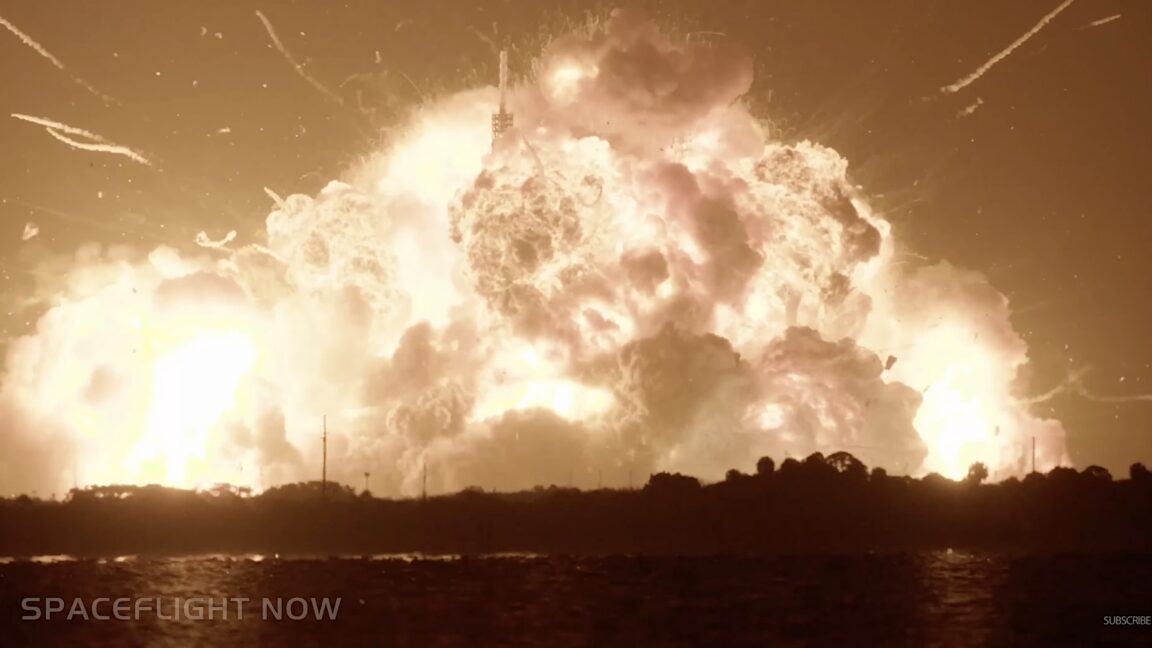
Summary: The explosion of Blue Origin’s New Glenn rocket during a ground test at Cape Canaveral provided the first significant real-world data on the blast effects of a fully loaded methalox (methane/liquid oxygen) vehicle. This event occurs as the Space Coast prepares for a surge in launch cadence, driven by SpaceX’s Starship and new entrants like Stoke Space and Relativity, all using methalox propellants. The Space Force’s conservative safety protocols, based on limited data, have created operational tensions, as competitors worry that frequent Starship operations could trigger disruptive evacuations. The incident offers empirical evidence to refine these risk models.
Why it matters: For launch operators, regulators, and adjacent infrastructure, the data calibrates safety margins and operational rules that will define the practical upper limit of launch tempo at the world’s busiest spaceport.
Context: Cape Canaveral is transitioning from legacy kerosene and hydrogen rockets to a new generation of methalox vehicles, whose explosive yields and blast contours were previously theoretical. The Space Force’s projected 500 annual launches by 2036 depends on resolving these safety unknowns.
"Last week’s explosion of a New Glenn rocket at Cape Canaveral, Florida, was clearly a setback for Blue Origin and NASA, but it was a learning experience for safety officials looking to." — ARSTECHNICA
Commentary: The New Glenn failure transforms a theoretical risk into a quantifiable one, allowing the Space Force to move from conservative blanket restrictions to data-driven standoff distances. This should reduce friction between high-cadence operators like SpaceX and neighboring pads, but may also reveal new, unanticipated constraints that could throttle the projected launch growth. The incident underscores that the industry’s scaling ambitions remain bounded by physical safety engineering, not just manufacturing or regulatory speed.
Date: June 05, 2026 09:55 AM ET
URL: https://arstechnica.com/space/2026/06/safety-officials-finally-have-a-good-idea-of-what-a-big-rocket-explosion-can-do/
AI Sentiment Score: Negative (66%)
AI Credibility Score: 10.0/10 — High
Scores and text generated by AI analysis of the source article indicated.
Post ID: 7b33cfdb