

Ancient World
Scientists discover 2 new ‘ghost’ lineages that contributed DNA to modern humans (Livescience)
Summary: A new genealogical method applied to 500+ modern human genomes has identified two previously unknown ‘ghost’ lineages that contributed DNA to Homo sapiens. One lineage, possibly Homo heidelbergensis, contributed 0.5–1% of the genome of all living people, dating to an interbreeding event in Africa over 50,000 years ago. The other, a ‘super-archaic’ lineage diverging nearly 2 million years ago, appears in Oceanian genomes at trace levels, likely inherited via Denisovans. The technique, published in Science, reconstructs ancestral recombination graphs without requiring fossil DNA, opening a new window into deep human evolution.
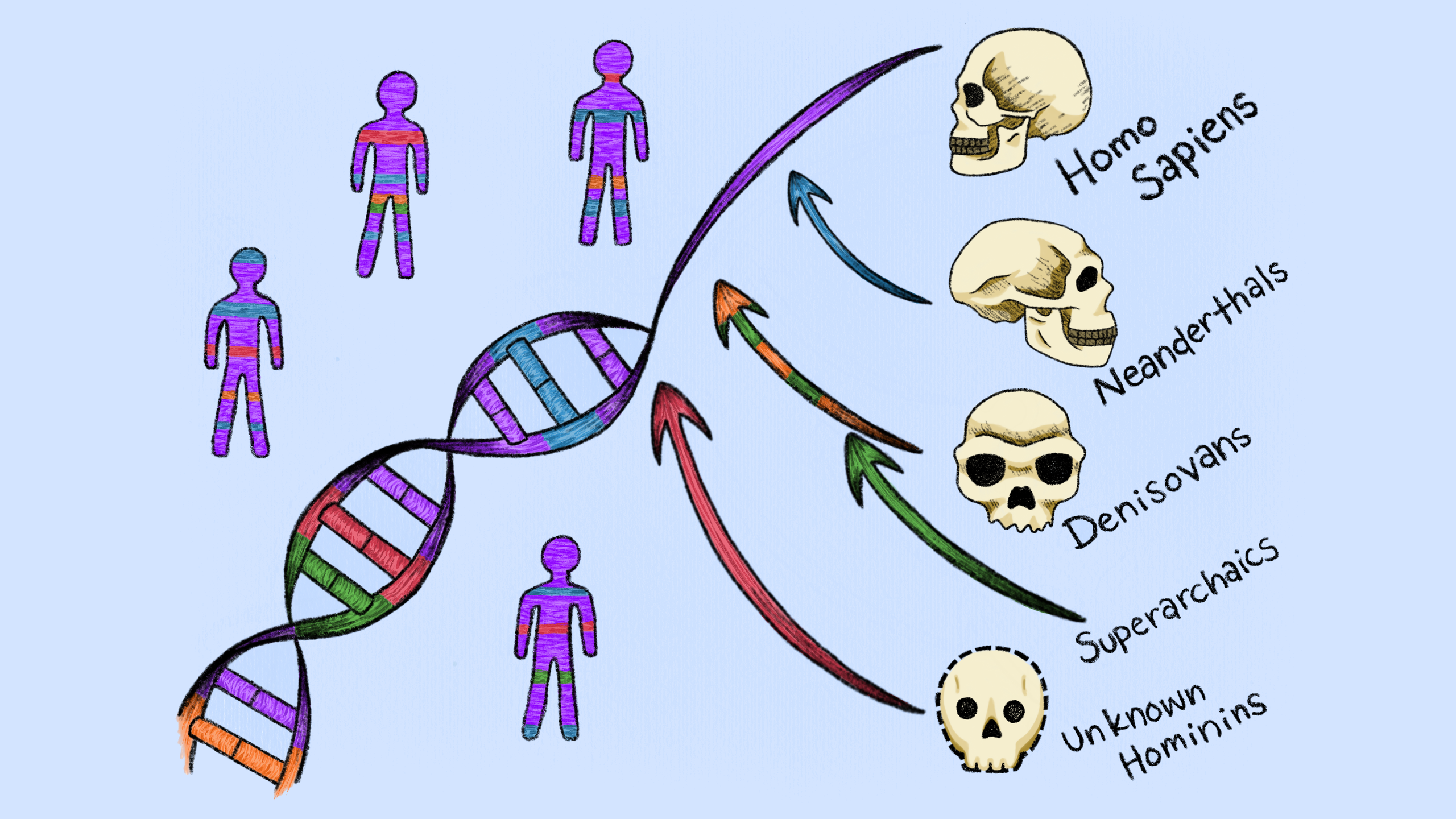
Why it matters: This study shifts the evidentiary basis for human evolution from fossil luck to computational inference, allowing researchers to recover genetic contributions from populations that left no skeletal record. It also reinforces that hybridization, not a clean branching tree, is the norm in human history—a correction with implications for how we model population dynamics and adaptive introgression.
Context: Previous identifications of ghost ancestry relied on fragmentary ancient DNA from cold, dry sites, leaving Africa and tropical regions largely unrepresented. The new method uses ancestral recombination graphs to spot deep coalescent signals in modern genomes, a technique that can be extended to other species with scarce fossil DNA.
"Scientists discover 2 new ‘ghost’ lineages that contributed DNA to modern humans A new method of analyzing modern humans’ DNA is revealing secrets about our extinct ancestors. Traces of two "ghost lineages"." — LIVESCIENCE
Commentary: The finding that a ghost lineage contributed to all modern humans—not just Africans—challenges the assumption that the Out-of-Africa migration was genetically homogeneous. The super-archaic signal in Oceania, likely from Homo erectus via Denisovans, suggests deep-time admixture events that predate the modern human lineage itself. The concentration of these introgressed segments in immune and metabolic genes points to adaptive value, but the functional consequences remain untested. This method’s portability to non-human species could make it a standard tool in comparative genomics, not just paleoanthropology.
Date: July 30, 2026 03:57 PM ET
URL: https://www.livescience.com/archaeology/human-evolution/scientists-discover-2-new-ghost-lineages-that-contributed-dna-to-modern-humans
AI Sentiment Score: Negative (60%)
AI Credibility Score: 10.0/10 — High
Scores and text generated by AI analysis of the source article indicated.
500-year-old Inca mummies prove that European colonists brought devastating smallpox to the Americas (Livescience)
Summary: Ancient DNA from two 500-year-old Inca mummies in Chile has yielded the earliest known smallpox genomes in the Americas, dating between 1492 and 1631. The genomes match an extinct variola lineage that split from European strains around 1296, providing the first molecular proof that European colonization introduced smallpox to the Americas. The study, published in Science, confirms that the virus evolved to become exclusively human-adapted, and it corroborates historical records of devastating epidemics that killed millions of Indigenous people.

Why it matters: This is the first direct molecular evidence linking European colonization to smallpox’s introduction in the Americas, shifting the evidentiary basis from colonial-era written records to pathogen genomes. It also offers a rare glimpse into the evolutionary step between medieval and modern variola strains, with implications for understanding how pathogens adapt to human hosts.
Context: Smallpox’s toll in the Americas has long been inferred from historical accounts and estimated at three to four million deaths, but ancient DNA evidence was previously absent. The genomes fill a gap in the evolutionary timeline of variola virus, and the study’s finding that the strain lost animal-infecting genes over time parallels concerns about Mpox’s adaptation to humans.
""We provide the first molecular evidence of smallpox introduction to the Americas through colonization," Nakagome said." — LIVESCIENCE
Commentary: The discovery transforms a historical assumption into a genetic fact, but it also raises questions about the virus’s transmission dynamics among Indigenous populations that colonial records may have missed. The finding that variola became more human-specific over time is a stark reminder that pathogen evolution is not static—and it offers a cautionary model for monitoring Mpox’s current trajectory. Expect this to fuel further ancient DNA hunts across the Americas, as each new genome could refine the timeline of colonial epidemics and their genetic legacy.
Date: July 30, 2026 02:00 PM ET
URL: https://www.livescience.com/archaeology/americas/500-year-old-inca-mummies-prove-that-european-colonists-brought-devastating-smallpox-to-the-americas
AI Sentiment Score: Negative (80%)
AI Credibility Score: 10.0/10 — High
Scores and text generated by AI analysis of the source article indicated.
The Ghost In Our Genes: Scientists Discover Mystery Ancestor Hiding In Human DNA (Studyfinds)
Summary: A new computational tool called TRACE has detected traces of an unknown ancient human relative in every population sampled, a lineage distinct from Neanderthals and Denisovans. The ghost lineage, estimated to have split from the Neanderthal-Denisovan line over 500,000 years ago, comprises 0.5–1.1% of the genome in modern humans, including in regions previously considered ‘archaic deserts.’ In Oceanian genomes, the analysis also found signs of an even older ‘super-archaic’ lineage, possibly Homo erectus, suggesting multiple layers of ancient interbreeding. The findings, published in Science, rely on ancestral recombination graphs rather than fossils, offering a new way to recover hidden ancestry.
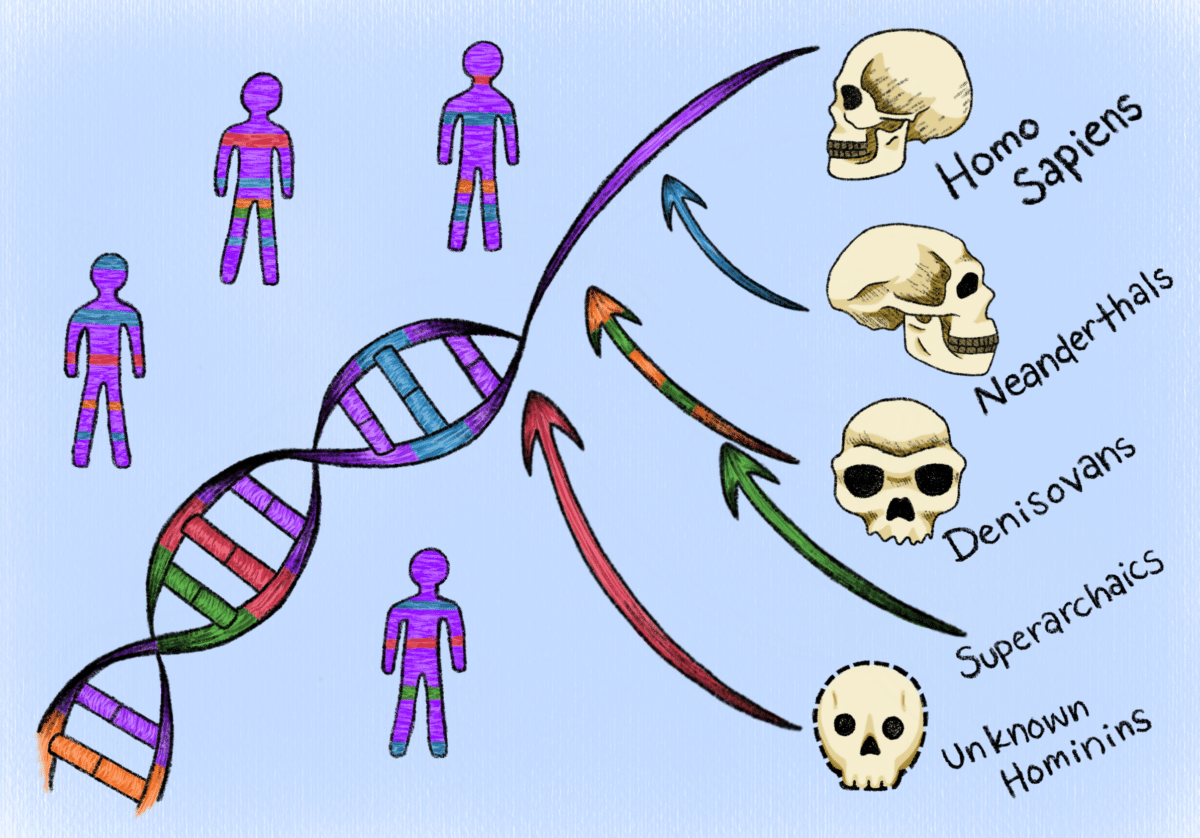
Why it matters: This study introduces a method to detect ancient interbreeding without reference genomes, potentially rewriting the timeline and geography of human admixture. It also challenges the assumption that ‘archaic deserts’ reflect universal selection against archaic DNA, which has implications for understanding how selection acts on introgressed variants.
Context: Previous studies of archaic introgression relied on sequenced genomes from Neanderthals and Denisovans. TRACE’s approach uses ancestral recombination graphs to infer archaic segments from modern DNA alone, enabling detection of lineages with no fossil record. The finding of ghost ancestry in African populations suggests interbreeding occurred before the Out-of-Africa migration, a point of ongoing debate.
"All five shared deserts examined contain substantial ghost ancestry. A desert on chromosome 7, containing a gene linked to language and speech, shows a ghost peak of 13.3%; a desert on chromosome 3 has a ghost peak near 20%. If these regions rejected all ancient DNA on principle, ghost ancestry would not survive there either." — STUDYFINDS
Commentary: The TRACE method’s ability to identify ghost ancestry in ‘archaic deserts’ is a significant methodological leap, but its reliance on inferred genealogies means recall rates can drop below 30% in some models, so the true extent of ghost ancestry may be underestimated. The super-archaic signal in Oceanians, if confirmed, would push the known depth of hominin admixture back to nearly two million years, suggesting a far more complex web of interbreeding than previously modeled. The lack of ancient African genomes older than 20,000 years remains a critical gap, limiting direct validation of these findings for African populations. As TRACE and similar tools improve, expect a re-evaluation of the ‘clean’ Out-of-Africa narrative, with implications for population genetics and the evolutionary history of adaptive traits.
Date: July 31, 2026 06:10 AM ET
URL: https://studyfinds.com/ghost-in-our-genes-mystery-ancestor-human-dna
AI Sentiment Score: Negative (81%)
AI Credibility Score: 10.0/10 — High
Scores and text generated by AI analysis of the source article indicated.
Around 150 BCE, Aksum rose along Red Sea trade routes; researchers say surviving Tigray grapevines may preserve part of that ancient agricultural legacy (Timesofindia.Indiatimes)
Summary: A new interdisciplinary study of traditional grapevines in Ethiopia’s Tigray region has found genetic and morphological evidence that some surviving vines may descend from the Aksumite Kingdom (150 BCE–800 CE), a major Red Sea trade power. One vine in the village of Rubaksa, proposed as ‘Rubaksum Tsellim,’ shows no match to commercial varieties but strong affinities with ancient Mediterranean and Caucasus grapes, including seed shapes similar to Italian, Greek, and Cypriot types. A second vine with an identical DNA profile suggests a surviving lineage, likely preserved by Orthodox churches and family cuttings. The findings point to a living agricultural legacy of Aksum’s trade networks, with potential for sustainable viticulture in Tigray’s terraced landscape.
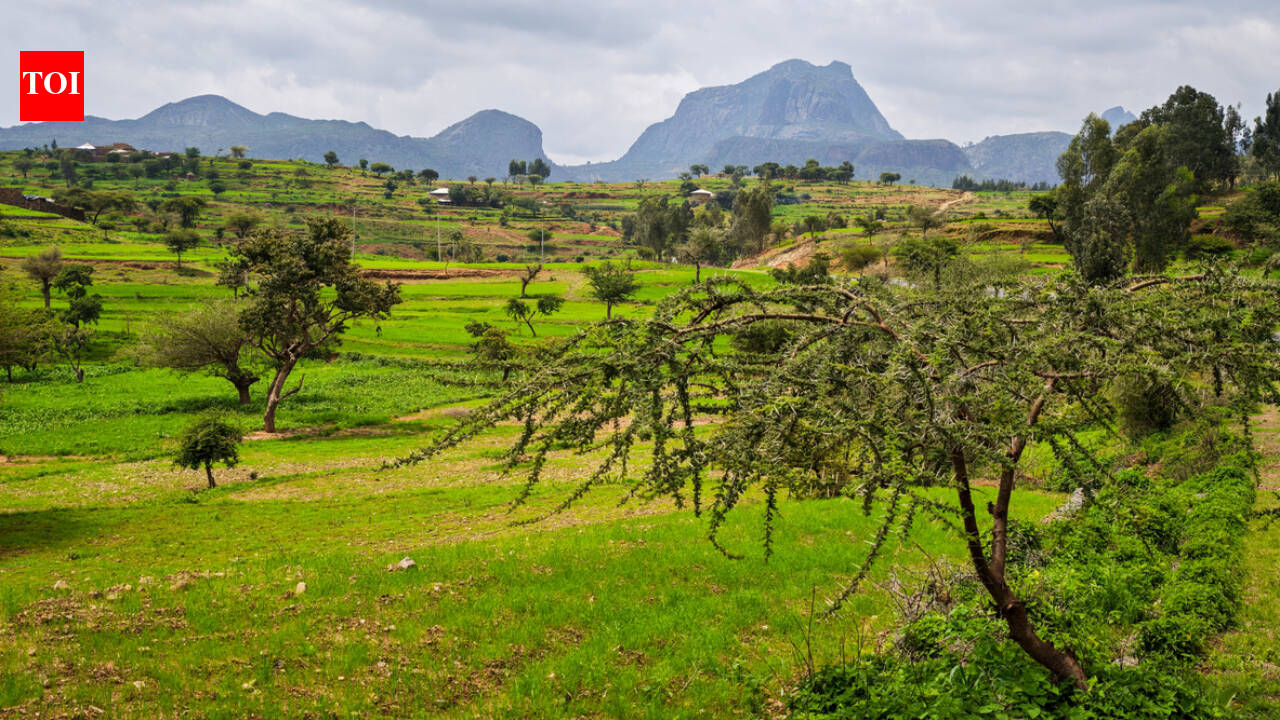
Why it matters: This discovery reframes Aksum’s agricultural reach and demonstrates that local farming practices can preserve genetic lineages of ancient civilizations, offering both historical insight and practical resources for future crop resilience.
Context: Aksum was a commercial hub linking Africa, the Mediterranean, and the Near East, but its viticulture was previously known only from archaeological remains like seeds and wine presses. The study bridges that gap by identifying living descendants, a rare continuity between ancient and modern plant genetics.
"The genetic fingerprint of the vine did not match any known commercial grape variety listed in major international databases. But it had strong similarities with ancient grape varieties from the Mediterranean and Caucasus regions." — TIMESOFINDIA.INDIATIMES
Commentary: The identification of a distinct landrace with no commercial match underscores the value of non-market agricultural systems in preserving biodiversity. That Orthodox churches and family networks maintained these vines for centuries suggests institutional and social structures can act as de facto gene banks. The potential for using these vines in sustainable terrace farming could offer a climate-adaptive crop for Tigray, but any commercial push must avoid eroding the very traditional practices that preserved the lineage. This is a case where historical archaeology meets living genetics, and the stakes are both cultural and agricultural.
Date: July 31, 2026 08:00 PM ET
URL: https://timesofindia.indiatimes.com/science/around-150-bce-aksum-rose-along-red-sea-trade-routes-researchers-say-surviving-tigray-grapevines-may-preserve-part-of-that-ancient-agricultural-legacy/articleshow/132728468.cms
AI Sentiment Score: Negative (50%)
AI Credibility Score: 10.0/10 — High
Scores and text generated by AI analysis of the source article indicated.
Post ID: 871ec1f7