
Space Exploration
NASA Science Soars During August Total Solar Eclipse (Science.Nasa.Gov)
Summary: NASA-funded teams will chase the August 12, 2026 total solar eclipse over Greenland, Iceland, and Spain using a WB-57 high-altitude jet and scientific balloons. The jet’s SCIFLI Multispectral Airborne Imager (SAMI) will capture high-resolution coronal images in visible and infrared wavelengths, extending observation time to nearly three minutes. Balloon teams will study atmospheric boundary layer collapse and ozone depletion during totality, building on findings from the 2023 and 2024 eclipses. The mission aims to improve understanding of coronal heating, solar wind origins, and eclipse-driven atmospheric changes.

Why it matters: This campaign tests whether eclipse observations can be refined through iterative hardware and software improvements, directly informing future heliophysics missions and our ability to predict space weather impacts on satellites and astronauts.
Context: The 2026 eclipse follows the April 2024 total solar eclipse, where SAMI first flew and balloon teams observed boundary layer collapse and ozone decreases. The new campaign applies lessons learned, including adjusted exposure times and faster data processing, while probing how seasonal and latitudinal differences affect atmospheric responses.
"The Sun is always changing,” Caspi said. “Every eclipse is different. So we could see things we didn’t see before. And we learn from each eclipse how to better observe the next one." — SCIENCE.NASA.GOV
Commentary: The iterative approach—adjusting exposure times, leveraging new software, and expanding balloon coverage—turns each eclipse into a calibration exercise for future space-based coronagraphs. The boundary layer collapse question in Iceland’s long-day environment is a sharp test of whether eclipse-driven cooling can override the day-night cycle, with implications for atmospheric modeling. The ozone measurements, repeated at a different time of day and season, will help isolate seasonal versus eclipse-specific effects. This is low-cost, high-yield science that keeps the heliophysics community primed for the next generation of solar observatories.
Date: July 27, 2026 02:01 PM ET
URL: https://science.nasa.gov/science-research/heliophysics/nasa-science-soars-during-august-total-solar-eclipse/
AI Sentiment Score: Negative (77%)
AI Credibility Score: 10.0/10 — High
Scores and text generated by AI analysis of the source article indicated.
NASA’s Swift Sees ‘Wandering’ Mega Black Hole Shredding Star (Science.Nasa.Gov)
Summary: NASA’s Swift Observatory confirmed a tidal disruption event 30,000 light-years from a galaxy’s center, marking the first time such a phenomenon has been observed so far outside a galactic core. The event, first flagged by ZTF in November 2025, was validated through a new AI-driven search technique and multi-telescope follow-up. The black hole, about a million solar masses, likely originated in a smaller galaxy that merged with its current host. This discovery validates a new method for finding ‘wandering’ supermassive black holes, with upcoming surveys expected to dramatically expand the sample.
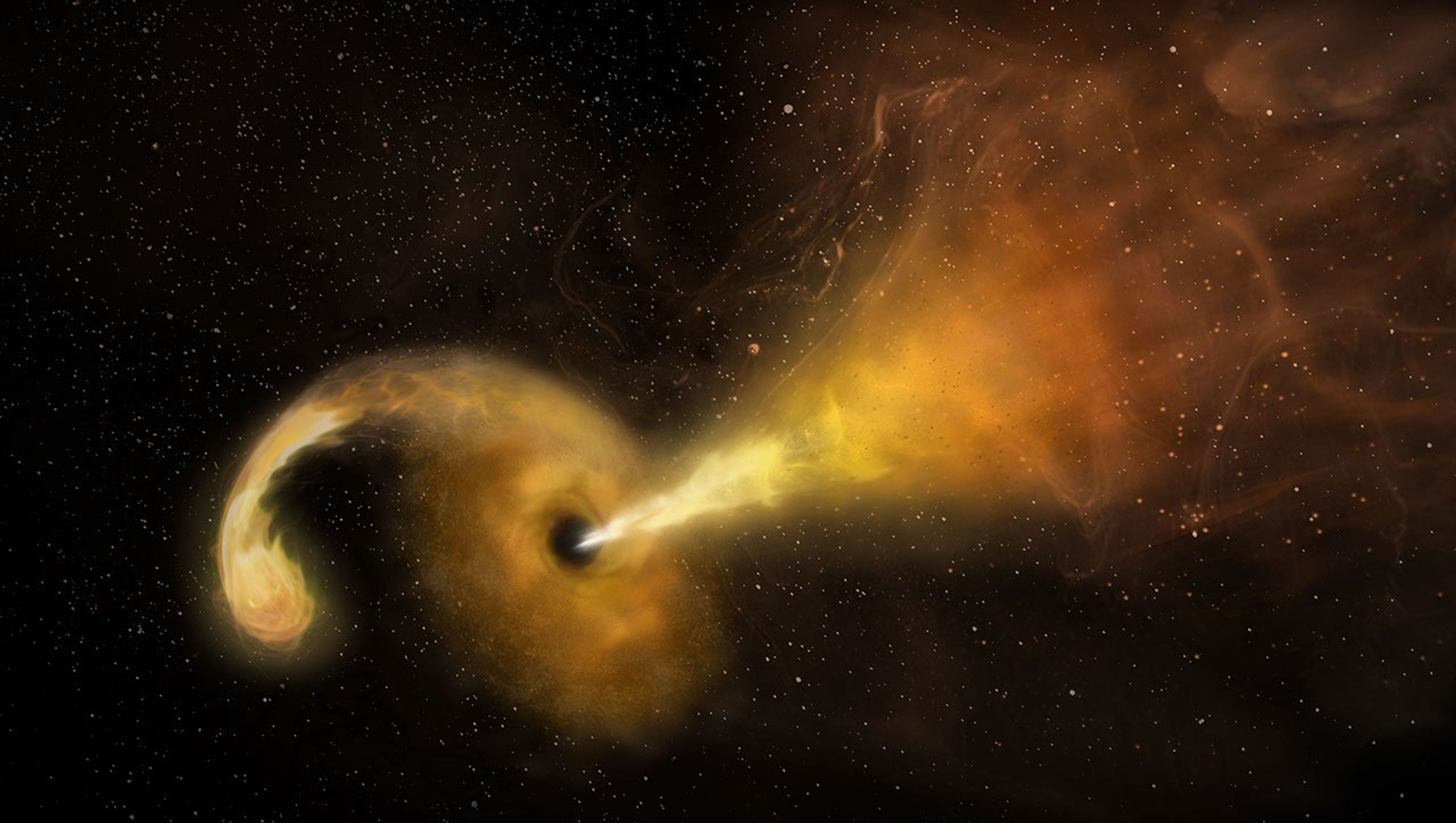
Why it matters: This is the first confirmed tidal disruption event found far outside a galaxy’s core, validating a new technique to detect otherwise invisible wandering supermassive black holes. It opens a census of these objects, which could reshape models of galaxy mergers and black hole evolution.
Context: Tidal disruption events are rare (about 30 per year across all surveyed galaxies) and were previously only observed in galactic cores, where supermassive black holes are known to reside. The new detection, at 30,000 light-years from the center, suggests a population of off-center black holes that have been ejected or displaced by mergers.
"NASA’s Neil Gehrels Swift Observatory captured an “orphan” black hole lighting up as it devoured a star on the outskirts of a faraway galaxy. These phenomena are rare to begin with, and." — SCIENCE.NASA.GOV
Commentary: The validation of this search technique is the real headline: it turns a rare, destructive event into a survey tool for a hidden population of black holes. The timing is fortuitous—Rubin and Roman will soon provide the wide, deep data needed to scale this from a handful of detections to a statistical sample. The Swift orbit boost is a reminder that even aging assets can extend their scientific yield if the engineering holds. Expect the ‘wandering black hole’ census to become a standard metric in galaxy evolution papers within a few years.
Date: July 27, 2026 12:06 PM ET
URL: https://science.nasa.gov/missions/swift/nasas-swift-sees-wandering-mega-black-hole-shredding-star/
AI Sentiment Score: Negative (85%)
AI Credibility Score: 10.0/10 — High
Scores and text generated by AI analysis of the source article indicated.
NASA’s Hubble Shows Star Formation in Andromeda Galaxy Winding Down (Science.Nasa.Gov)
Summary: A new study using Hubble data finds that star formation in Andromeda has declined by half over the last 500 million years, with a steeper drop in the last 40 million years. The current rate is about one-fifth of a solar mass per year, down from roughly one solar mass per year half a billion years ago. The decline is concentrated in a star-forming ring 32,000 light-years from the center, and the team identifies satellite galaxy M32 as a likely but unconfirmed trigger for a local decrease that began about 60 million years ago. The findings, published in The Astrophysical Journal, are based on photometric measurements of about 200 million individual stars from two Hubble surveys.
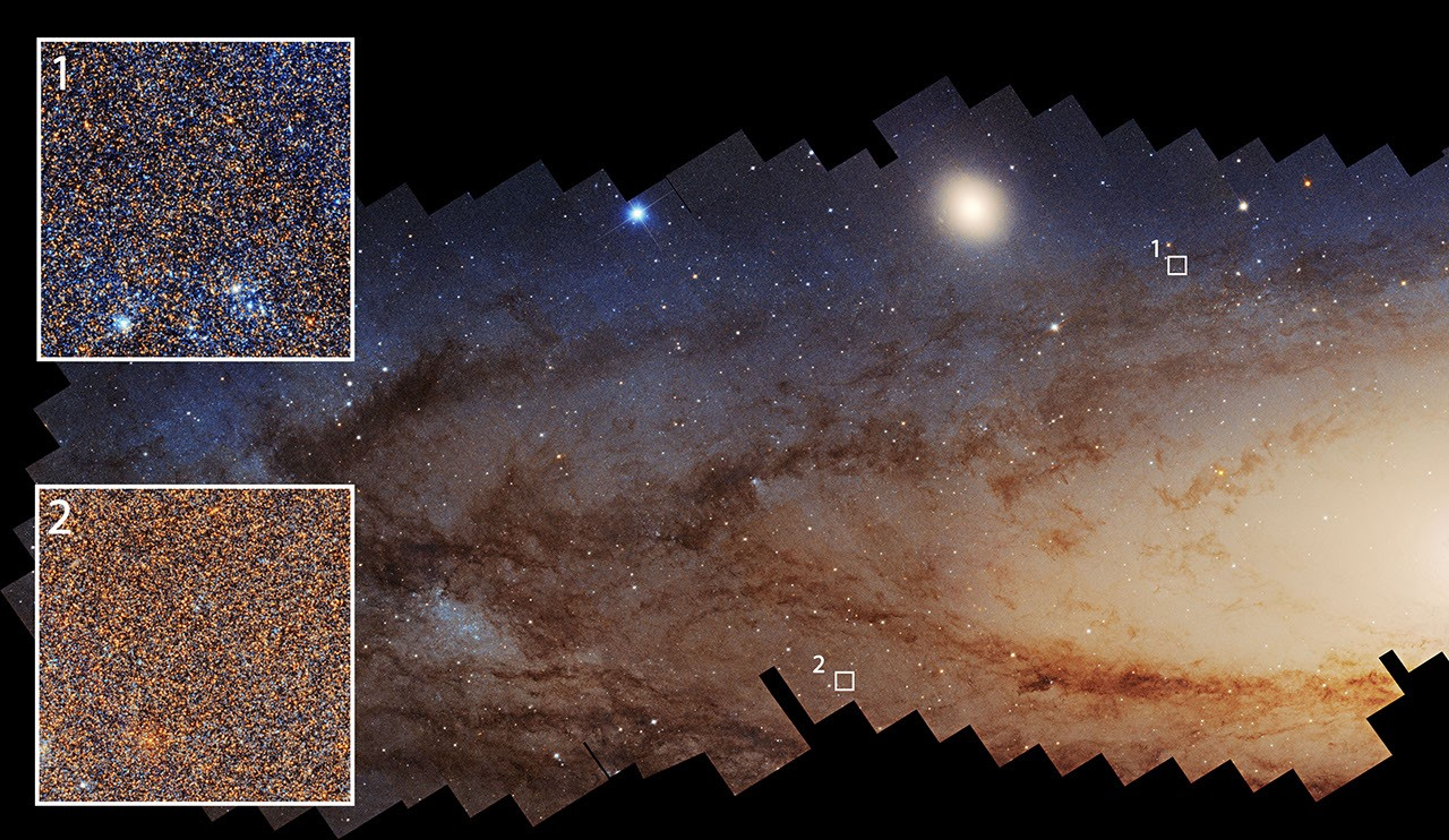
Why it matters: This is the most detailed star-formation history ever constructed for a large spiral galaxy, providing a direct fossil record of how a Milky Way analog winds down—and it sets the stage for Roman’s full-disk survey, which will extend this method to an entire galaxy and its halo.
Context: Andromeda’s 2-billion-year-old starburst, likely from a merger, has been known, but this study quantifies the decline with unprecedented spatial resolution, dividing the disk into thousands of 300-light-year cells. The M32 interaction hypothesis has been debated for years; this timing constraint is a new, testable piece of evidence.
"The researchers calculated that, 500 million years ago, Andromeda formed stars at a rate of about one solar mass per year. However, the formation rate dropped to about half that by 40 million years ago. The current rate has plummeted even farther, to about one-fifth the mass of our Sun per year." — SCIENCE.NASA.GOV
Commentary: The M32 correlation is the sharpest new signal here, but the team’s caution is warranted—3D separation is still uncertain, and correlation is not causation. The real payoff will come from Roman’s wide-field near-infrared imaging, which can map the entire disk and halo in a single pass, turning this 200-million-star census into a billion-star baseline. For mission planners, this is a reminder that archival Hubble data remains a high-yield asset, and that Roman’s launch—now as early as Aug. 30—will directly extend this line of inquiry. Watch for follow-up papers that combine Roman’s halo coverage with ground-based spectroscopy to test the M32 flyby scenario more rigorously.
Date: July 27, 2026 10:00 AM ET
URL: https://science.nasa.gov/missions/hubble/nasas-hubble-shows-star-formation-in-andromeda-galaxy-winding-down/
AI Sentiment Score: Negative (69%)
AI Credibility Score: 10.0/10 — High
Scores and text generated by AI analysis of the source article indicated.
NASA Opens New Flight Dynamics Research Facility in Virginia (Nasa.Gov)
Summary: NASA opened the Flight Dynamics Research Facility at Langley Research Center, its first major new wind tunnel in over 40 years. The facility consolidates and upgrades capabilities from two older tunnels, offering a 20-foot test chamber, 117 mph top airspeed, and modern digital systems. It will support testing for aircraft, drones, X-planes, and spacecraft, including Artemis reentry vehicles and potential Mars aircraft. The facility is part of a broader GSA partnership under Langley’s 20-year campus revitalization plan.
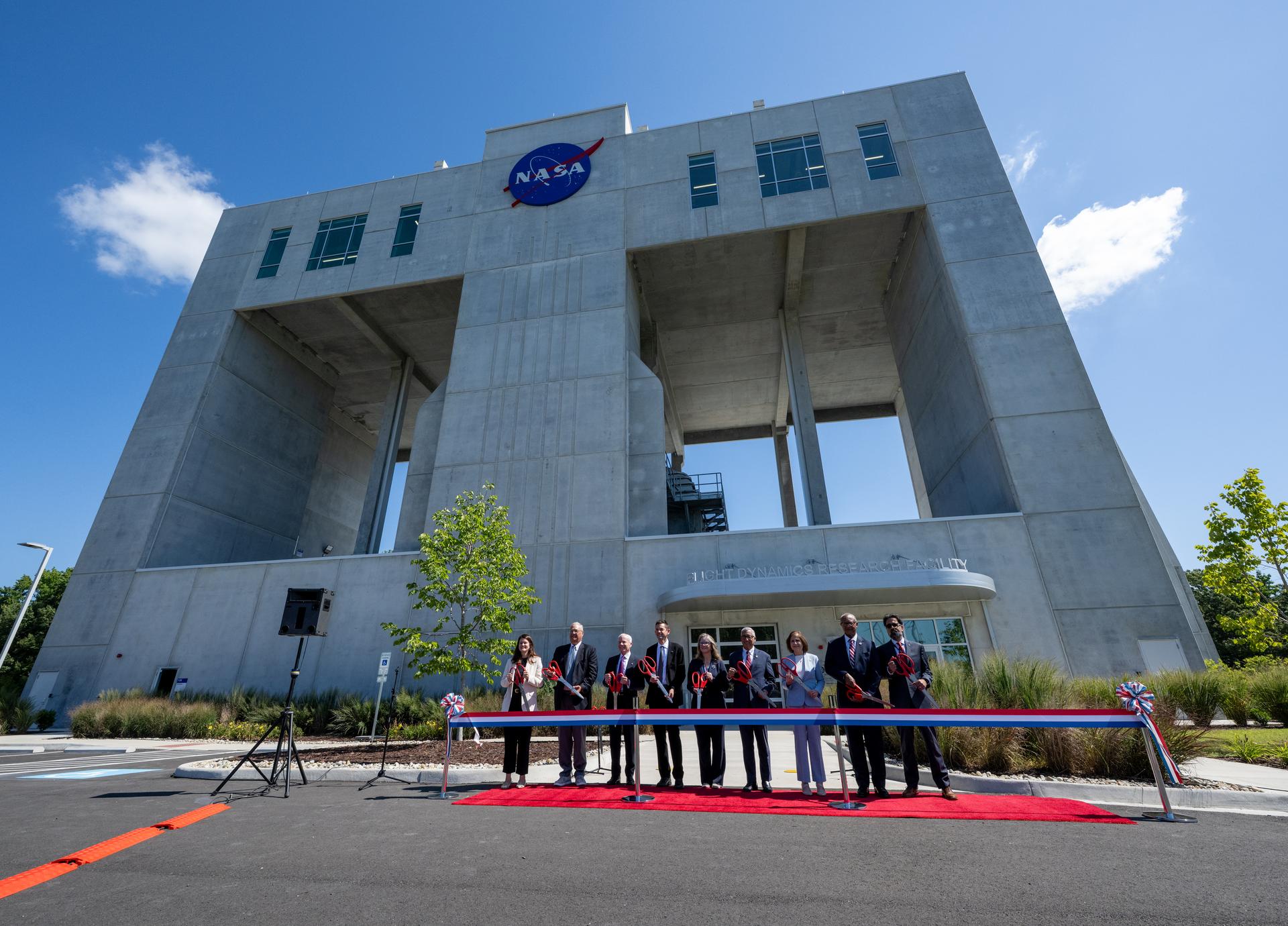
Why it matters: This is the first major U.S. wind tunnel investment in four decades, directly affecting the pace and fidelity of aerodynamic testing for both commercial and military aviation, as well as NASA’s lunar and Mars entry, descent, and landing systems.
Context: The facility replaces the 20-Foot Vertical Spin Tunnel and 12-Foot Low-Speed Tunnel, doubling top airspeed and increasing test chamber size, which enables heavier, more detailed models and higher-altitude simulations.
"NASA opened its newest wind tunnel, the Flight Dynamics Research Facility, Friday, providing a critical resource for the agency and its partners to test the safety and performance of future generations of." — NASA.GOV
Commentary: The doubling of airspeed and larger test chamber are not incremental upgrades; they shift what can be tested in free flight, particularly for reentry capsules and high-altitude aircraft. The facility’s energy efficiency and reduced maintenance costs signal a deliberate move to modernize infrastructure without expanding footprint. For industry partners, this reduces a bottleneck in validating new designs, potentially accelerating X-plane and drone certification timelines. The Mars aircraft angle is a quiet but telling signal that NASA is treating atmospheric flight on other worlds as a nearer-term engineering problem, not a distant concept.
Date: July 31, 2026 01:11 PM ET
URL: https://www.nasa.gov/news-release/nasa-opens-new-flight-dynamics-research-facility-in-virginia/
AI Sentiment Score: Negative (57%)
AI Credibility Score: 10.0/10 — High
Scores and text generated by AI analysis of the source article indicated.
Saturn’s moon Titan has rivers of liquid methane longer than the Nile’s tributaries, but a 2025 Brown University study found that only 1.3% of those rivers form deltas — on Earth, nearly every river does, and nobody yet knows why Titan’s don’t (Spacedaily)
Summary: A 2025 Brown University study in JGR: Planets finds that only 1.3% of Titan’s large coastal rivers show evidence of deltas, versus nearly all comparable rivers on Earth. The team tested whether Cassini’s radar could have missed them by simulating Titan-like imaging of Earth’s deltas, concluding large features should have been visible. The absence is therefore likely real, pointing to sea-level change, coastal reworking, or sediment behavior as competing explanations. With Cassini gone and Dragonfly not equipped for polar coastal work, the question remains open pending a future orbital or landed mission.
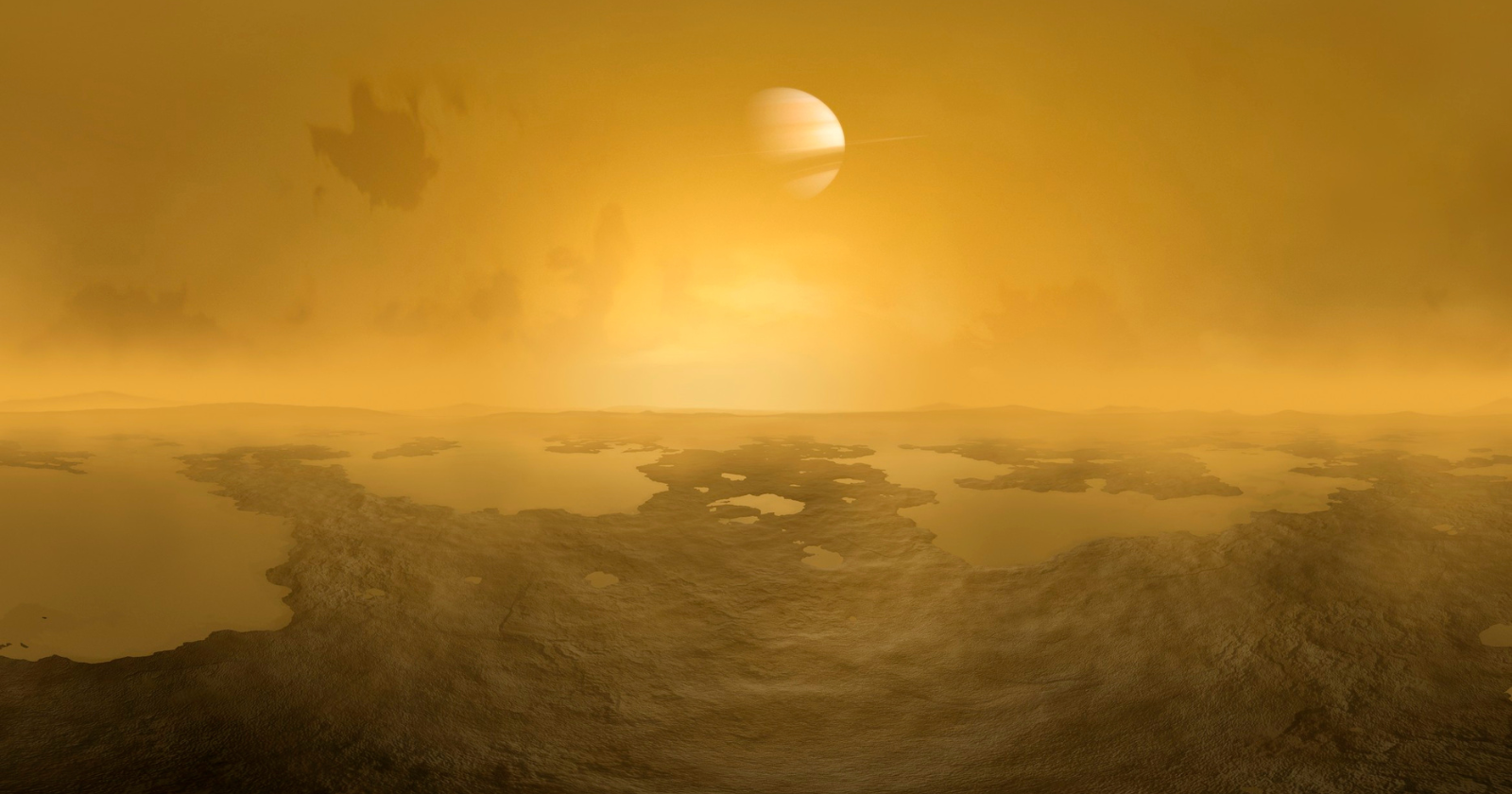
Why it matters: This reframes Titan’s methane cycle as geologically dynamic rather than a static Earth analog, with implications for how we interpret planetary habitability and sediment transport on other worlds.
Context: Cassini’s 2012 imaging revealed a 400-km river system draining into Ligeia Mare, but radar resolution and liquid transparency left delta detection ambiguous. The 2025 study’s synthetic radar test strengthens the case that the missing deltas are a real phenomenon, not an artifact.
"The honest conclusion of the paper is not that it solved the missing-delta problem. It showed that the problem is probably real." — SPACEDAILY
Commentary: The study’s methodological pivot—simulating Cassini’s view of Earth—is a model for squeezing knowledge from dead missions. The real prize is the implication that Titan’s coasts are transient, which would make them a natural laboratory for understanding climate-driven shoreline evolution. Dragonfly’s equatorial focus leaves the polar delta question unanswered, so the next decade’s science will depend on reanalysis and advocacy for a dedicated Titan polar orbiter. Until then, the absence of deltas is a feature, not a bug: it records a world in motion.
Date: August 01, 2026 12:31 AM ET
URL: https://spacedaily.com/t-saturns-moon-titan-has-rivers-of-liquid-methane-longer-than-the-niles-tributaries-but-a-2025-brown-university-study-found-that-only-1-3-of-those-rivers-form-deltas-on-earth-nearly-ev
AI Sentiment Score: Negative (83%)
AI Credibility Score: 10.0/10 — High
Scores and text generated by AI analysis of the source article indicated.
Adrift SpaceX Rocket Set To Crash Into Moon At 5,400 MPH (Patch)
Summary: A discarded Falcon 9 upper stage, launched in January 2025, is on course to impact the Moon near Einstein Crater on August 5, 2026, at roughly 5,400 mph. The collision will create a crater about 27 meters wide and 5 meters deep, with ejecta visible to telescopes for tens of minutes. NASA’s Lunar Reconnaissance Orbiter and South Korea’s Danuri orbiter will image the site before and after. The event is a rare controlled experiment for lunar impact physics and debris hazard assessment, though it was avoidable with proper disposal.
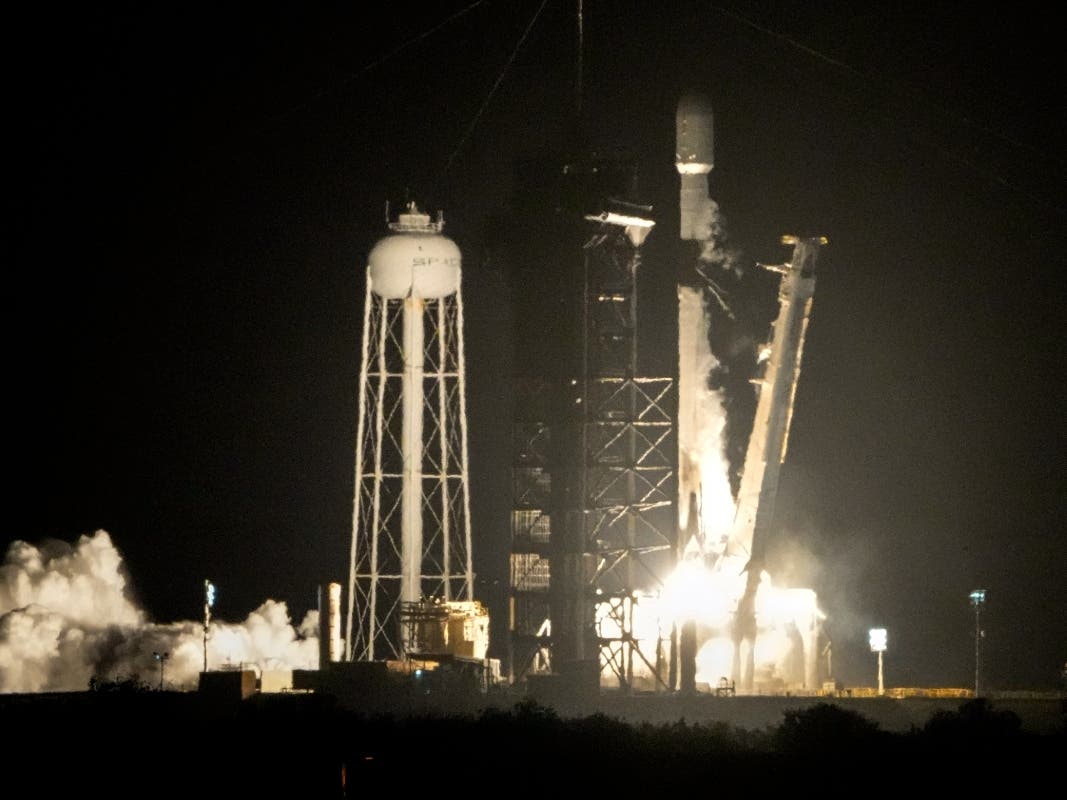
Why it matters: This is the first unplanned lunar impact of a large human-made object in years, providing a live test of impact models and debris risk for upcoming crewed missions.
Context: The stage was left in a chaotic orbit after launching Firefly’s Blue Ghost and ispace’s lander in January 2025; Blue Ghost landed successfully, ispace’s failed. The impact follows a pattern of growing cislunar traffic without agreed disposal standards.
"This impact will not be a problem,” retired astrophysicist Jonathan McDowell said in an email. “But in a future where there are long-term bases on the moon, similar impacts would be an issue and we need not to leave rocket stages in chaotic orbits of this kind." — PATCH
Commentary: The event is a useful calibration point for lunar impact models, but the real signal is the absence of binding disposal rules for cislunar hardware. With Artemis and Chinese landings imminent, the window for voluntary best practices is closing. Expect pressure on NASA and the FCC to mandate deorbit or heliocentric disposal for future lunar missions. The fact that this was avoidable—and wasn’t—is the story.
Date: August 01, 2026 01:39 AM ET
URL: https://patch.com/california/redondobeach/adrift-spacex-rocket-set-crash-moon-5-400-mph
AI Sentiment Score: Negative (50%)
AI Credibility Score: 10.0/10 — High
Scores and text generated by AI analysis of the source article indicated.
Post ID: 1c6263ff