

Artemis Moon Missions and Rocket Updates
Final Artemis III SLS Booster Segments En Route to NASA Kennedy (Nasa.Gov)
Summary: The final eight solid rocket booster motor segments for the Artemis III SLS rocket have shipped from Northrop Grumman’s Utah facility to Kennedy Space Center. These segments will form the twin boosters that provide over 75% of the rocket’s liftoff thrust. Their delivery marks a tangible step toward hardware integration for the mission, which aims to land astronauts on the Moon.
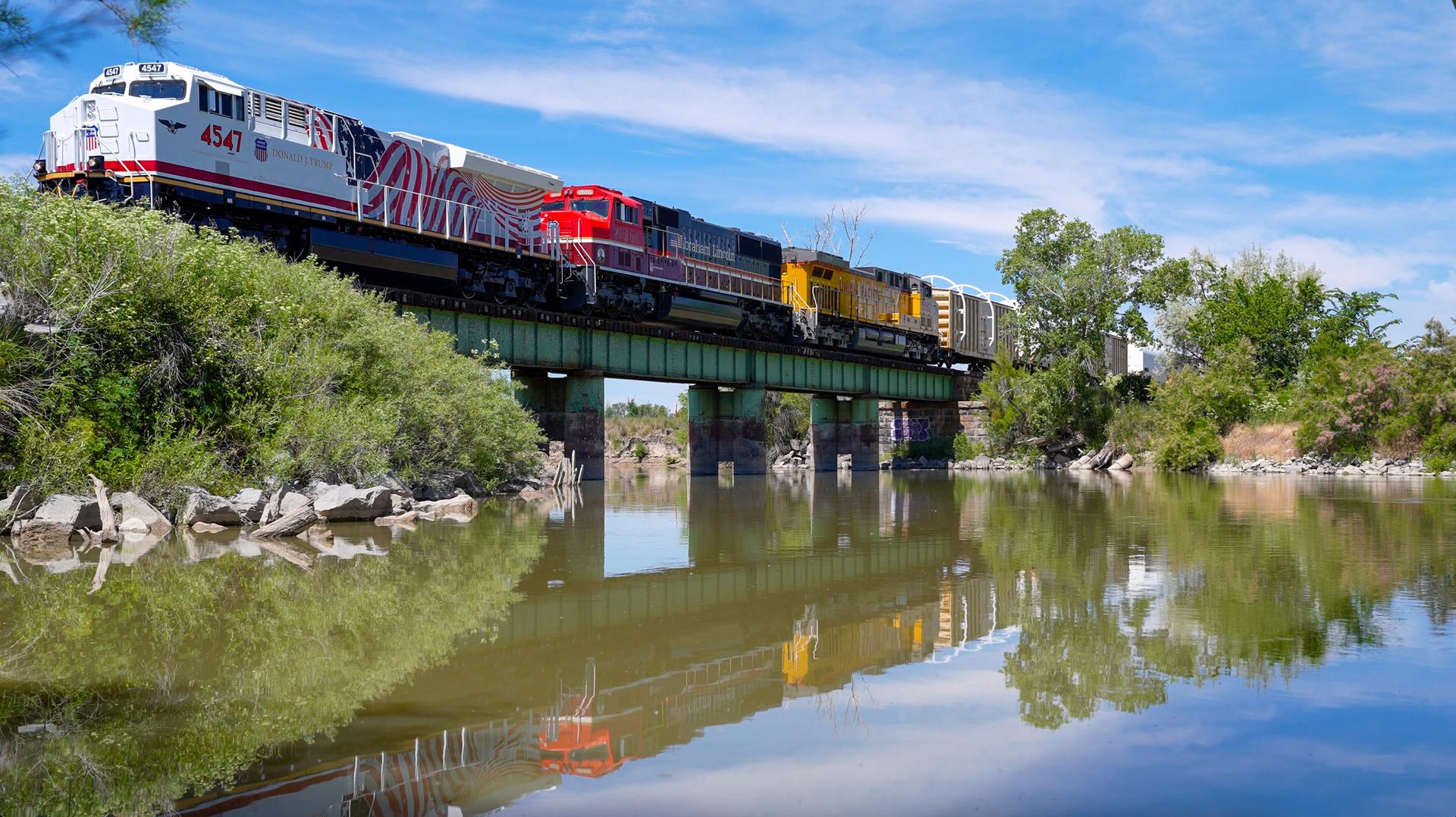
Why it matters: This shipment signals a transition from long-lead manufacturing to final assembly for a critical national exploration program, moving Artemis III from planning into its tangible hardware phase.
Context: Artemis III is the planned first crewed lunar landing mission of the Artemis program. The SLS booster segments, manufactured years in advance, represent a major long-lead item; their delivery often precedes a final assembly and integration schedule.
"The final booster motor segments for NASA’s SLS (Space Launch System) rocket that will help propel Artemis III astronauts on their journey to space shipped from Northrop Grumman’s Railyard Shipping Facility in Corinne, Utah on June 2." — NASA.GOV
Commentary: The delivery is a procedural milestone, not a technical one, but it concretely narrows the path for potential schedule slips. It places pressure on downstream integration workflows at Kennedy and indirectly signals Northrop Grumman’s production line is clearing its backlog for this mission. Watch for the subsequent stacking operations as the next visible gauge of pace.
Date: June 04, 2026 12:53 PM ET
URL: https://www.nasa.gov/blogs/missions/2026/06/04/final-artemis-iii-sls-booster-segments-en-route-to-nasa-kennedy/
AI Sentiment Score: Negative (50%)
AI Credibility Score: 10.0/10 — High
Scores and text generated by AI analysis of the source article indicated.
Artemis III’s remaining solid rocket booster segments shipped from Utah to Florida (Nasaspaceflight)
Summary: Northrop Grumman has shipped the final eight solid rocket booster segments for Artemis III from Utah to Florida, marking a tangible step in hardware flow for the 2027-targeted mission. The SLS stack is planned for a wet dress rehearsal at LC-39B later this year, a critical test following hydrogen leak issues on prior flights. However, the mission’s launch readiness, potentially as early as March 2027, remains decoupled from the uncertain development schedules of the SpaceX Starship and Blue Origin Blue Moon Human Landing Systems.

Why it matters: This shipment signals that the SLS program is advancing its hardware pipeline on its own cadence, creating a potential schedule collision with the lagging human landing system development, which could force a stack-and-store scenario or mission reconfiguration.
Context: Artemis III’s timeline is bifurcated: SLS/Orion hardware production and testing proceeds apace, while the critical Human Landing System elements face significant technical and schedule risk, creating a structural tension within the program.
"After the rehearsal is complete, Cianciola stated that the Artemis III stack will be prepared to support launch readiness as early as March 2027. However, that does not necessarily mean that Artemis III will fly then, as questions remain about the readiness of the SpaceX Starship and Blue Origin Blue Moon Human Landing System (HLS) vehicles." — NASASPACEFLIGHT
Commentary: The booster shipment underscores a program executing its known, repeatable processes while its most novel and risky components—the commercial landers—remain unresolved. This divergence highlights the operational reality that Artemis III may become a de facto SLS/Orion test flight if HLS delays persist, effectively redefining the mission’s primary objective from a lunar landing to a complex orbital rendezvous demonstration.
Date: June 03, 2026 04:37 PM ET
URL: https://www.nasaspaceflight.com/2026/06/artemis-iii-srb-shipment/
AI Sentiment Score: Negative (60%)
AI Credibility Score: 10.0/10 — High
Scores and text generated by AI analysis of the source article indicated.
After New Glenn anomaly, Blue Origin keeps focus on upcoming Blue Moon and Mars missions (Nasaspaceflight)
Summary: Blue Origin is accelerating recovery efforts following the loss of a New Glenn vehicle during a hotfire test in late May, with a goal of returning to flight by year’s end. The company’s immediate focus is on the Blue Moon Mark 1 lander, Endurance, which NASA has selected for its inaugural Moon Base mission, though that schedule is now in flux. Concurrently, Blue Origin is competing for NASA’s revived Mars Telecommunications Orbiter contract, proposing a Blue Ring-based solution. The New Glenn anomaly directly pressures the timelines for these cornerstone lunar and Martian programs.

Why it matters: The New Glenn failure creates a critical path dependency for NASA’s near-term lunar surface operations and its evolving Mars communications architecture, forcing schedule renegotiations and testing alternative provider resilience.
Context: Blue Origin’s lunar lander contracts and New Glenn’s manifest represent a foundational, non-redundant pillar of NASA’s current Artemis and Moon Base logistics, making the rocket’s operational status a direct proxy for programmatic risk.
"Following the damaging loss of New Glenn during hotfire testing at Launch Complex 36 in late May, Blue Origin is moving quickly to get its massive orbital rocket back to flight by." — NASASPACEFLIGHT
Commentary: The anomaly shifts the operational calculus from schedule confidence to contingency management. NASA’s public support for Blue Origin’s recovery, while necessary, underscores the agency’s lack of a ready alternative heavy-lift provider for its Blue Moon landers, creating a single-point-of-failure scenario it had sought to avoid. The parallel push for the Mars orbiter contract suggests Blue Origin is leveraging its integrated spacecraft platform to diversify revenue and mission criticality beyond Earth-Moon logistics, a strategic hedge against launch vehicle volatility.
Date: June 05, 2026 08:22 PM ET
URL: https://www.nasaspaceflight.com/2026/06/blue-moon-mto-update/
AI Sentiment Score: Negative (55%)
AI Credibility Score: 10.0/10 — High
Scores and text generated by AI analysis of the source article indicated.
Rocket Report: Blue Origin explosion still making headlines; Impulse raises money (Arstechnica)
Summary: The New Glenn explosion has grounded Blue Origin’s heavy-lift program, creating immediate pressure on its lunar lander schedule and raising the prospect of a SpaceX launch for Blue Moon. Concurrently, Canada’s sovereign launch program is advancing from talk to funded infrastructure, with Maritime Launch Services securing a major government lease for Spaceport Nova Scotia and moving into construction tendering.
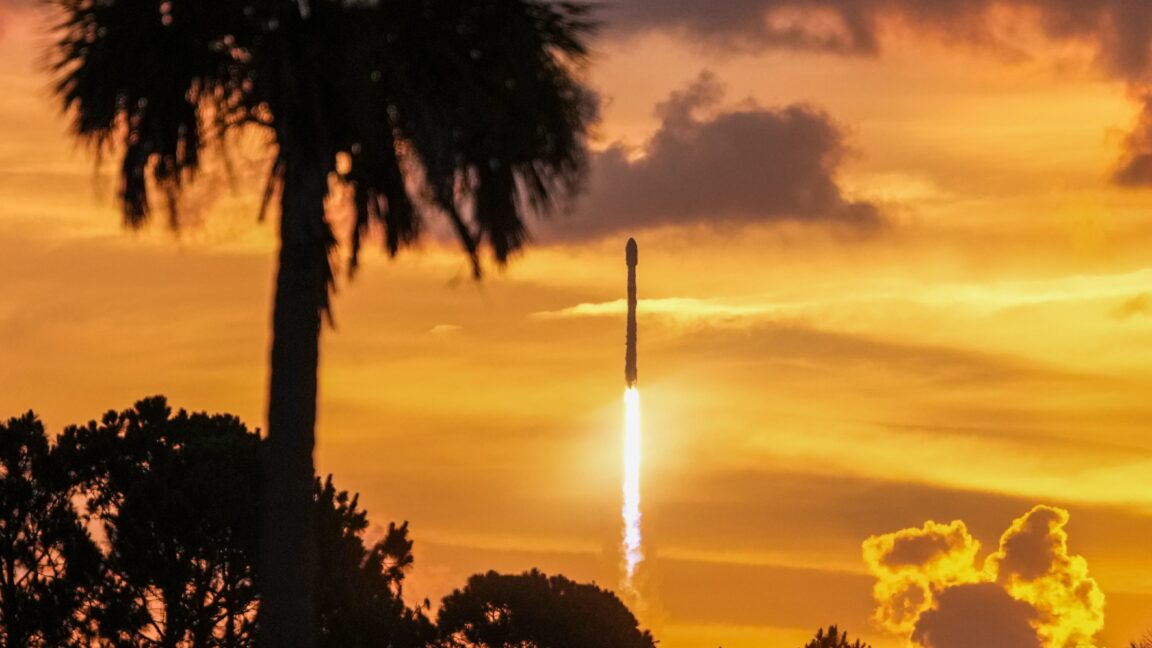
Why it matters: A major competitor’s launch failure reshapes near-term heavy-lift availability and international partnership dynamics, while a national spaceport moving to construction signals a shift in global launch infrastructure and sovereign capability.
Context: New Glenn is critical to Blue Origin’s NASA Artemis commitments and commercial ambitions; its extended grounding forces contingency planning. Canada’s spaceport investment follows a global pattern of mid-tier space nations securing independent access to orbit.
"Blue Origin aims to resume launches at the badly damaged launch facility by the end of the year, but there’s good reason to be skeptical of this timeline. With New Glenn grounded, will Blue Origin founder Jeff Bezos approach Elon Musk’s SpaceX to launch his Blue Moon lander to the lunar south pole? It sure sounds like NASA is pushing for that." — ARSTECHNICA
Commentary: The operational consequence is a potential, and ironic, dependency: Blue Moon may require a Falcon Heavy. This would cede strategic leverage to SpaceX and validate NASA’s insistence on schedule over vendor loyalty. In parallel, Canada’s concrete investment transforms Maritime Launch from a proposal into a federally backed entity, altering the Atlantic launch map and providing a model for other nations seeking infrastructure-led space policy.
Date: June 05, 2026 10:20 AM ET
URL: https://arstechnica.com/space/2026/06/rocket-report-blue-origin-explosion-still-making-headlines-impulse-raises-money/
AI Sentiment Score: Negative (83%)
AI Credibility Score: 10.0/10 — High
Scores and text generated by AI analysis of the source article indicated.
Safety officials finally have a good idea of what a big rocket explosion can do (Arstechnica)
Summary: The explosion of Blue Origin’s New Glenn rocket at Cape Canaveral provided the first major real-world data point on the blast effects of a large methalox (methane/liquid oxygen) vehicle. This event occurs as the Space Coast prepares for a surge in launch cadence, driven by multiple companies including SpaceX, Blue Origin, ULA, Stoke Space, and Relativity Space, all planning to operate methane-fueled rockets in close proximity. The US Space Force, which manages the range, projects up to 500 launches annually by 2036 but operates under conservative safety protocols for this newer propellant combination.

Why it matters: The empirical blast data directly informs critical safety and zoning protocols that will determine the operational tempo and physical co-location of competing launch providers at a congested national spaceport.
Context: Methalox is becoming the standard propellant for new heavy-lift rockets, but its explosive yield and debris field were previously modeled, not measured from a full-scale failure.
"Last week’s explosion of a New Glenn rocket at Cape Canaveral, Florida, was clearly a setback for Blue Origin and NASA, but it was a learning experience for safety officials looking to." — ARSTECHNICA
Commentary: The explosion transforms a theoretical risk into a quantifiable engineering parameter, allowing the Space Force to move from conservative blanket restrictions to evidence-based standoff distances and launch windows. This data is essential for deconflicting the operations of SpaceX’s Starship with neighboring pads, potentially easing tensions over forced evacuations and enabling the high-flight-rate future the range forecasts.
Date: June 05, 2026 09:55 AM ET
URL: https://arstechnica.com/space/2026/06/safety-officials-finally-have-a-good-idea-of-what-a-big-rocket-explosion-can-do/
AI Sentiment Score: Negative (71%)
AI Credibility Score: 10.0/10 — High
Scores and text generated by AI analysis of the source article indicated.
How long will it take to rebuild Blue Origin’s launch pad? We asked some SpaceX vets. (Arstechnica)
Summary: Blue Origin’s New Glenn rocket suffered a catastrophic explosion during a static fire test on May 28, 2026, severely damaging its launch pad at Cape Canaveral. The incident draws direct parallels to SpaceX’s 2016 AMOS-6 failure, which destroyed a Falcon 9 and its launch complex. The article consults SpaceX veterans who managed that recovery to assess the operational and schedule challenges now facing Blue Origin, particularly given NASA’s reliance on New Glenn for its lunar program.
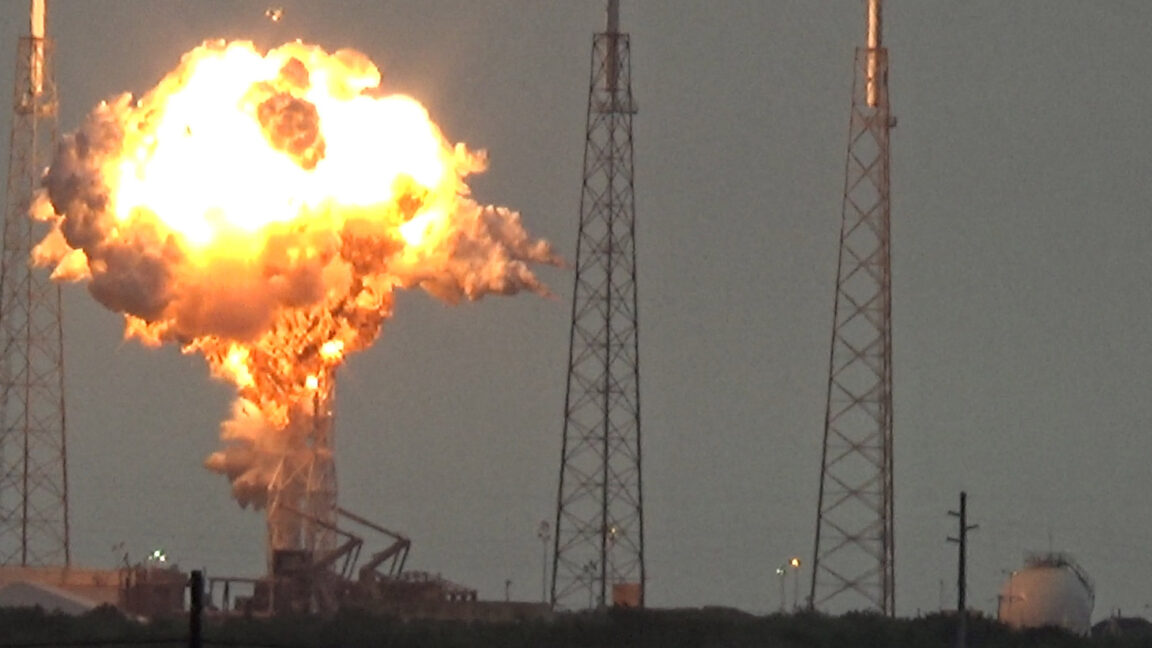
Why it matters: The setback directly impacts the Artemis lunar mission schedule and tests Blue Origin’s operational resilience and crisis management in a way its competitor has already been forced to learn.
Context: Major launch vehicle failures during ground testing are rare but high-consequence events that reset program timelines and reveal institutional preparedness; SpaceX’s recovery from AMOS-6 became a case study in rapid fault isolation and infrastructure rebuild.
"My AMOS-6 scar started itching when I saw the video of New Glenn,” said Hans Koenigsmann, the SpaceX engineer who led the failure investigation in the fall of 2016. “It’s really terrible." — ARSTECHNICA
Commentary: The parallel is not merely anecdotal; it signals that Blue Origin must now execute a complex, high-stakes investigation and reconstruction under public and contractual pressure that SpaceX endured a decade prior. The key differentiator will be whether Blue Origin can match the forensic speed and operational agility SpaceX demonstrated, which will determine the magnitude of the delay for NASA’s CLPS and Artemis cargo missions.
Date: June 03, 2026 06:00 AM ET
URL: https://arstechnica.com/space/2026/06/how-long-will-it-take-to-rebuild-blue-origins-launch-pad-we-asked-some-spacex-vets/
AI Sentiment Score: Negative (60%)
AI Credibility Score: 10.0/10 — High
Scores and text generated by AI analysis of the source article indicated.
The Exploration Company advances Nyx parachute recovery (Nasaspaceflight)
Summary: The Exploration Company (TEC) has completed a dedicated parachute system drop test for its reusable Nyx cargo spacecraft in the Mojave Desert. The test validated the critical transition from drogue to main parachutes using a purpose-built Drop Test Vehicle, a key risk-reduction step ahead of a planned 2028 demonstration flight to the International Space Station. This milestone advances the development of a European-led, launcher-agnostic vehicle designed for orbital cargo delivery and return.

Why it matters: Parachute recovery remains a high-risk, mission-critical phase for returning spacecraft; successful validation of the deployment sequence reduces a major technical hurdle for Nyx’s operational timeline and commercial viability.
Context: TEC is part of a European push to develop competitive, reusable commercial cargo systems, positioning Nyx as a potential alternative to SpaceX’s Dragon and Northrop Grumman’s Cygnus for station resupply and future lunar logistics.
"The company completed a dedicated drop test of the Nyx parachute system in the Mojave Desert, California, validating the critical transition from drogue to main parachutes." — NASASPACEFLIGHT
Commentary: Choosing a land-based drop test over a splashdown simulation prioritizes agile data collection and logistics speed, a pragmatic trade-off for a development program still in the qualification phase. Partnering with Airborne Systems leverages proven parachute expertise, while the use of a dedicated Drop Test Vehicle follows the disciplined, subsystem-focused test philosophy seen in programs like Orion. This incremental approach signals a methodical, risk-averse engineering culture, which will be tested as development scales toward full-system orbital reentry.
Date: June 04, 2026 07:09 AM ET
URL: https://www.nasaspaceflight.com/2026/06/the-exploration-company-nyx-parachute-recovery/
AI Sentiment Score: Negative (72%)
AI Credibility Score: 10.0/10 — High
Scores and text generated by AI analysis of the source article indicated.
Post ID: 409720c5